mirror of
https://github.com/paperclipai/paperclip.git
synced 2026-10-27 02:44:50 +01:00
 1ef3b08714
## Thinking Path

> - Paperclip is the open source app people use to manage AI agents for
work.
> - A stable agent persona is useful only when the same identity appears
across the app.
> - Lists, task messages, selectors, and activity feeds need inexpensive
static avatars.
> - Onboarding and agent headers need a larger character with
expressions and pointer tracking.
> - This pull request connects the persona foundation to those existing
views and preserves onboarding draft assignments.
> - Full-page stories and Linux checks make the placements and
performance contract reviewable.

## Linked Issues or Issue Description

**Problem or motivation**

Agents need a stable visual identity in lists, tasks, onboarding, and
configuration. External tools also need an image URL for that identity.

**Proposed solution**

Assign each agent a permanent palette from a fixed ClipLab character
library. Store the assignment on the agent. Render and cache preset PNG
URLs on demand. Use static images in dense views and one animated
character in larger placements.

**Alternatives considered**

A generated image bundle requires a separate asset build. A live
renderer in every avatar adds unnecessary work in large lists. Arbitrary
uploaded images do not provide the requested shared character system.

**Roadmap alignment**

This improves agent identity across existing control-plane views. It
preserves agent permissions, company boundaries, and status labels.
ROADMAP.md has no separate ClipLab persona milestone.

Related approaches: #2422 adds configurable image URLs and DiceBear
generation; #5578 adds optional uploaded avatars. This work uses a
fixed, versioned character library and preset URLs.

## What Changed

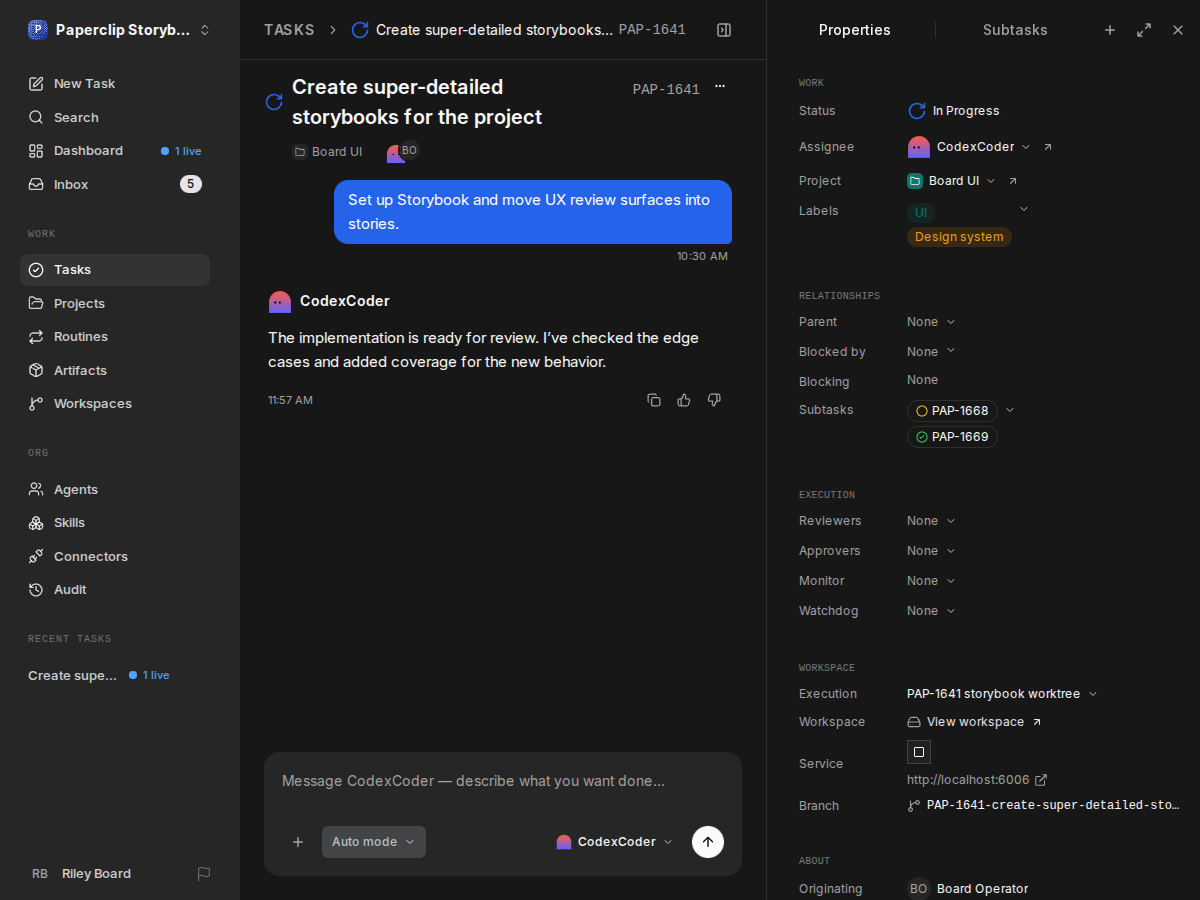
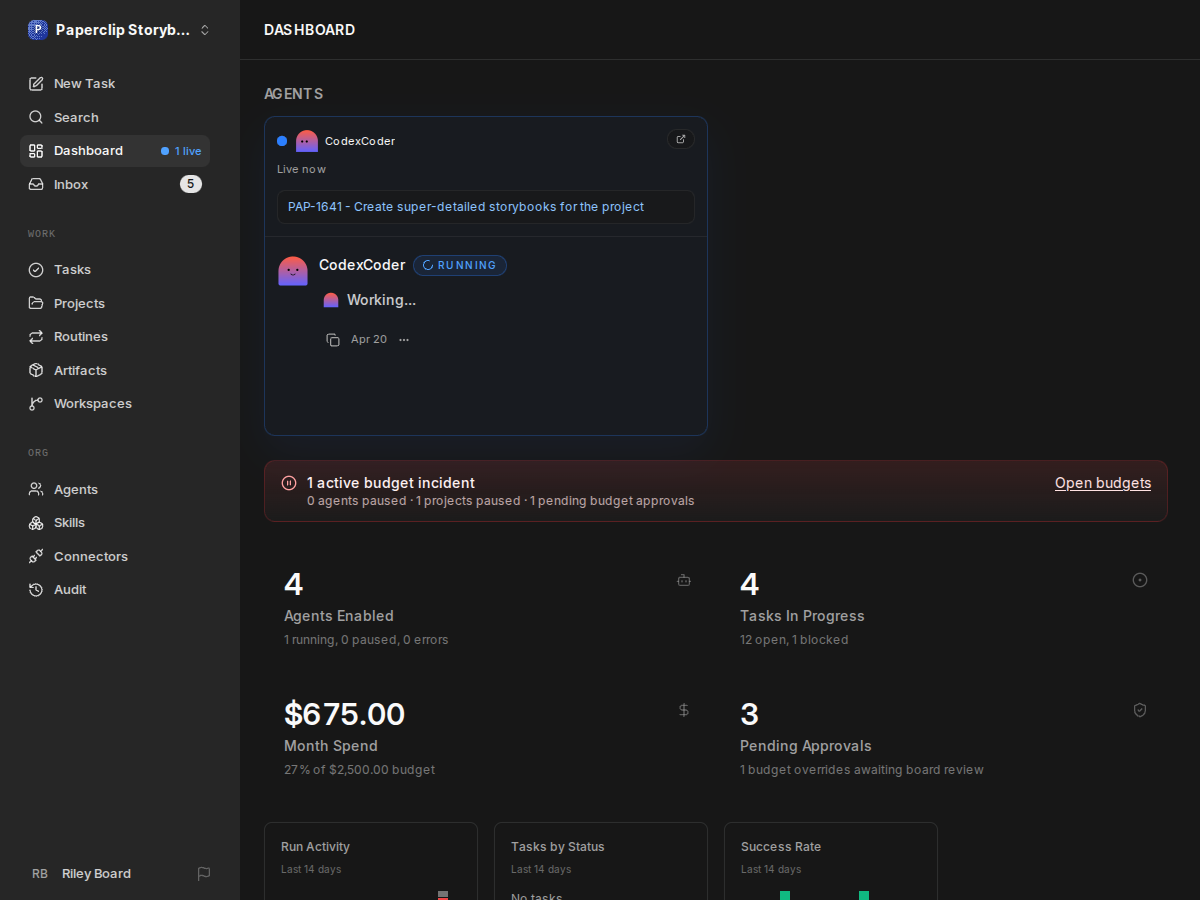
- Replace agent icons with static persona images across lists, the
sidebar, org charts, tasks, comments, selectors, activity, and dashboard
views.
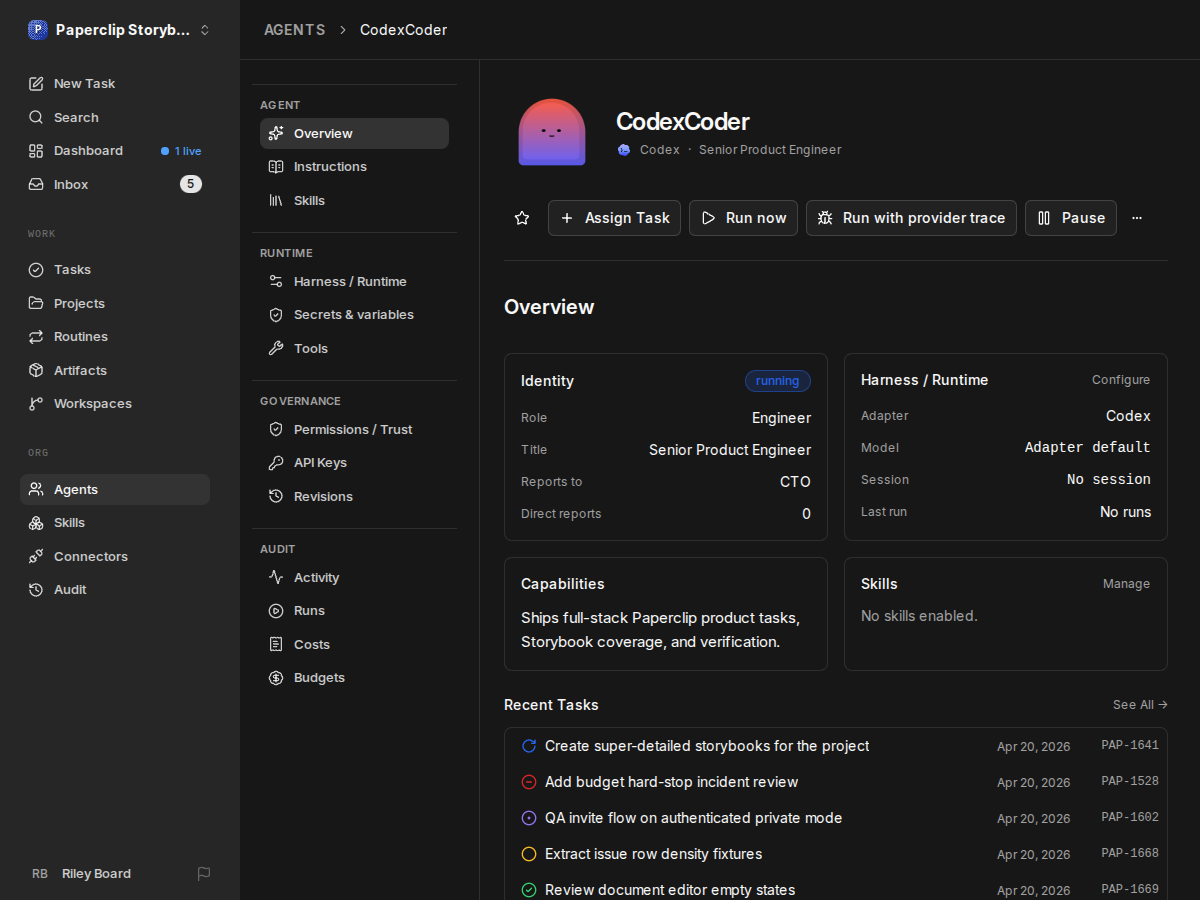
- Put one animated character in the agent header. Let it follow the
pointer across the page, with reduced-motion and touch fallbacks.
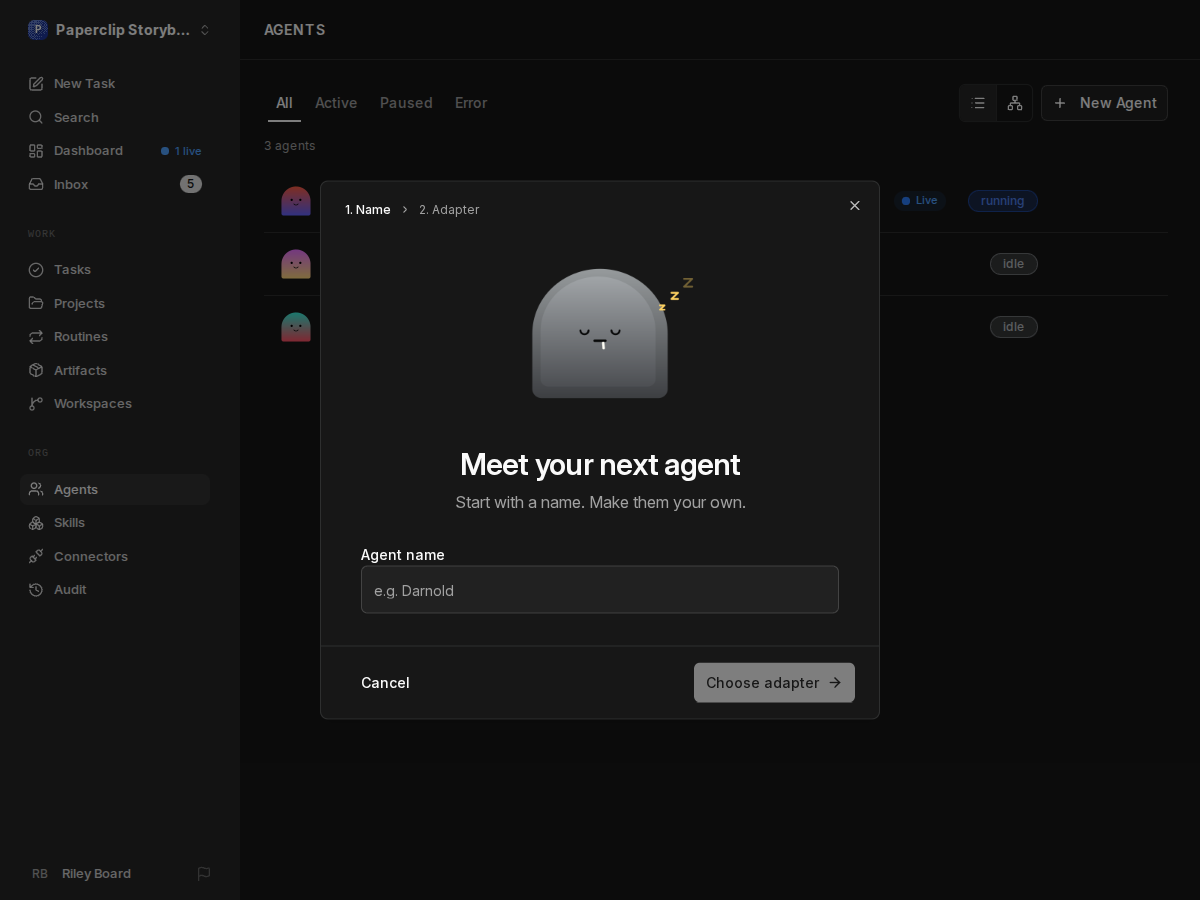
- Add larger padded characters to agent creation. Keep the palette
stable across draft refreshes and connection retries, then reveal it
after success.
- Pass appearance through shared projections rather than fetching each
agent separately.
- Add real full-page Storybook examples for the agent list, overview,
task, dashboard, new-agent dialog, and connection page.
- Add Linux screenshot, clipping, density, and 500-avatar performance
checks.

## Verification

- `pnpm -r typecheck`, `pnpm build`, and token gates pass on the rebased
tree. Persona lifecycle tests pass.
- The rebased feature passes 38 Linux screenshot/performance checks,
including both display densities, corner pointer positions, and the
no-WebGL/no-live-download contract for 500 avatars.
- The final Linux persona suite passes all 38 visual, lifecycle,
density, and full-page checks using the standard Storybook configuration
and real on-demand avatar endpoint.
- Final local focused verification: 45 avatar/native-recovery tests
pass; UI identity/routine tests, typecheck/build, token gates, and
Storybook build pass.
- Current-head CI passes: full workspace/server tests, all serialized
server groups, typecheck/release checks, build, canary validation, and
end-to-end shards. The build passed after retrying a native-runner
concurrency-test failure; its three targeted cases also pass locally.
- Manual inspection covered stable identities in the app, header
placement, full-page mouse tracking, onboarding size, and task/dashboard
placements.


### Screenshots

Linux captures use synthetic Storybook fixtures. Full-page captures use
reduced motion. The live character, mouse tracking, and disposal are
checked separately.

<details>
<summary>Agent overview with the character in its header</summary>

<img
src="https://raw.githubusercontent.com/paperclipai/paperclip/8c68f42b268ada22b67d79d0fe1bb0a2f84ec25c/screenshots/full-page-agent-overview.png"
width="900" alt="Agent overview with the character in its header" />

</details>
<details>
<summary>Task messages and assignee identity</summary>

<img
src="https://raw.githubusercontent.com/paperclipai/paperclip/8c68f42b268ada22b67d79d0fe1bb0a2f84ec25c/screenshots/full-page-task.png"
width="900" alt="Task messages and assignee identity" />

</details>
<details>
<summary>Larger onboarding character with room for expressions</summary>

<img
src="https://raw.githubusercontent.com/paperclipai/paperclip/8c68f42b268ada22b67d79d0fe1bb0a2f84ec25c/screenshots/full-page-meet-your-next-agent.png"
width="900" alt="Larger onboarding character with room for expressions"
/>

</details>
<details>
<summary>Dashboard agent activity</summary>

<img
src="https://raw.githubusercontent.com/paperclipai/paperclip/8c68f42b268ada22b67d79d0fe1bb0a2f84ec25c/screenshots/full-page-company-dashboard.png"
width="900" alt="Dashboard agent activity" />

</details>

## Risks

- This PR depends on #13170, the persona foundation. Merge the
foundation first, then retarget this PR to master.
- Many placements change from icons to character silhouettes. Human
avatars and authoritative agent status labels retain their existing
behavior.
- Only one character can render live per view. Reduced motion,
hidden/offscreen content, touch input, and renderer failures use the
defined fallbacks.
- The full-page stories use fixture data. They do not contact a real
company or complete real provider sign-in.

## Model Used

OpenAI Codex, GPT-6 family. The exact model identifier and context
window are not exposed in this session. Used code editing, shell
execution, browser inspection, and Linux visual testing.

## Checklist

- [x] I have included a thinking path that traces from project context
to this change
- [x] I have specified the model used (with version and capability
details)
- [x] I have checked ROADMAP.md and confirmed this PR does not duplicate
planned core work
- [x] I have searched GitHub for duplicate or related PRs and linked
them above
- [x] I have either (a) linked existing issues with `Fixes: #` / `Closes
#` / `Refs #` OR (b) described the issue in-PR following the relevant
issue template
- [x] I have not referenced internal/instance-local Paperclip issues or
links (only public GitHub `#NNN` / `github.com/paperclipai/paperclip`
URLs)
- [x] My branch name describes the change (e.g. `docs/...`, `fix/...`)
and contains no internal Paperclip ticket id or instance-derived details
- [x] I have run tests locally and they pass
- [x] I have added or updated tests where applicable
- [x] I have updated relevant documentation to reflect my changes
- [x] I have considered and documented any risks above
- [x] All Paperclip CI gates are green
- [x] Greptile is 5/5 with no open P2s, recommendations, or follow-ups
- [x] I will address all Greptile and reviewer comments before
requesting merge

---------

Co-authored-by: Paperclip <noreply@paperclip.ing>
Co-authored-by: Tonio <tonework@gmail.com>
Co-authored-by: Claude Fable 5.1 <noreply@anthropic.com>
524 lines
22 KiB
TypeScript
524 lines
22 KiB
TypeScript
import { agentAvatarUrl, resolveAgentAppearance } from "@paperclipai/shared";
|
|
import { and, desc, eq, gte, isNotNull, isNull, lt, lte, sql } from "drizzle-orm";
|
|
import { alias } from "drizzle-orm/pg-core";
|
|
import type { Db } from "@paperclipai/db";
|
|
import { activityLog, agents, companies, costEvents, heartbeatRuns, issues, projects } from "@paperclipai/db";
|
|
import { notFound, unprocessable } from "../errors.js";
|
|
import { budgetService, type BudgetServiceHooks } from "./budgets.js";
|
|
import { visibleIssueCondition } from "./issue-visibility.js";
|
|
|
|
export interface CostDateRange {
|
|
from?: Date;
|
|
to?: Date;
|
|
}
|
|
|
|
const METERED_BILLING_TYPE = "metered_api";
|
|
const SUBSCRIPTION_BILLING_TYPES = ["subscription_included", "subscription_overage"] as const;
|
|
|
|
function sumAsNumber(column: typeof costEvents.costCents | typeof costEvents.inputTokens | typeof costEvents.cachedInputTokens | typeof costEvents.outputTokens) {
|
|
return sql<number>`coalesce(sum(${column}), 0)::double precision`;
|
|
}
|
|
|
|
function currentUtcMonthWindow(now = new Date()) {
|
|
const year = now.getUTCFullYear();
|
|
const month = now.getUTCMonth();
|
|
return {
|
|
start: new Date(Date.UTC(year, month, 1, 0, 0, 0, 0)),
|
|
end: new Date(Date.UTC(year, month + 1, 1, 0, 0, 0, 0)),
|
|
};
|
|
}
|
|
|
|
async function getMonthlySpendTotal(
|
|
db: Db,
|
|
scope: { companyId: string; agentId?: string | null },
|
|
) {
|
|
const { start, end } = currentUtcMonthWindow();
|
|
const conditions = [
|
|
eq(costEvents.companyId, scope.companyId),
|
|
gte(costEvents.occurredAt, start),
|
|
lt(costEvents.occurredAt, end),
|
|
];
|
|
if (scope.agentId) {
|
|
conditions.push(eq(costEvents.agentId, scope.agentId));
|
|
}
|
|
const [row] = await db
|
|
.select({
|
|
total: sumAsNumber(costEvents.costCents),
|
|
})
|
|
.from(costEvents)
|
|
.where(and(...conditions));
|
|
return Number(row?.total ?? 0);
|
|
}
|
|
|
|
export function costService(db: Db, budgetHooks: BudgetServiceHooks = {}) {
|
|
const budgets = budgetService(db, budgetHooks);
|
|
return {
|
|
createEvent: async (companyId: string, data: Omit<typeof costEvents.$inferInsert, "companyId">) => {
|
|
const agent = await db
|
|
.select()
|
|
.from(agents)
|
|
.where(eq(agents.id, data.agentId))
|
|
.then((rows) => rows[0] ?? null);
|
|
|
|
if (!agent) throw notFound("Agent not found");
|
|
if (agent.companyId !== companyId) {
|
|
throw unprocessable("Agent does not belong to company");
|
|
}
|
|
|
|
const event = await db
|
|
.insert(costEvents)
|
|
.values({
|
|
...data,
|
|
companyId,
|
|
biller: data.biller ?? data.provider,
|
|
billingType: data.billingType ?? "unknown",
|
|
cachedInputTokens: data.cachedInputTokens ?? 0,
|
|
})
|
|
.returning()
|
|
.then((rows) => rows[0]);
|
|
|
|
const [agentMonthSpend, companyMonthSpend] = await Promise.all([
|
|
getMonthlySpendTotal(db, { companyId, agentId: event.agentId }),
|
|
getMonthlySpendTotal(db, { companyId }),
|
|
]);
|
|
|
|
await db
|
|
.update(agents)
|
|
.set({
|
|
spentMonthlyCents: agentMonthSpend,
|
|
updatedAt: new Date(),
|
|
})
|
|
.where(eq(agents.id, event.agentId));
|
|
|
|
await db
|
|
.update(companies)
|
|
.set({
|
|
spentMonthlyCents: companyMonthSpend,
|
|
updatedAt: new Date(),
|
|
})
|
|
.where(eq(companies.id, companyId));
|
|
|
|
await budgets.evaluateCostEvent(event);
|
|
|
|
return event;
|
|
},
|
|
|
|
summary: async (companyId: string, range?: CostDateRange) => {
|
|
const company = await db
|
|
.select()
|
|
.from(companies)
|
|
.where(eq(companies.id, companyId))
|
|
.then((rows) => rows[0] ?? null);
|
|
|
|
if (!company) throw notFound("Company not found");
|
|
|
|
const conditions: ReturnType<typeof eq>[] = [eq(costEvents.companyId, companyId)];
|
|
if (range?.from) conditions.push(gte(costEvents.occurredAt, range.from));
|
|
if (range?.to) conditions.push(lte(costEvents.occurredAt, range.to));
|
|
|
|
const [{ total }] = await db
|
|
.select({
|
|
total: sumAsNumber(costEvents.costCents),
|
|
})
|
|
.from(costEvents)
|
|
.where(and(...conditions));
|
|
|
|
const spendCents = Number(total);
|
|
const utilization =
|
|
company.budgetMonthlyCents > 0
|
|
? (spendCents / company.budgetMonthlyCents) * 100
|
|
: 0;
|
|
|
|
return {
|
|
companyId,
|
|
spendCents,
|
|
budgetCents: company.budgetMonthlyCents,
|
|
utilizationPercent: Number(utilization.toFixed(2)),
|
|
};
|
|
},
|
|
|
|
issueTreeSummary: async (
|
|
companyId: string,
|
|
issueId: string,
|
|
options: { excludeRoot?: boolean } = {},
|
|
) => {
|
|
// Callers must resolve and authorize a visible root issue before invoking this.
|
|
// The route does that so zero counts are not mistaken for a missing root.
|
|
const childIssues = alias(issues, "child");
|
|
|
|
// The seed of the recursive CTE: when excludeRoot is true, start from
|
|
// the direct children so the root issue itself is not counted.
|
|
const cteSeed = options.excludeRoot
|
|
? sql`
|
|
SELECT ${issues.id}
|
|
FROM ${issues}
|
|
WHERE ${issues.companyId} = ${companyId}
|
|
AND ${issues.parentId} = ${issueId}
|
|
AND ${issues.hiddenAt} IS NULL
|
|
AND ${issues.harnessKind} IS NULL
|
|
`
|
|
: sql`
|
|
SELECT ${issues.id}
|
|
FROM ${issues}
|
|
WHERE ${issues.companyId} = ${companyId}
|
|
AND ${issues.id} = ${issueId}
|
|
AND ${issues.hiddenAt} IS NULL
|
|
AND ${issues.harnessKind} IS NULL
|
|
`;
|
|
|
|
const cteSeedText = options.excludeRoot
|
|
? sql`
|
|
SELECT (${issues.id})::text AS id
|
|
FROM ${issues}
|
|
WHERE ${issues.companyId} = ${companyId}
|
|
AND ${issues.parentId} = ${issueId}
|
|
AND ${issues.hiddenAt} IS NULL
|
|
AND ${issues.harnessKind} IS NULL
|
|
`
|
|
: sql`
|
|
SELECT (${issues.id})::text AS id
|
|
FROM ${issues}
|
|
WHERE ${issues.companyId} = ${companyId}
|
|
AND ${issues.id} = ${issueId}
|
|
AND ${issues.hiddenAt} IS NULL
|
|
AND ${issues.harnessKind} IS NULL
|
|
`;
|
|
|
|
const issueTreeCondition = sql<boolean>`
|
|
${issues.id} IN (
|
|
WITH RECURSIVE issue_tree(id) AS (
|
|
${cteSeed}
|
|
UNION ALL
|
|
SELECT ${childIssues.id}
|
|
FROM ${issues} ${childIssues}
|
|
JOIN issue_tree ON ${childIssues.parentId} = issue_tree.id
|
|
WHERE ${childIssues.companyId} = ${companyId}
|
|
AND ${childIssues.hiddenAt} IS NULL
|
|
AND ${childIssues.harnessKind} IS NULL
|
|
)
|
|
SELECT id FROM issue_tree
|
|
)
|
|
`;
|
|
|
|
const runSummarySql = sql`
|
|
WITH RECURSIVE issue_tree(id) AS (
|
|
${cteSeedText}
|
|
UNION ALL
|
|
SELECT (${childIssues.id})::text
|
|
FROM ${issues} ${childIssues}
|
|
JOIN issue_tree ON (${childIssues.parentId})::text = issue_tree.id
|
|
WHERE ${childIssues.companyId} = ${companyId}
|
|
AND ${childIssues.hiddenAt} IS NULL
|
|
AND ${childIssues.harnessKind} IS NULL
|
|
)
|
|
SELECT
|
|
count(distinct ${heartbeatRuns.id})::int AS "runCount",
|
|
coalesce(sum(extract(epoch from (coalesce(${heartbeatRuns.finishedAt}, now()) - ${heartbeatRuns.startedAt})) * 1000), 0)::double precision AS "runtimeMs"
|
|
FROM ${heartbeatRuns}
|
|
WHERE ${heartbeatRuns.companyId} = ${companyId}
|
|
AND ${heartbeatRuns.startedAt} IS NOT NULL
|
|
AND (
|
|
${heartbeatRuns.contextSnapshot} ->> 'issueId' IN (SELECT id FROM issue_tree)
|
|
OR EXISTS (
|
|
SELECT 1
|
|
FROM ${activityLog}
|
|
JOIN issue_tree ON ${activityLog.entityId} = issue_tree.id
|
|
WHERE ${activityLog.companyId} = ${companyId}
|
|
AND ${activityLog.entityType} = 'issue'
|
|
AND ${activityLog.runId} = ${heartbeatRuns.id}
|
|
)
|
|
)
|
|
`;
|
|
|
|
// Run cost-event aggregation and run-duration aggregation in parallel.
|
|
// They're separate queries because cost_events fan out per-event and
|
|
// joining heartbeat_runs through them would double-count run durations.
|
|
const [costRowResult, runRowResult] = await Promise.all([
|
|
db
|
|
.select({
|
|
issueCount: sql<number>`count(distinct ${issues.id})::int`,
|
|
costCents: sumAsNumber(costEvents.costCents),
|
|
inputTokens: sumAsNumber(costEvents.inputTokens),
|
|
cachedInputTokens: sumAsNumber(costEvents.cachedInputTokens),
|
|
outputTokens: sumAsNumber(costEvents.outputTokens),
|
|
})
|
|
.from(issues)
|
|
.leftJoin(
|
|
costEvents,
|
|
and(
|
|
eq(costEvents.companyId, companyId),
|
|
eq(costEvents.issueId, issues.id),
|
|
),
|
|
)
|
|
.where(
|
|
and(
|
|
eq(issues.companyId, companyId),
|
|
visibleIssueCondition(),
|
|
issueTreeCondition,
|
|
),
|
|
),
|
|
db.execute(runSummarySql),
|
|
]);
|
|
|
|
const costRow = costRowResult[0];
|
|
const runRow = Array.isArray(runRowResult)
|
|
? (runRowResult[0] as { runCount?: number | string | null; runtimeMs?: number | string | null } | undefined)
|
|
: undefined;
|
|
|
|
return {
|
|
issueId,
|
|
issueCount: Number(costRow?.issueCount ?? 0),
|
|
includeDescendants: true,
|
|
costCents: Number(costRow?.costCents ?? 0),
|
|
inputTokens: Number(costRow?.inputTokens ?? 0),
|
|
cachedInputTokens: Number(costRow?.cachedInputTokens ?? 0),
|
|
outputTokens: Number(costRow?.outputTokens ?? 0),
|
|
runCount: Number(runRow?.runCount ?? 0),
|
|
runtimeMs: Number(runRow?.runtimeMs ?? 0),
|
|
};
|
|
},
|
|
|
|
byAgent: async (companyId: string, range?: CostDateRange) => {
|
|
const conditions: ReturnType<typeof eq>[] = [eq(costEvents.companyId, companyId)];
|
|
if (range?.from) conditions.push(gte(costEvents.occurredAt, range.from));
|
|
if (range?.to) conditions.push(lte(costEvents.occurredAt, range.to));
|
|
|
|
const rows = await db
|
|
.select({
|
|
agentId: costEvents.agentId,
|
|
agentName: agents.name,
|
|
agentAppearance: agents.appearance,
|
|
agentStatus: agents.status,
|
|
costCents: sumAsNumber(costEvents.costCents),
|
|
inputTokens: sumAsNumber(costEvents.inputTokens),
|
|
cachedInputTokens: sumAsNumber(costEvents.cachedInputTokens),
|
|
outputTokens: sumAsNumber(costEvents.outputTokens),
|
|
apiRunCount:
|
|
sql<number>`count(distinct case when ${costEvents.billingType} = ${METERED_BILLING_TYPE} then ${costEvents.heartbeatRunId} end)::int`,
|
|
subscriptionRunCount:
|
|
sql<number>`count(distinct case when ${costEvents.billingType} in (${sql.join(SUBSCRIPTION_BILLING_TYPES.map((value) => sql`${value}`), sql`, `)}) then ${costEvents.heartbeatRunId} end)::int`,
|
|
subscriptionCachedInputTokens:
|
|
sql<number>`coalesce(sum(case when ${costEvents.billingType} in (${sql.join(SUBSCRIPTION_BILLING_TYPES.map((value) => sql`${value}`), sql`, `)}) then ${costEvents.cachedInputTokens} else 0 end), 0)::double precision`,
|
|
subscriptionInputTokens:
|
|
sql<number>`coalesce(sum(case when ${costEvents.billingType} in (${sql.join(SUBSCRIPTION_BILLING_TYPES.map((value) => sql`${value}`), sql`, `)}) then ${costEvents.inputTokens} else 0 end), 0)::double precision`,
|
|
subscriptionOutputTokens:
|
|
sql<number>`coalesce(sum(case when ${costEvents.billingType} in (${sql.join(SUBSCRIPTION_BILLING_TYPES.map((value) => sql`${value}`), sql`, `)}) then ${costEvents.outputTokens} else 0 end), 0)::double precision`,
|
|
})
|
|
.from(costEvents)
|
|
.leftJoin(agents, eq(costEvents.agentId, agents.id))
|
|
.where(and(...conditions))
|
|
.groupBy(costEvents.agentId, agents.name, agents.appearance, agents.status)
|
|
.orderBy(desc(sumAsNumber(costEvents.costCents)));
|
|
return rows.map(row => {
|
|
const appearance = resolveAgentAppearance(row.agentAppearance, row.agentId);
|
|
return { ...row, agentAppearance: appearance, avatarUrl: agentAvatarUrl(appearance, 512) };
|
|
});
|
|
},
|
|
|
|
byProvider: async (companyId: string, range?: CostDateRange) => {
|
|
const conditions: ReturnType<typeof eq>[] = [eq(costEvents.companyId, companyId)];
|
|
if (range?.from) conditions.push(gte(costEvents.occurredAt, range.from));
|
|
if (range?.to) conditions.push(lte(costEvents.occurredAt, range.to));
|
|
|
|
return db
|
|
.select({
|
|
provider: costEvents.provider,
|
|
biller: costEvents.biller,
|
|
billingType: costEvents.billingType,
|
|
model: costEvents.model,
|
|
costCents: sumAsNumber(costEvents.costCents),
|
|
inputTokens: sumAsNumber(costEvents.inputTokens),
|
|
cachedInputTokens: sumAsNumber(costEvents.cachedInputTokens),
|
|
outputTokens: sumAsNumber(costEvents.outputTokens),
|
|
apiRunCount:
|
|
sql<number>`count(distinct case when ${costEvents.billingType} = ${METERED_BILLING_TYPE} then ${costEvents.heartbeatRunId} end)::int`,
|
|
subscriptionRunCount:
|
|
sql<number>`count(distinct case when ${costEvents.billingType} in (${sql.join(SUBSCRIPTION_BILLING_TYPES.map((value) => sql`${value}`), sql`, `)}) then ${costEvents.heartbeatRunId} end)::int`,
|
|
subscriptionCachedInputTokens:
|
|
sql<number>`coalesce(sum(case when ${costEvents.billingType} in (${sql.join(SUBSCRIPTION_BILLING_TYPES.map((value) => sql`${value}`), sql`, `)}) then ${costEvents.cachedInputTokens} else 0 end), 0)::double precision`,
|
|
subscriptionInputTokens:
|
|
sql<number>`coalesce(sum(case when ${costEvents.billingType} in (${sql.join(SUBSCRIPTION_BILLING_TYPES.map((value) => sql`${value}`), sql`, `)}) then ${costEvents.inputTokens} else 0 end), 0)::double precision`,
|
|
subscriptionOutputTokens:
|
|
sql<number>`coalesce(sum(case when ${costEvents.billingType} in (${sql.join(SUBSCRIPTION_BILLING_TYPES.map((value) => sql`${value}`), sql`, `)}) then ${costEvents.outputTokens} else 0 end), 0)::double precision`,
|
|
})
|
|
.from(costEvents)
|
|
.where(and(...conditions))
|
|
.groupBy(costEvents.provider, costEvents.biller, costEvents.billingType, costEvents.model)
|
|
.orderBy(desc(sumAsNumber(costEvents.costCents)));
|
|
},
|
|
|
|
byBiller: async (companyId: string, range?: CostDateRange) => {
|
|
const conditions: ReturnType<typeof eq>[] = [eq(costEvents.companyId, companyId)];
|
|
if (range?.from) conditions.push(gte(costEvents.occurredAt, range.from));
|
|
if (range?.to) conditions.push(lte(costEvents.occurredAt, range.to));
|
|
|
|
return db
|
|
.select({
|
|
biller: costEvents.biller,
|
|
costCents: sumAsNumber(costEvents.costCents),
|
|
inputTokens: sumAsNumber(costEvents.inputTokens),
|
|
cachedInputTokens: sumAsNumber(costEvents.cachedInputTokens),
|
|
outputTokens: sumAsNumber(costEvents.outputTokens),
|
|
apiRunCount:
|
|
sql<number>`count(distinct case when ${costEvents.billingType} = ${METERED_BILLING_TYPE} then ${costEvents.heartbeatRunId} end)::int`,
|
|
subscriptionRunCount:
|
|
sql<number>`count(distinct case when ${costEvents.billingType} in (${sql.join(SUBSCRIPTION_BILLING_TYPES.map((value) => sql`${value}`), sql`, `)}) then ${costEvents.heartbeatRunId} end)::int`,
|
|
subscriptionCachedInputTokens:
|
|
sql<number>`coalesce(sum(case when ${costEvents.billingType} in (${sql.join(SUBSCRIPTION_BILLING_TYPES.map((value) => sql`${value}`), sql`, `)}) then ${costEvents.cachedInputTokens} else 0 end), 0)::double precision`,
|
|
subscriptionInputTokens:
|
|
sql<number>`coalesce(sum(case when ${costEvents.billingType} in (${sql.join(SUBSCRIPTION_BILLING_TYPES.map((value) => sql`${value}`), sql`, `)}) then ${costEvents.inputTokens} else 0 end), 0)::double precision`,
|
|
subscriptionOutputTokens:
|
|
sql<number>`coalesce(sum(case when ${costEvents.billingType} in (${sql.join(SUBSCRIPTION_BILLING_TYPES.map((value) => sql`${value}`), sql`, `)}) then ${costEvents.outputTokens} else 0 end), 0)::double precision`,
|
|
providerCount: sql<number>`count(distinct ${costEvents.provider})::int`,
|
|
modelCount: sql<number>`count(distinct ${costEvents.model})::int`,
|
|
})
|
|
.from(costEvents)
|
|
.where(and(...conditions))
|
|
.groupBy(costEvents.biller)
|
|
.orderBy(desc(sumAsNumber(costEvents.costCents)));
|
|
},
|
|
|
|
/**
|
|
* aggregates cost_events by provider for each of three rolling windows:
|
|
* last 5 hours, last 24 hours, last 7 days.
|
|
* purely internal consumption data, no external rate-limit sources.
|
|
*/
|
|
windowSpend: async (companyId: string) => {
|
|
const windows = [
|
|
{ label: "5h", hours: 5 },
|
|
{ label: "24h", hours: 24 },
|
|
{ label: "7d", hours: 168 },
|
|
] as const;
|
|
|
|
const results = await Promise.all(
|
|
windows.map(async ({ label, hours }) => {
|
|
const since = new Date(Date.now() - hours * 60 * 60 * 1000);
|
|
const rows = await db
|
|
.select({
|
|
provider: costEvents.provider,
|
|
biller: sql<string>`case when count(distinct ${costEvents.biller}) = 1 then min(${costEvents.biller}) else 'mixed' end`,
|
|
costCents: sumAsNumber(costEvents.costCents),
|
|
inputTokens: sumAsNumber(costEvents.inputTokens),
|
|
cachedInputTokens: sumAsNumber(costEvents.cachedInputTokens),
|
|
outputTokens: sumAsNumber(costEvents.outputTokens),
|
|
})
|
|
.from(costEvents)
|
|
.where(
|
|
and(
|
|
eq(costEvents.companyId, companyId),
|
|
gte(costEvents.occurredAt, since),
|
|
),
|
|
)
|
|
.groupBy(costEvents.provider)
|
|
.orderBy(desc(sumAsNumber(costEvents.costCents)));
|
|
|
|
return rows.map((row) => ({
|
|
provider: row.provider,
|
|
biller: row.biller,
|
|
window: label as string,
|
|
windowHours: hours,
|
|
costCents: row.costCents,
|
|
inputTokens: row.inputTokens,
|
|
cachedInputTokens: row.cachedInputTokens,
|
|
outputTokens: row.outputTokens,
|
|
}));
|
|
}),
|
|
);
|
|
|
|
return results.flat();
|
|
},
|
|
|
|
byAgentModel: async (companyId: string, range?: CostDateRange) => {
|
|
const conditions: ReturnType<typeof eq>[] = [eq(costEvents.companyId, companyId)];
|
|
if (range?.from) conditions.push(gte(costEvents.occurredAt, range.from));
|
|
if (range?.to) conditions.push(lte(costEvents.occurredAt, range.to));
|
|
|
|
// single query: group by agent + provider + model.
|
|
// the (companyId, agentId, occurredAt) composite index covers this well.
|
|
// order by provider + model for stable db-level ordering; cost-desc sort
|
|
// within each agent's sub-rows is done client-side in the ui memo.
|
|
const rows = await db
|
|
.select({
|
|
agentId: costEvents.agentId,
|
|
agentName: agents.name,
|
|
agentAppearance: agents.appearance,
|
|
provider: costEvents.provider,
|
|
biller: costEvents.biller,
|
|
billingType: costEvents.billingType,
|
|
model: costEvents.model,
|
|
costCents: sumAsNumber(costEvents.costCents),
|
|
inputTokens: sumAsNumber(costEvents.inputTokens),
|
|
cachedInputTokens: sumAsNumber(costEvents.cachedInputTokens),
|
|
outputTokens: sumAsNumber(costEvents.outputTokens),
|
|
})
|
|
.from(costEvents)
|
|
.leftJoin(agents, eq(costEvents.agentId, agents.id))
|
|
.where(and(...conditions))
|
|
.groupBy(
|
|
costEvents.agentId,
|
|
agents.name,
|
|
agents.appearance,
|
|
costEvents.provider,
|
|
costEvents.biller,
|
|
costEvents.billingType,
|
|
costEvents.model,
|
|
)
|
|
.orderBy(costEvents.provider, costEvents.biller, costEvents.billingType, costEvents.model);
|
|
return rows.map(row => {
|
|
const appearance = resolveAgentAppearance(row.agentAppearance, row.agentId);
|
|
return { ...row, agentAppearance: appearance, avatarUrl: agentAvatarUrl(appearance, 512) };
|
|
});
|
|
},
|
|
|
|
byProject: async (companyId: string, range?: CostDateRange) => {
|
|
const issueIdAsText = sql<string>`${issues.id}::text`;
|
|
const runProjectLinks = db
|
|
.selectDistinctOn([activityLog.runId, issues.projectId], {
|
|
runId: activityLog.runId,
|
|
projectId: issues.projectId,
|
|
})
|
|
.from(activityLog)
|
|
.innerJoin(
|
|
issues,
|
|
and(
|
|
eq(activityLog.entityType, "issue"),
|
|
eq(activityLog.entityId, issueIdAsText),
|
|
),
|
|
)
|
|
.where(
|
|
and(
|
|
eq(activityLog.companyId, companyId),
|
|
eq(issues.companyId, companyId),
|
|
isNotNull(activityLog.runId),
|
|
isNotNull(issues.projectId),
|
|
),
|
|
)
|
|
.orderBy(activityLog.runId, issues.projectId, desc(activityLog.createdAt))
|
|
.as("run_project_links");
|
|
|
|
const effectiveProjectId = sql<string | null>`coalesce(${costEvents.projectId}, ${runProjectLinks.projectId})`;
|
|
const conditions: ReturnType<typeof eq>[] = [eq(costEvents.companyId, companyId)];
|
|
if (range?.from) conditions.push(gte(costEvents.occurredAt, range.from));
|
|
if (range?.to) conditions.push(lte(costEvents.occurredAt, range.to));
|
|
|
|
const costCentsExpr = sumAsNumber(costEvents.costCents);
|
|
|
|
return db
|
|
.select({
|
|
projectId: effectiveProjectId,
|
|
projectName: projects.name,
|
|
costCents: costCentsExpr,
|
|
inputTokens: sumAsNumber(costEvents.inputTokens),
|
|
cachedInputTokens: sumAsNumber(costEvents.cachedInputTokens),
|
|
outputTokens: sumAsNumber(costEvents.outputTokens),
|
|
})
|
|
.from(costEvents)
|
|
.leftJoin(runProjectLinks, eq(costEvents.heartbeatRunId, runProjectLinks.runId))
|
|
.innerJoin(projects, sql`${projects.id} = ${effectiveProjectId}`)
|
|
.where(and(...conditions, sql`${effectiveProjectId} is not null`))
|
|
.groupBy(effectiveProjectId, projects.name)
|
|
.orderBy(desc(costCentsExpr));
|
|
},
|
|
};
|
|
}
|