mirror of
https://github.com/paperclipai/paperclip.git
synced 2026-11-26 18:35:33 +01:00
4a211e9bbeb7a19eb8d6407cd05e22085a58e87f
8
Commits
| Author | SHA1 | Message | Date | |
|---|---|---|---|---|
 DottaandClaude Opus 5.5 |
b56f240f45 |
feat(analytics): show session replay text by default, mask only customer content (#22057)
## Thinking Path > - Paperclip is the open source app people use to manage AI agents for work > - Hosted Paperclip Cloud records browser sessions with PostHog session replay > - Replay masked all text and showed only an allowlist of chrome, so most replays showed only stars > - The team cannot see how people use the board, and the allowlist needed a review for each new label > - The owner decided to show text by default and mask only marked customer content, the way PostHog normally works > - This pull request flips the default, removes the allowlist, and marks every surface that can show connected-account content > - The benefit is readable replays, while Google user data and Slack data stay masked ## Linked Issues or Issue Description **Subsystem affected** Hosted Cloud browser analytics: PostHog session replay in the board UI (`ui/src/lib/analytics/`). **Problem or motivation** Replay masked every text node. Only sidebar items and opt-in components showed text. Replays were almost unreadable. Each new label needed an `analyticsChrome` opt-in and an allowlist review. **Proposed solution** Record text as it is. Mask text only inside `ph-mask` (customer content), `ph-no-capture` (secrets, blocked) and editable content. Add `ANALYTICS_MASK_CLASS` to every surface that can show connected-account content (Gmail, Calendar, Drive and Docs, Slack) or other free-form text from agents or customers. **Alternatives considered** Keep "mask all" and grow the allowlist. This needs a review for each label and still hides most of the board. ## What Changed - `privacy.ts`: `ANALYTICS_MASK_TEXT_SELECTOR` is now `.ph-mask, .ph-no-capture, [contenteditable]:not([contenteditable="false"])`. rrweb masks a text node only when its parent or an ancestor matches the selector. Removed `maskReplayText`, `isReplayTextRevealed`, `ANALYTICS_UNMASK_ATTRIBUTE` and `ANALYTICS_UNMASK_PROPS`. - `product-analytics.ts`: removed `maskTextFn`, so rrweb uses its default star masking. `maskAllInputs`, `blockClass`, `maskAttributeFn`, `mask_all_text` and `mask_all_element_attributes` do not change. - Removed the `analyticsChrome` prop from `Button`, `Label`, `TabsTrigger`, `EmptyState` and `SidebarNavItem`, and from all sidebar call sites. - Added `ANALYTICS_MASK_CLASS` to the content element (not the chrome) of these surfaces: - Link preview cards, task quicklook description, external object pills and rows, related-work titles. - Email message cards and email send intents. - Connected account names and email addresses (Browse, Connections, app detail headers, app sidebar, connection choice list, connection access and repair cards), GitHub login and repositories, Slack workspace names, chat channel and linked user labels. - Inbox and decision rows (subject and detail), obligation evidence, Needs You notes and receipts, decision options and result summaries, and the interaction card roots (questions, options, answers, tool action requests, suggested tasks). - Approval payloads, action card input and reason, recovery card headline, evidence and options, run ledger retry detail, interrupt handoff previews. - Run transcripts, run failure details and run events on the agent page. - Search result snippets, toast bodies, voice and call transcripts, case summary, files and fields, attachment previews, artifact previews (text, tables, patches and documents). - Replaced `unmask-allowlist.test.ts` with `replay-masking.test.tsx`. It checks that unmarked chrome records as it is, that each marker masks, that a rendered voice transcript and run transcript mask, that each surface above has the class, and that autocapture records no element text. Updated `privacy.test.ts`, `shared-chrome.test.tsx` and `product-analytics.test.ts`. - Updated `doc/cloud-browser-analytics.md`: new default, marker classes, masked surfaces, and residual risk. ## Verification - `pnpm exec vitest run src/lib/analytics` in `ui/`: 83 tests pass. - Vitest for the 48 test files next to the changed components: 994 tests pass. - `tsc --noEmit -p ui/tsconfig.json`: no new errors (only the existing generated Storybook catalog errors). - `pnpm verify` exits 2 because a doc is a global CI input. Required CI supplies the broad coverage. - Manual: I ran an isolated local instance with a Cloud-like browser analytics config. `PAPERCLIP_POSTHOG_HOST` pointed to a local capture server, not PostHog. I opened a task page in headless Chromium, hovered a GitHub pull request link, and decoded the captured `/s/` replay payloads: - Clear text: sidebar (`New task`, `Chat`, `Tasks`, `Inbox`, `More`), breadcrumb, task title `Quarterly launch checklist`, `REP-1`, the Connectors promo heading and button. - Masked (stars only): the markdown task body, the chat comment, the link preview card (pull request title, author, URL, status), and the company menu. - Marker strings in the body, comment and preview never appeared in clear text in any payload. - The page `<title>` (task title and company name) is in the replay head. This is accepted residual risk. ## Risks - Text that is not marked is now recorded. Task titles, agent names, project names, company names, routine names, artifact and document titles, and activity rows are visible in replays. The owner accepted this. An agent can copy email or Slack text into a task title. - A new surface that shows connected-account content without `ANALYTICS_MASK_CLASS` is recorded until somebody marks it. `replay-masking.test.tsx` and the doc list the marked surfaces. - The masking options in `posthog.init` take precedence over the PostHog project masking settings (posthog-js 1.450), so a dashboard change cannot unmask content. Keep the project settings empty to avoid a console warning. - Some masked areas also mask nearby fixed labels (for example the interaction card buttons). This is safe. - Analytics is off on self-hosted and local installs, so they see no change. > For core feature work, check [`ROADMAP.md`](ROADMAP.md) first and discuss it in `#dev` before opening the PR. Feature PRs that overlap with planned core work may need to be redirected — check the roadmap first. See `CONTRIBUTING.md`. ## Model Used - Claude Opus 5.5 (claude-opus-5-5), Anthropic, with tool use and code execution in Claude Code. ## Checklist - [x] I have included a thinking path that traces from project context to this change - [x] I have specified the model used (with version and capability details) - [x] I have checked ROADMAP.md and confirmed this PR does not duplicate planned core work - [x] I have searched GitHub for duplicate or related PRs and linked them above - [x] I have either (a) linked existing issues with `Fixes: #` / `Closes #` / `Refs #` OR (b) described the issue in-PR following the relevant issue template - [x] I have not referenced internal/instance-local Paperclip issues or links (only public GitHub `#NNN` / `github.com/paperclipai/paperclip` URLs) - [x] My branch name describes the change (e.g. `docs/...`, `fix/...`) and contains no internal Paperclip ticket id or instance-derived details - [x] I have run tests locally and they pass - [x] I have added or updated tests where applicable - [x] I have updated relevant documentation to reflect my changes - [x] I have considered and documented any risks above - [ ] All Paperclip CI gates are green - [ ] Greptile is 5/5 with no open P2s, recommendations, or follow-ups - [x] I will address all Greptile and reviewer comments before requesting merge 🤖 Generated with [Claude Code](https://claude.com/claude-code) --------- Co-authored-by: Claude Opus 5.5 <noreply@anthropic.com> |
||
|
DottaandClaude Opus 5.5
|
8172d27089 |
feat(cloud): browser product analytics through a same-origin PostHog proxy (#22012)
## Thinking Path > - Paperclip is the open source app people use to manage AI agents for work. > - Paperclip Cloud runs the same app for hosted customers, and the same UI ships in the npm package. > - The PostHog project for Cloud gets only server events today. It has no page views, sessions, replays or people. > - So the Product and Web analytics pages are empty, and we cannot see how Cloud users move through the board. > - This pull request adds browser analytics for Cloud only. It is off until an operator sets two switches on a Cloud stack. > - Self-hosted installs do not change: they never download posthog-js and never serve the PostHog proxy. > - The benefit is real page views, sessions, heatmaps, Web Vitals and masked session replays for Cloud, linked to the user and the workspace. ## Linked Issues or Issue Description **Subsystem affected** Board UI (analytics bootstrap and privacy markers), server session payload and a new same-origin proxy route, shared validators. **Problem or motivation** Cloud sends only server events to PostHog. There is no browser SDK, so PostHog has no page views, sessions, replays or identified people for Cloud. We cannot see where Cloud users get stuck. **Proposed solution** The signed-in session gives the UI a PostHog config only on a Cloud-managed stack with `PAPERCLIP_POSTHOG_PROJECT_TOKEN` and `PAPERCLIP_POSTHOG_BROWSER_ENABLED=1`. The UI loads posthog-js after the page settles. Events go through a strict same-origin proxy at `/_ph`, so ad blockers do not drop them. Replay masks all text and all inputs by default. **Alternatives considered** Bake a key into the UI build: refused, because the same build ships to self-hosted users. A generic reverse proxy: refused, because it would forward any path. Mask only content areas: refused, because a missed surface would leak; masking is deny by default. **Additional context** This is the browser part of the Cloud direct PostHog plan. The server direct sender is already on master (#22006). Fleet configuration is a separate change. PostHog person deletion on account deletion is a follow-up. ## What Changed - Uses the shared Cloud PostHog config (`resolveCloudPostHogConfig` in `server/src/services/cloud-posthog-config.ts`, already on master from the server direct-sending change). This PR does not change it. - `server/src/services/cloud-posthog-browser.ts`: `resolveBrowserAnalyticsConfig` returns `{ token, apiHost: "/_ph", uiHost, environment, stackId, replayEnabled }` only when `PAPERCLIP_POSTHOG_BROWSER_ENABLED=1`. `environment` is always set: the explicit variable, else `staging` for a `*.staging.paperclip.app` host, else `production`. - `GET /api/auth/get-session` carries the new optional `browserAnalytics` field (the existing signed-in bootstrap request, so no new request on the cold path). `packages/shared` has `browserAnalyticsConfigSchema` and the session schema field. - `server/src/routes/posthog-proxy.ts`: a strict proxy, mounted before the body parsers and only when browser analytics is on. It forwards only these requests and answers 404 to all others without contacting PostHog: - `POST /e/`, `/i/v0/e/`, `/batch/`, `/s/`, `/flags/`, `/decide/` to the ingest host. - `GET /array/<token>/config(.js)` and `GET /static/[<version>/]<name>.js` to the assets host (derived from the ingest host). - `stream.pipeline` joins the streams, so an error on either side (PostHog closes the connection partway through a response, or the browser goes away) closes both and never goes unhandled. It builds a new header set from an allowlist plus `X-Forwarded-For`. It never forwards the inbound Host, Cookie or Authorization headers. It drops `Set-Cookie` from responses. Bodies stream; nothing is buffered. It refuses bodies over 64 MiB (413, also for chunked bodies that grow past the limit) and limits requests in flight to 16 per client address and 256 in total (429). - `ui/src/lib/analytics/product-analytics.ts` (the only module that talks to posthog-js) and `ui/src/components/ProductAnalyticsGate.tsx`: - posthog-js loads after the page settles (or at a 15 s deadline), only when the session has a config. It loads as PostHog's browser script `/_ph/static/array.js` through the proxy, the same way posthog-js itself loads its extensions (recorder, web vitals). It is not an npm dependency and is in no bundle chunk. - Init: page views on history change, page leave, autocapture, Web Vitals, heatmaps, `person_profiles: "identified_only"`, `tracing_headers` for our own host only, replay only when `replayEnabled`. Surveys, product tours, web experiments and conversations are off. - Super properties on every event: `deployment_source: "cloud"` and `environment`. - After sign-in: `identify(session.userId, { email, name })` (person properties only). `session.userId` is the authenticated actor's user id verbatim (for example `paperclip-id:...`): `GET /api/auth/get-session` copies `req.actor.userId` into it, and server events use that same actor id as `distinct_id`, so browser and server events land on one person. Tests: `auth-routes.test.ts` (the session returns the actor id verbatim) and `ProductAnalyticsGate.test.tsx` (identify uses it) and `group("workspace", stackId)`. On sign-out: `reset()`, then the super properties again. `useSignOut` calls it before it leaves the page, because Cloud sign-out navigates away while the session query is still populated. - Privacy (`ui/src/lib/analytics/privacy.ts`), deny by default: - Replay masks every text node (`maskTextSelector: "*"` with `maskTextFn`) and every input value (`maskAllInputs`). - Only elements with `ANALYTICS_UNMASK_PROPS` show their text: sidebar items whose label is a fixed string (`analyticsChrome`, added at the 99 call sites with literal labels), and a shared `Button`, `Label`, `TabsTrigger` or `EmptyState` only when its caller passes `analyticsChrome`. None of them opts in by default, because they also render customer text (agent names, document titles). Sidebar items with dynamic labels (recent tasks, agents, projects) stay masked. - Replay masks attribute values too (`maskAttributeFn`, deny by default). Only layout attributes (`class`, `style`, `role`, `data-state`, SVG geometry), rrweb metadata and stylesheet links keep their values. `title`, `aria-label`, `alt`, `placeholder`, `src`, `href`, `data-*` and element references (`id`, `for`, `aria-labelledby`, `aria-describedby`, `aria-controls`, which often embed names or slugs) are always masked, even on unmasked chrome. So the organization switcher's `aria-label`, task titles in `title` attributes, image sources and download links with file paths never reach a replay. - `before_send` (`scrubCapturedEvent`) drops the `title` property from every event, because posthog-js copies `document.title` (task and organization names) into page views. Every URL string in every event, including replay meta events, keeps only its origin and path: query and hash values never leave (they can hold tokens, `code`/`state`, file paths or search text), and the token segment of `/board-claim/<token>` and `/invite/<token>` is redacted. It recurses only into plain objects and arrays, so the `Date` timestamp stays intact. - `ANALYTICS_MASK_CLASS` keeps customer content masked even inside unmasked chrome: `MarkdownBody` (task and issue bodies, comments, chat messages, documents and artifact markdown), `MarkdownEditor`, the task chat thread, the issue chat thread, the comment timeline, the file viewer (source, markdown and CSV views) and the organization name in the organization switcher. Text in any `contenteditable` editor is always masked. - `ANALYTICS_NO_CAPTURE_CLASS` (`ph-no-capture`, a blank box in replay) on every password-type `Input` (about 40 secret, token and API key fields), environment variable values and new secret values. - Autocapture never records element text or attribute values (`mask_all_text`, `mask_all_element_attributes`). - Connected-account content (Google user data and Slack data: email bodies, calendar events, Slack messages in tasks, chat, tool results, previews) never appears unmasked in a replay. Replay masks all text by default; nothing that renders connected-account content is in the unmask allowlist; autocapture records no element text anywhere (`mask_all_text`). `ui/src/lib/analytics/unmask-allowlist.test.ts` pins the allowlist: only 7 files may spread the unmask attribute, sidebar opt-ins need a literal label, and any `analyticsChrome` opt-in on `Button`/`Label`/`TabsTrigger`/`EmptyState` fails until it is added to a reviewed list (empty today). The same test renders Gmail, Calendar and Slack-style tool results next to unmasked navigation and checks they are masked. - Guard test: UI code must never call `capture()` with a `PAPERCLIP_EVENTS` name, so each event has one sender. - Docs: `doc/cloud-browser-analytics.md` (switches, per-stack opt-out, proxy allowlist, identity, privacy) and a link from `doc/observability.md`. - No new npm dependency and no lockfile change: posthog-js comes from PostHog through the proxy at run time. (An earlier revision added `posthog-js` to `ui/package.json`; the Runner support suite requires every `ui` dependency in the reviewed lockfile, which a pull request cannot update, so the script approach replaced it.) ## Verification - `pnpm verify`: see the result below. - Focused tests: - `server/src/__tests__/cloud-posthog-browser.test.ts`: exposure matrix (self-hosted with every switch set, Cloud without token, without stack ID, without the browser switch, switch not `1`, enabled, replay off), environment fallback, proxy mount only when enabled, allowed routes, 404 for disallowed methods and paths (including `//host` and `..` paths) with no upstream contact, Host/Cookie/Authorization stripped, `Set-Cookie` dropped, 502 when PostHog is down, and no unhandled error when PostHog closes a response partway (red on the old `pipe()` code, green now). - `server/src/__tests__/auth-routes.test.ts`: the session carries `browserAnalytics` only on Cloud with the token and the switch. - `ui/src/lib/analytics/*.test.ts`, `ui/src/components/ProductAnalyticsGate.test.tsx`: no import of posthog-js without a config or when signed out; load after the page settles, once; identify, group, reset with a mocked posthog; email and name never become event properties; deny-by-default replay masking; guard test. - Real run (local, headless Chromium, production UI build, never the real PostHog project): - Self-hosted server, no env: 0 requests for PostHog's script and 0 requests to `/_ph` in 9 cold loads and in a 40 s session with navigation. `browserAnalytics` is `null`. `/_ph/e/` falls through to the UI. - Cloud config: a full Cloud boot needs S3, a managed database and the control plane. So a small local stand-in served the same production UI build, mounted the real proxy from `server/src/routes/posthog-proxy.ts`, added the real `resolveBrowserAnalyticsConfig()` output to the session, and forwarded other API calls to the local server. `PAPERCLIP_POSTHOG_HOST` pointed at a local capture server. - Captured through `/_ph` only (0 requests to any posthog.com host): `$pageview` on each client navigation (5), `$identify` with `$set: { email, name }`, `$groupidentify`, `$groups: { workspace: <stack id> }` on events, `environment` and `deployment_source` on every event, `$web_vitals`, `$autocapture` with no `$el_text`, `$$heatmap`, and 10 `$snapshot` replay events. A search of every decoded `/e/` and `/s/` payload (events, replay text and replay attributes) found the email only in `$identify`'s `$set`, and found none of: the task body, the typed comment, the task title, the organization name. No Cookie header reached the capture server. 96 of 113 API requests carried `X-POSTHOG-SESSION-ID` (the others ran before posthog-js loaded). - Client-side visits to `/invite/INVITESECRET123` and `/cli-auth/abc?token=CLISECRET456` reached PostHog as `/invite/REDACTED` and `/cli-auth/abc` (no query); neither secret was in any payload. - Disallowed proxy requests (`PUT /_ph/e/`, `GET /_ph/api/projects/`, `POST /_ph/static/x.js`) answered 404. - Sample replay payload (decoded rrweb text nodes from a captured `/s/` request). The task body, the typed comment, the task title, the organization name and the email were not in any replay payload: ```json {"text_nodes": [ {"parentTag": "title", "textContent": "****** ** * *********"}, {"parentTag": "a", "textContent": "**** ** **** *******"}, {"parentTag": "span", "textContent": "****** **"}, {"parentTag": "span", "textContent": "*** ****"}, {"parentTag": "span", "textContent": "Tasks"}, {"parentTag": "span", "textContent": "Inbox"}, {"parentTag": "h2", "textContent": "******* *******"}, {"parentTag": "p", "textContent": "****** *** * ******* ** ******"} ]} ``` - Cold load, 9 fresh-profile loads each, median, same stand-in with analytics off and on: | | DOMContentLoaded | Board content visible | | --- | --- | --- | | Analytics off | 128 ms | 336 ms | | Analytics on | 126 ms | 334 ms | Final head. The difference is inside run-to-run noise (earlier pairs: 332/335 ms and 335/348 ms). PostHog's script loads only after the content is visible. ## Risks - Inert by default. Without a Cloud-managed stack, a project token, a stack ID and `PAPERCLIP_POSTHOG_BROWSER_ENABLED=1`, the session field is `null`, the proxy is not mounted and no analytics code runs. The OSS package does not change behavior. - Per-stack opt-out: `PAPERCLIP_POSTHOG_REPLAY_ENABLED=0` turns replay off; unsetting `PAPERCLIP_POSTHOG_BROWSER_ENABLED` turns all browser analytics off. Both apply on the next restart. - Replay text shown in the clear comes only from fixed sidebar labels and from shared components whose caller opts in. Today no `Button`, `Label`, `TabsTrigger` or `EmptyState` call site opts in, so replays show layout, clicks and navigation with most copy masked. Opting in fixed-label call sites is a follow-up. Review sample replays on staging before production. - Image `src` values are masked, so images record as empty boxes. Sandboxed iframes (HTML artifacts, MCP apps) also record as empty boxes. Replays therefore show layout and product copy, not customer media. - PostHog's script is not version-pinned: the assets host serves its current browser build, as for any PostHog snippet install, and posthog-js already loads its extensions from that host at run time. It runs only on Cloud stacks with the browser switch on. - The proxy needs no sign-in, like PostHog's documented proxies: posthog-js sends some events while a page unloads, and the proxy can only reach the two PostHog hosts, on the listed paths, with the public project token. Body size and in-flight limits bound the load one client can add. - posthog-js rejects bots (including headless browsers) on its own, which is the wanted production behavior. - `SidebarNavItem.production.tsx`, `Sidebar*.tsx` and the shared `ui/*` components changed by one attribute each; no visual change. ## Model Used - Claude Opus 5.5 (`claude-opus-5-5`), Anthropic, used through Claude Code with tool use (shell, file edits, headless browser runs). ## Checklist - [x] I have included a thinking path that traces from project context to this change - [x] I have specified the model used (with version and capability details) - [x] I have checked ROADMAP.md and confirmed this PR does not duplicate planned core work - [x] I have searched GitHub for duplicate or related PRs and linked them above - [x] I have either (a) linked existing issues with `Fixes: #` / `Closes #` / `Refs #` OR (b) described the issue in-PR following the relevant issue template - [x] I have not referenced internal/instance-local Paperclip issues or links (only public GitHub `#NNN` / `github.com/paperclipai/paperclip` URLs) - [x] My branch name describes the change (e.g. `docs/...`, `fix/...`) and contains no internal Paperclip ticket id or instance-derived details - [x] I have run tests locally and they pass - [x] I have added or updated tests where applicable - [x] I have updated relevant documentation to reflect my changes - [x] I have considered and documented any risks above - [ ] All Paperclip CI gates are green - [ ] Greptile is 5/5 with no open P2s, recommendations, or follow-ups - [x] I will address all Greptile and reviewer comments before requesting merge 🤖 Generated with [Claude Code](https://claude.com/claude-code) --------- Co-authored-by: Claude Opus 5.5 <noreply@anthropic.com> |
||
|
TonioandPaperclip
|
56517dda6c |
fix(ui): bundle connector, toolbar, empty-state and agent roster fixes (#18716)
## Thinking Path > - Paperclip is the open source app people use to manage AI agents for work. > - Operators use connector setup, collection headers, empty states, and agent lists to manage that work. > - Provider redirects replace the setup page, and collection controls use different sizes. > - Agent selection inserts a bar above the list. The row link highlights only part of the row. > - This pull request keeps sign-in in a separate window and applies the Tasks control sizes to collection and audit headers. > - It also reuses artifact artwork for empty collections and gives agent selection a fixed action card. > - These changes preserve the operator's place and keep controls and rows stable. ## Linked Issues or Issue Description **What happened?** Connector sign-in replaced the current page. Inline collection controls had different heights. Projects and Artifacts used small placeholder empty states. Agent selection moved the list, hover covered only the identity cell, and chat/status shared that cell without matching headings. **Expected behavior** Provider sign-in opens in a new tab or window. Collection controls match Tasks. Empty collections use the large artifact graphics. Agent actions float above the page while rows remain aligned. **Steps to reproduce** Start connector sign-in from a page or dialog. Compare collection and Audit headers. Open an empty Projects or Artifacts collection. Select an agent, then hover across its row. Related public work: #13584 covers an earlier connector new-tab implementation, including same-page fallbacks that this bundle does not use. #8528 covers Tasks toggle sizing. #17742 covers scoped agent Audit sections. This bundle does not change server callback or audit authorization contracts. ## What Changed - Reserve a separate authorization window during the click. Use validated sign-in URLs, retain a new-tab fallback, and close blank windows after failed requests. Store Cloud reauthentication state in the destination window. - Use the Tasks 44px control foundation for shared collection headers and Audit, Costs, Timeline, Secrets, Teams, Gateways, and agent skill controls. - Use a large artifact stack with an off-white Paperclip image with a dark icon for Projects and artifact Tasks empty states. Use one matching artifact for other types. Set 20px gaps and use the label “Create project”. Action hover and keyboard focus animate the artwork. - Portal agent bulk actions to a fixed card 48px above the bottom safe area. Use quintic entry/exit motion and respect reduced motion. Retain card contents during exit. - Give chat and status separate cells, add a Status heading, use the MessagesSquare chat action with a hover tooltip, and highlight the entire row. - Add linked agent chips and a manager picker to the agent profile. Block self and descendant manager choices. Keep the name crown and custom title inline during edits. - Update design guidance, the connection maps, regression tests, and empty-state Storybook fixtures. ## Verification - Final commit `a41a6c6494a839deaaec1ef7cc50c90078ab6381`: all 55 checks passed, three skipped. [Canonical CI run](https://github.com/paperclipai/paperclip/actions/runs/41999792769) includes all eight browser shards and all server/runner/workspace groups. Greptile: 5/5, zero unresolved review findings. - Workspace typecheck/build passed. Local UI suite passed 11,006 tests in 880 files, plus 542 CLI tests. Subsequent connector callback changes passed all 245 AppsConnect tests, UI typecheck, token gates, and query-error policy checks. Manager cache/error regressions passed four tests. Map checks passed. - Local connector browser suite: 20 passed. All six chat integration shards: 1,931 passed. Workspace B groups passed; database tests passed 313 cases across 72 files with one worker. - Browser preview verified agent manager changes, overview links, inline name/title geometry, empty-state colors, row actions and the chat tooltip. Live provider consent and post-deployment feature verification remain separate from these fixtures. - Preserved failures: ten bulk-roster tests initially missed the portaled action card; their selectors were fixed and all twelve roster tests passed. A nested fixture selected pnpm 11 and removed local dependencies; the local shim now pins pnpm 9. Embedded PostgreSQL native links were restored. A Python 3.9 fixture failure passed all 19 tests with the current runtime. Concurrent local database startup failures passed on the one-worker rerun. - The broad local serialized server run passed 3,791 tests with one scheduling assertion failure, which passed in isolation. The local general-server run reproduced a native recovery provider/model fixture failure and has not completed. These server sources are unchanged by this bundle; all final canonical CI server shards passed. This is not a claim that every broad local run passed. - [Earlier CI run](https://github.com/paperclipai/paperclip/actions/runs/41995119880) failed a browser test during cleanup when heartbeat-run cancellation hit a PostgreSQL lock timeout. All final browser shards passed without weakening that test. - Review follow-ups cover Slack popup/fallback recovery, a single artwork hover transform, shared manager error rendering, detached standalone OAuth windows, and verified task-bound callbacks in both hosts. ## Risks - Browser popup policy and provider callback behavior can affect sign-in completion. The original setup page stays open; blocked windows have an explicit recovery path. - Shared toolbar styles affect several surfaces. Menu content remains in its existing portals; canonical label tabs and search clear buttons retain their own geometry. - No schema, server, API authorization, or migration change. - Required CI and review are complete. Deployment provenance and hosted feature verification are checked separately after merge. ## Model Used OpenAI Codex, GPT-6 family, with reasoning, repository tools, test execution, and browser inspection. The exact model ID and context-window size were not exposed in this session. ## Checklist - [x] I have included a thinking path that traces from project context to this change - [x] I have specified the model used (with version and capability details) - [x] I have checked ROADMAP.md and confirmed this PR does not duplicate planned core work - [x] I have searched GitHub for duplicate or related PRs and linked them above - [x] I have either (a) linked existing issues with `Fixes: #` / `Closes #` / `Refs #` OR (b) described the issue in-PR following the relevant issue template - [x] I have not referenced internal/instance-local Paperclip issues or links (only public GitHub `#NNN` / `github.com/paperclipai/paperclip` URLs) - [x] My branch name describes the change (e.g. `docs/...`, `fix/...`) and contains no internal Paperclip ticket id or instance-derived details - [x] I have run relevant tests locally and they pass (broader local exceptions are recorded above) - [x] I have added or updated tests where applicable - [x] I have updated relevant documentation to reflect my changes - [x] I have considered and documented any risks above - [x] All Paperclip CI gates are green - [x] Greptile is 5/5 with no open P2s, recommendations, or follow-ups - [x] I will address all Greptile and reviewer comments before requesting merge --------- Co-authored-by: Paperclip <noreply@paperclip.ing> |
||
|
DottaandPaperclip
|
a116713b9a |
feat(mcp) [split 6/8]: add Tools and Profiles UI foundation (#9561)
## Thinking Path > - Paperclip is the open source app people use to manage AI agents for work > - Governed MCP access spans contracts, runtime enforcement, adapters, UI surfaces, and operator verification > - The parity reference PR #9534 is too large for effective automated or human review > - The feature therefore needs a linear stack whose individual diffs stay below the 100-file review limit > - This pull request is split 6/8 and focuses on UI API, shared components, and Tools/Profile surfaces > - The benefit is a standalone, testable review boundary while preserving byte-for-byte parity at the top of the stack ## Linked Issues or Issue Description - Related parity reference: #9534 - Problem: Operators need typed clients and administration surfaces that compile independently before navigation exposes them. - Proposed solution: Adds UI APIs, hooks, libraries, shared components, Tools/Profiles pages, and the plugin settings consumer required by the new company-scoped API. - Alternatives considered: keeping #9534 as one 403-file review, or rewriting the feature to manufacture seams; both were rejected in favor of path extraction plus compile-driven boundary moves. - Roadmap alignment: this advances the existing governed MCP/tool-access work already represented by #9534; it does not introduce a separate roadmap initiative. - Stack position: base branch is `pap10341-split/05-runtime-integration`. - Merge policy: merge bottom-up, in order, only after the complete eight-PR stack has been reviewed and the top-of-stack parity gate remains empty. - Requested review: UXDesigner sanity pass on Tools/Profile surfaces; Greptile on every PR. ## What Changed - Adds UI APIs, hooks, libraries, shared components, Tools/Profiles pages, and the plugin settings consumer required by the new company-scoped API. - Keeps this PR below 100 changed files and independently typecheckable. - Preserves the final tree from #9534 when combined with the other seven stack levels. ## Verification - `pnpm typecheck` - `pnpm check:token-gates` — all gates clean - Focused UI Vitest run with `NODE_ENV=test` — 28 files, 183 tests passed ## Risks - Large dead-code UI additions can drift from activation routes; PR 7 supplies the registration layer and top-level parity catches omissions. - Stack risk: merging out of order can expose incomplete layers; mitigate by following the documented bottom-up merge policy. - Parity risk: later edits to an intermediate branch can drift from #9534; mitigate by re-running the empty top-of-stack diff before merge. > For core feature work, check [`ROADMAP.md`](ROADMAP.md) first and discuss it in `#dev` before opening the PR. Feature PRs that overlap with planned core work may need to be redirected — check the roadmap first. See `CONTRIBUTING.md`. ## Model Used - OpenAI Codex, exact model ID `gpt-5.4`; runtime-managed context window; medium reasoning with repository, shell, Git, GitHub CLI, and code-execution tools enabled. ## Checklist - [x] I have included a thinking path that traces from project context to this change - [x] I have specified the model used (with version and capability details) - [x] I have checked ROADMAP.md and confirmed this PR does not duplicate planned core work - [x] I have searched GitHub for duplicate or related PRs and linked them above - [x] I have either (a) linked existing issues with `Fixes: #` / `Closes #` / `Refs #` OR (b) described the issue in-PR following the relevant issue template - [x] Internal references are omitted except the execution-plan link explicitly required for this coordinated split stack - [x] My branch name describes the change and contains no internal Paperclip ticket id or instance-derived details - [x] I have run tests locally and they pass - [x] I have added or updated tests where applicable - [x] I have updated relevant documentation to reflect my changes - [x] I have considered and documented any risks above - [ ] All Paperclip CI gates are green - [ ] Greptile is 5/5 with no open P2s, recommendations, or follow-ups - [x] I will address all Greptile and reviewer comments before requesting merge ## Stack Coordination - Internal execution plan: [PAP-13874](/PAP/issues/PAP-13874#document-plan) - Parity reference: #9534 - Stack: #9556 → #9557 → #9558 → #9559 → #9560 → #9561 → #9562 → #9563 - Merge bottom-up only after full-stack review and an empty parity diff at #9563. ## UI Evidence QA captured these from the live Garden MCP split stack at 1440px and verified clean rendering: 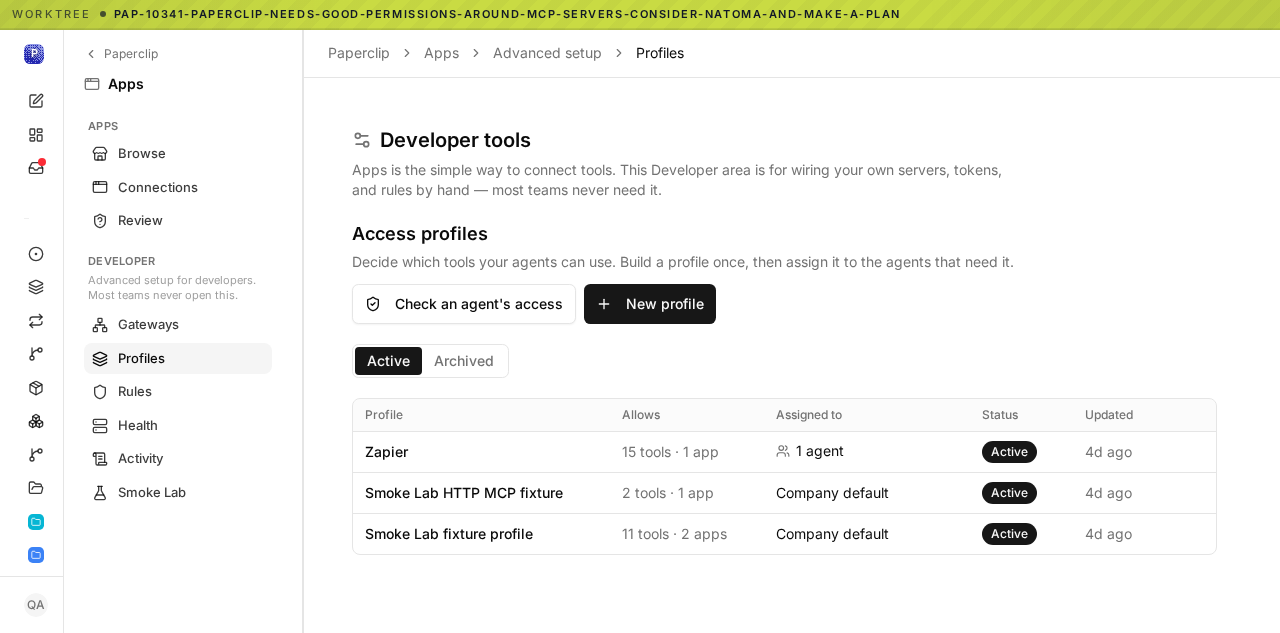 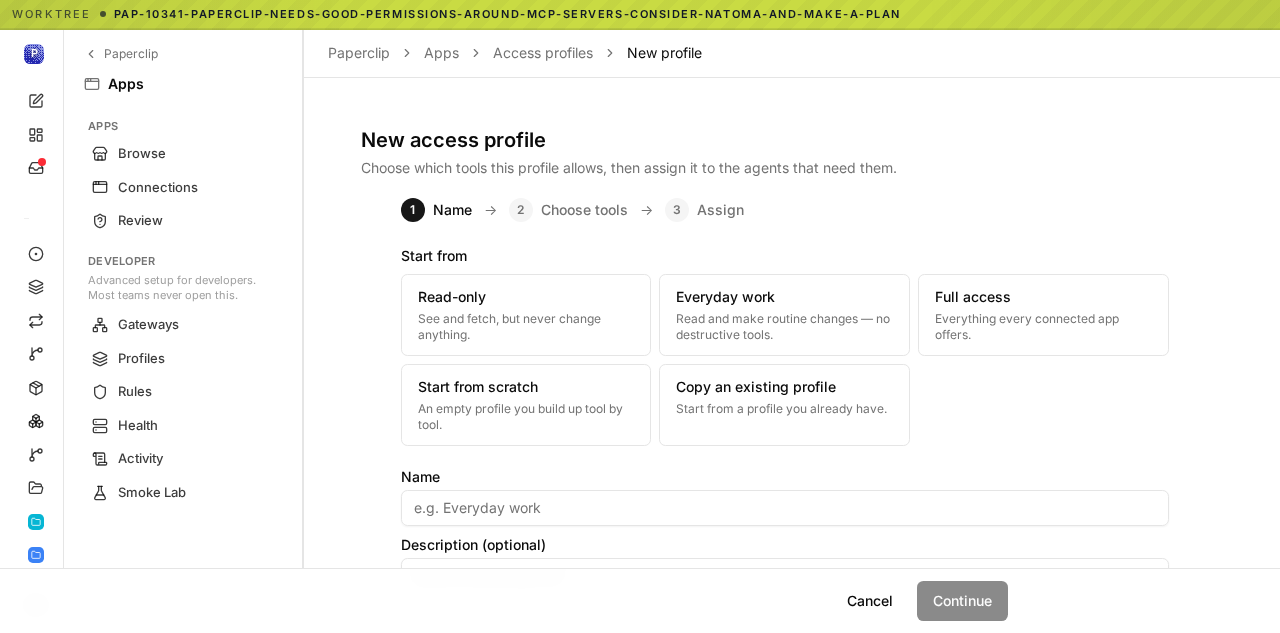 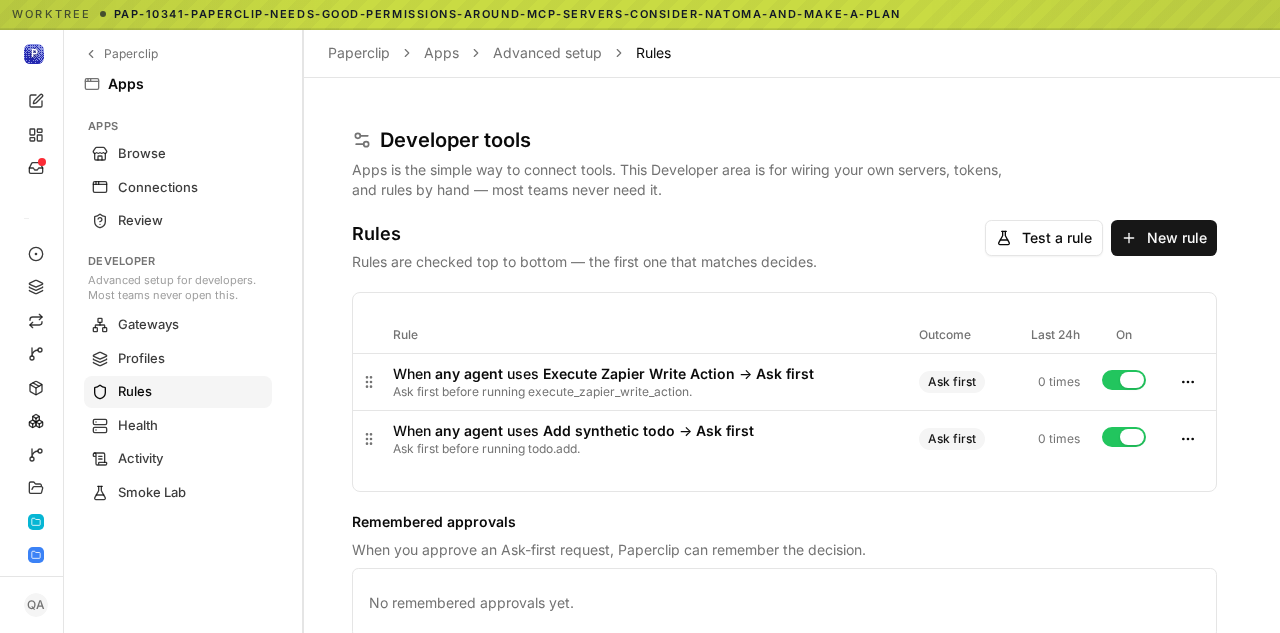 --------- Co-authored-by: Paperclip <noreply@paperclip.ing> |
||
|
DottaandPaperclip
|
8b6a06ee25 |
[codex] Add built-in agents and Reflection Coach bundle (#9206)
## Thinking Path > - Paperclip is the open source app people use to manage AI agents for work. > - Operators need first-party agent capabilities for repeatable company work, not just manually created one-off agents. > - Built-in agents need to behave like normal company-scoped agents while preserving approval gates, permissions, budgets, and audit trails. > - Reflection and coaching work also needs bundled instructions, skill content, and a routine so the feature can be installed and reset predictably. > - The API, database, UI, portability, and tests all need to agree on the built-in lifecycle from not provisioned through setup, approval, ready, paused, and reset. > - This pull request adds built-in agent provisioning and the Reflection Coach bundle end-to-end. > - The benefit is a safer first-party path for Paperclip-managed agents without bypassing the same governance model used for operator-created agents. ## Linked Issues or Issue Description No public GitHub issue was found for this exact built-in agent and Reflection Coach bundle work. Problem/motivation: - Paperclip did not have a first-party built-in agent lifecycle for product-owned agents. - Bundled agent resources such as default instructions, skills, and routines needed managed ownership and reset semantics. - Approval-gated companies needed built-in setup to preserve requested adapter, budget, manager, and permission state through board approval. - The board UI needed clear built-in badges, setup affordances, readiness state, and bundle status without exposing secrets. Proposed solution: - Add a company-scoped built-in agent registry, provisioning/reset/reconcile/status APIs, and Reflection Coach bundled resources. - Track bundled managed resources in the database with idempotent migration behavior. - Reuse existing agent approval, authorization, budget, and activity-log paths instead of creating a bypass. - Add UI setup, badges, gates, bundle panels, and route coverage for built-in agents. Duplicate search: - Searched GitHub PRs for `built-in agents Reflection Coach repo:paperclipai/paperclip`; only this PR was returned. - Searched GitHub issues for the same query; no public issues were returned. ## What Changed - Added built-in agent definitions, lifecycle state derivation, provisioning, reset, reconcile, status, and routine-control routes. - Added the `built_in_managed_resources` migration and schema exports for bundled instructions, skill, and routine ownership. - Added the Reflection Coach built-in bundle with default instructions, skill catalog content, routine template, default permissions, and managed-resource drift handling. - Added approval-aware provisioning behavior that preserves requested adapter config, budgets, manager assignment, and built-in permissions through hire approval. - Added authorization and mutation gates for built-in agent and skill changes, including consented Reflection Coach change paths. - Added UI surfaces for built-in agent setup, roster/detail badges, readiness gates, bundle status, routine controls, and route filtering. - Added company import/export and validator coverage for built-in managed resources and low-trust/red-team presets. - Addressed Greptile follow-ups for pending approval reconciliation, consent-gate error propagation, config-read authorization fallback, approval-path manager preservation, and non-model adapter provisioning. ## Verification Local verification: - `git diff --check public/master..HEAD` passed. - `pnpm check:token-gates` passed with all gates clean. - `pnpm exec vitest run ui/src/components/ConfigureBuiltInAgentModal.test.tsx` passed: 1 file, 4 tests. - `pnpm exec vitest run ui/src/components/EntityRow.test.tsx ui/src/pages/Agents.test.tsx ui/src/components/BuiltInAgentGate.test.tsx ui/src/components/ConfigureBuiltInAgentModal.test.tsx ui/src/components/BuiltInBundlePanel.test.tsx ui/src/pages/InstanceExperimentalSettings.test.tsx ui/src/pages/Routines.test.tsx` passed: 7 files, 64 tests. - `pnpm --filter @paperclipai/server exec vitest run src/__tests__/built-in-agents.test.ts src/__tests__/authorization-service.test.ts src/__tests__/company-skills-routes.test.ts` passed: 3 files, 91 tests. - `pnpm --filter @paperclipai/db check:migrations` passed. - `pnpm -r typecheck` passed after the rebase; `pnpm --filter ui typecheck` passed after the final UI review fix. Remote verification on latest head `1c61f693a4ec881d739022b0e75a8ca8bf8c2cd8`: - Merge state: `CLEAN`. - Greptile: `5/5`, zero unresolved Greptile threads. - PR check rollup: all checks successful, neutral, or skipped as expected. - Passing gates include Build, Typecheck + Release Registry, all server shards, all workspace shards, all serialized server suites, e2e, Canary Dry Run, policy, review, verify, Socket, Superagent, and Snyk. ## Risks - This adds a new managed-resource table and migration; the migration uses idempotent create/add/index guards and passed migration safety checks. - Built-in agent provisioning touches approval and authorization paths; tests cover pending approval preservation, stale retry rejection, consent gates, and config-read fallback behavior. - Reflection Coach creates managed instructions, skill, and routine resources; drift/reset behavior is covered by service tests and redacted API responses. - Non-model adapter setup now provisions a `needs_setup` built-in row before command/endpoint fields are complete; this matches the server lifecycle and is covered by the setup modal regression test. ## Model Used OpenAI Codex coding agent based on GPT-5. Exact hosted model ID, context-window size, and reasoning-mode labels are not exposed in this runtime; tool use, shell execution, GitHub CLI/API access, and local code editing were enabled. ## Checklist - [x] I have included a thinking path that traces from project context to this change - [x] I have specified the model used (with version and capability details) - [x] I have checked ROADMAP.md and confirmed this PR does not duplicate planned core work - [x] I have searched GitHub for duplicate or related PRs and linked them above - [x] I have either (a) linked existing issues with `Fixes: #` / `Closes #` / `Refs #` OR (b) described the issue in-PR following the relevant issue template - [x] I have not referenced internal/instance-local Paperclip issues or links (only public GitHub `#NNN` / `github.com/paperclipai/paperclip` URLs) - [x] My branch name describes the change (e.g. `docs/...`, `fix/...`) and contains no internal Paperclip ticket id or instance-derived details - [x] I have run tests locally and they pass - [x] I have added or updated tests where applicable - [x] I have updated relevant documentation to reflect my changes - [x] I have considered and documented any risks above - [x] All Paperclip CI gates are green - [x] Greptile is 5/5 with no open P2s, recommendations, or follow-ups - [x] I will address all Greptile and reviewer comments before requesting merge --------- Co-authored-by: Paperclip <noreply@paperclip.ing> |
||
|
ForgottenandClaude Opus 4.6
|
0d436911cd |
Polish UI components and rework AgentConfigForm
Major AgentConfigForm rework with improved adapter configuration fields and layout. Refine sidebar, breadcrumbs, and card/tab components for visual consistency. Clean up page layouts across Activity, Agents, Approvals, Costs, Dashboard, Goals, Inbox, Issues, Org, and Projects pages. Minor heartbeat-run CLI fix. Co-Authored-By: Claude Opus 4.6 <noreply@anthropic.com> |
||
|
ForgottenandClaude Opus 4.6
|
d912670f72 |
Polish UI: enhance dialogs, command palette, and page layouts
Expand NewIssueDialog with richer form fields. Add NewProjectDialog. Enhance CommandPalette with more actions and search. Improve CompanySwitcher, EmptyState, and IssueProperties. Flesh out Activity, Companies, Dashboard, and Inbox pages with real content and layouts. Refine sidebar, routing, and dialog context. CSS tweaks for dark theme. Co-Authored-By: Claude Opus 4.6 <noreply@anthropic.com> |
||
|
ForgottenandClaude Opus 4.6
|
fad1bd27ce |
Add shared UI primitives, contexts, and reusable components
Add shadcn components: avatar, breadcrumb, checkbox, collapsible, command, dialog, dropdown-menu, label, popover, scroll-area, sheet, skeleton, tabs, textarea, tooltip. Add shared components: BreadcrumbBar, CommandPalette, CompanySwitcher, CommentThread, EmptyState, EntityRow, FilterBar, InlineEditor, MetricCard, PageSkeleton, PriorityIcon, PropertiesPanel, StatusIcon, SidebarNavItem/Section. Add contexts for breadcrumbs, dialogs, and side panels. Add keyboard shortcut hook and utility helpers. Update layout, sidebar, and main app shell. Co-Authored-By: Claude Opus 4.6 <noreply@anthropic.com> |


