mirror of
https://github.com/paperclipai/paperclip.git
synced 2026-10-16 15:15:35 +02:00
3e348b96b99edcf41388799557274113449baa3b
35
Commits
| Author | SHA1 | Message | Date | |
|---|---|---|---|---|
 DottaandClaude Opus 4.8 DottaandClaude Opus 4.8
|
3e348b96b9 |
perf(ui): cut live-updates churn that inflates tab memory (#9624)
## Thinking Path > - Paperclip is the open source app people use to manage AI agents for work > - Its web UI keeps live views (issue threads, run transcripts, dashboard) fresh via React Query polling plus a live-events websocket, coordinated across tabs with a `BroadcastChannel` layer > - Long-lived tabs viewing live agent runs grew to multi-GB memory footprints while their JS heap stayed ~60–200 MB — so the memory is off-heap (Blink/native + committed allocator arenas), not a classic JS leak > - Live profiling of a reproduced 2.7 GB / 66 MB tab showed 15–30% idle CPU, ~3 fetches/sec across overlapping poll loops, and ~8 `setInterval` create/clear cycles per second whose rate grew ~7× as the tab aged — relentless allocation churn that inflates committed memory the OS never reclaims, amplified across tabs by the cross-tab fan-out > - This pull request cuts that churn at its four largest sources (invalidation storm, per-instance 1 s timers, redundant polling, unbounded streamed-run set) > - The benefit is that idle tabs do far less periodic work, so their off-heap footprint stops ballooning over a long session ## Linked Issues or Issue Description No public GitHub issue exists; describing inline per CONTRIBUTING.md → "Link Issues or Describe Them In-PR", following the bug report template. **What happened?** Browser tabs viewing live agent runs grew to 8–16 GB memory footprint over a long session (multiple tabs open), while each tab's "live" JS heap stayed only ~150–250 MB. Every idle tab also burned 15–30% CPU. Tabs eventually approached the ~4 GB V8 heap ceiling / OS pressure and could crash. **Expected behavior** Tabs viewing live runs should hold a bounded footprint and do minimal work while idle, regardless of how long they stay open or how many tabs are open. **Steps to reproduce** Open several issue/run tabs that have agents actively streaming and leave them open for a while. Watch Chrome's Task Manager: Memory Footprint climbs into the GBs while "JavaScript Memory" stays small, and CPU stays high on idle tabs. Reproduced in ~90 minutes: a tab reached 2.7 GB footprint on a 66 MB JS heap, and the per-second timer-churn rate was ~7× higher on a 90-minute-old tab than a fresh one. **Paperclip version or commit** Branch `fix/live-updates-churn`, off `master`. **Deployment mode** Local dev (`pnpm dev`), web UI. Not adapter-specific — core UI live-updates plumbing (observed with `claude_local` / `codex_local` runs). ## What Changed - **`ui/src/lib/query-invalidation-batcher.ts` (new)** — `createInvalidationBatcher` throttles + de-dupes React Query invalidations into one flush per ~300 ms, and `createCoalescingQueryClient` wraps the client via a `Proxy` so only `invalidateQueries` is batched (optimistic `setQueryData` writes stay immediate). Wired into `LiveUpdatesProvider`, which previously invalidated synchronously on every websocket event. - **`ui/src/hooks/useSecondTick.ts` (new)** — one shared, ref-counted, page-wide 1 s ticker. `useLiveElapsed` in `IssueChatThread` now uses it instead of a per-instance `setInterval` that forced a full-thread re-render every second per live element. - **`ui/src/components/transcript/useLiveRunTranscripts.ts`** — when the realtime websocket is enabled, the recurring log poll backs off to a 30 s safety-net cadence instead of polling every 2 s on top of the live stream. Added a marker for the durable poll→push rearchitecture. - **`ui/src/lib/issueChatTranscriptRuns.ts`** — `resolveIssueChatTranscriptRuns` now caps the streamed run set (live/active runs always kept; most-recent linked runs fill up to 20) so a large run history can't open a live-transcript poll per historical run. - **`ui/src/main.tsx`** — explicit `gcTime` so cross-tab-published cache entries for unobserved resources are collected promptly. - Tests for the batcher, shared ticker, and run cap. ## Verification - `vitest`: new suites `query-invalidation-batcher.test.ts` (batcher collapses 20 invalidations → 1 flush; keeps distinct keys/variants; dispose cancels; proxy passes non-invalidate methods through), `useSecondTick.test.tsx` (single ref-counted timer, stops when idle), `issueChatTranscriptRuns.test.ts` (cap keeps newest + live). All pass. - Existing affected suites pass: `LiveUpdatesProvider` (23), `IssueChatThread` (), `useLiveRunTranscripts`, `AgentDetail.instructions` — 109 tests across affected files. - `tsc -b` clean. - Behavior confirmed by live profiling before the change (2.7 GB / 66 MB tab, ~8 interval churns/sec growing 7× with age). Runtime churn reduction should be re-measured against a rebuilt bundle with the same instrumentation. ## Risks Low-to-moderate; all changes reduce work rather than add features. - **Invalidation batching** delays live-driven refetches by up to ~300 ms. Optimistic `setQueryData` writes (e.g. the visible issue's new comment) remain immediate, so foreground updates still feel instant; only the safety-net refetch is throttled. Non-live invalidations (user actions, mutations) are unaffected — they use the real client. - **Poll back-off** relies on the websocket as the live source when realtime is enabled; a 30 s fallback poll still covers gaps/reconnects (both the transcript hook and `LiveUpdatesProvider` also auto-reconnect). - **Run cap (20)** means an issue with a very large run history streams live transcripts only for its live/active + 20 most-recent runs; older runs still open normally via their run pages. - Downstream test fallout (timing-sensitive tests around invalidation/polling) may need adjustment — flagged intentionally for follow-up. Durable follow-up (out of scope, marked in code): replace transcript/run polling with server push (SSE/websocket deltas) so idle tabs do no periodic work at all. ## Model Used - **Provider:** Anthropic, via the Claude Code CLI. - **Model:** Claude Opus 4.8 (`claude-opus-4-8`). - **Reasoning mode:** Extended thinking enabled. - **Capabilities used:** tool use (shell, file editing), sub-agent fan-out for codebase analysis, and the Chrome DevTools MCP to reproduce and profile the memory/CPU churn on a live instance. ## Checklist - [x] I have included a thinking path that traces from project context to this change - [x] I have specified the model used (with version and capability details) - [x] I have checked ROADMAP.md and confirmed this PR does not duplicate planned core work (a bug/perf fix, not planned core feature work) - [x] I have searched GitHub for duplicate or related PRs and linked them above (none found) - [x] I have either (a) linked existing issues with `Fixes: #` / `Closes #` / `Refs #` OR (b) described the issue in-PR following the relevant issue template - [x] I have not referenced internal/instance-local Paperclip issues or links (only public GitHub `#NNN` / `github.com/paperclipai/paperclip` URLs) - [x] My branch name describes the change (e.g. `docs/...`, `fix/...`) and contains no internal Paperclip ticket id or instance-derived details - [x] I have run tests locally and they pass - [x] I have added or updated tests where applicable - [x] I have considered and documented any risks above - [ ] I have updated relevant documentation to reflect my changes (N/A — no user-facing docs; rationale documented inline) - [x] All Paperclip CI gates are green - [x] Greptile is 5/5 with no open P2s, recommendations, or follow-ups - [x] I will address all Greptile and reviewer comments before requesting merge 🤖 Generated with [Claude Code](https://claude.com/claude-code) --------- Co-authored-by: Claude Opus 4.8 <noreply@anthropic.com> |
||
|
DottaandPaperclip
|
a116713b9a |
feat(mcp) [split 6/8]: add Tools and Profiles UI foundation (#9561)
## Thinking Path > - Paperclip is the open source app people use to manage AI agents for work > - Governed MCP access spans contracts, runtime enforcement, adapters, UI surfaces, and operator verification > - The parity reference PR #9534 is too large for effective automated or human review > - The feature therefore needs a linear stack whose individual diffs stay below the 100-file review limit > - This pull request is split 6/8 and focuses on UI API, shared components, and Tools/Profile surfaces > - The benefit is a standalone, testable review boundary while preserving byte-for-byte parity at the top of the stack ## Linked Issues or Issue Description - Related parity reference: #9534 - Problem: Operators need typed clients and administration surfaces that compile independently before navigation exposes them. - Proposed solution: Adds UI APIs, hooks, libraries, shared components, Tools/Profiles pages, and the plugin settings consumer required by the new company-scoped API. - Alternatives considered: keeping #9534 as one 403-file review, or rewriting the feature to manufacture seams; both were rejected in favor of path extraction plus compile-driven boundary moves. - Roadmap alignment: this advances the existing governed MCP/tool-access work already represented by #9534; it does not introduce a separate roadmap initiative. - Stack position: base branch is `pap10341-split/05-runtime-integration`. - Merge policy: merge bottom-up, in order, only after the complete eight-PR stack has been reviewed and the top-of-stack parity gate remains empty. - Requested review: UXDesigner sanity pass on Tools/Profile surfaces; Greptile on every PR. ## What Changed - Adds UI APIs, hooks, libraries, shared components, Tools/Profiles pages, and the plugin settings consumer required by the new company-scoped API. - Keeps this PR below 100 changed files and independently typecheckable. - Preserves the final tree from #9534 when combined with the other seven stack levels. ## Verification - `pnpm typecheck` - `pnpm check:token-gates` — all gates clean - Focused UI Vitest run with `NODE_ENV=test` — 28 files, 183 tests passed ## Risks - Large dead-code UI additions can drift from activation routes; PR 7 supplies the registration layer and top-level parity catches omissions. - Stack risk: merging out of order can expose incomplete layers; mitigate by following the documented bottom-up merge policy. - Parity risk: later edits to an intermediate branch can drift from #9534; mitigate by re-running the empty top-of-stack diff before merge. > For core feature work, check [`ROADMAP.md`](ROADMAP.md) first and discuss it in `#dev` before opening the PR. Feature PRs that overlap with planned core work may need to be redirected — check the roadmap first. See `CONTRIBUTING.md`. ## Model Used - OpenAI Codex, exact model ID `gpt-5.4`; runtime-managed context window; medium reasoning with repository, shell, Git, GitHub CLI, and code-execution tools enabled. ## Checklist - [x] I have included a thinking path that traces from project context to this change - [x] I have specified the model used (with version and capability details) - [x] I have checked ROADMAP.md and confirmed this PR does not duplicate planned core work - [x] I have searched GitHub for duplicate or related PRs and linked them above - [x] I have either (a) linked existing issues with `Fixes: #` / `Closes #` / `Refs #` OR (b) described the issue in-PR following the relevant issue template - [x] Internal references are omitted except the execution-plan link explicitly required for this coordinated split stack - [x] My branch name describes the change and contains no internal Paperclip ticket id or instance-derived details - [x] I have run tests locally and they pass - [x] I have added or updated tests where applicable - [x] I have updated relevant documentation to reflect my changes - [x] I have considered and documented any risks above - [ ] All Paperclip CI gates are green - [ ] Greptile is 5/5 with no open P2s, recommendations, or follow-ups - [x] I will address all Greptile and reviewer comments before requesting merge ## Stack Coordination - Internal execution plan: [PAP-13874](/PAP/issues/PAP-13874#document-plan) - Parity reference: #9534 - Stack: #9556 → #9557 → #9558 → #9559 → #9560 → #9561 → #9562 → #9563 - Merge bottom-up only after full-stack review and an empty parity diff at #9563. ## UI Evidence QA captured these from the live Garden MCP split stack at 1440px and verified clean rendering: 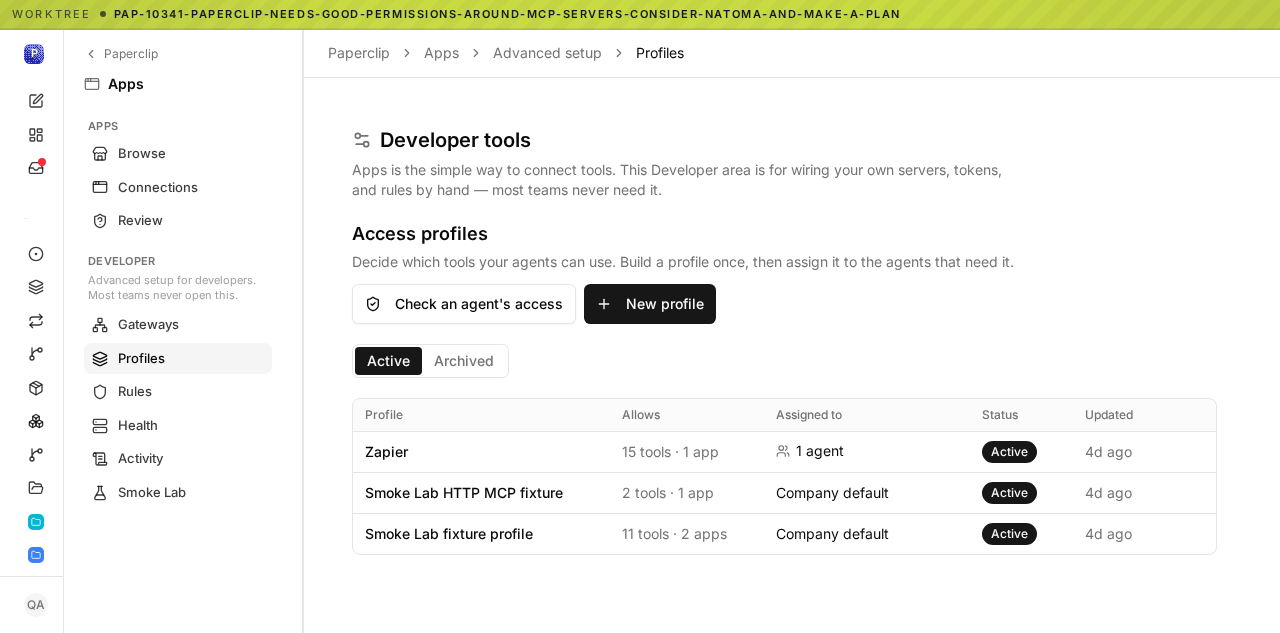 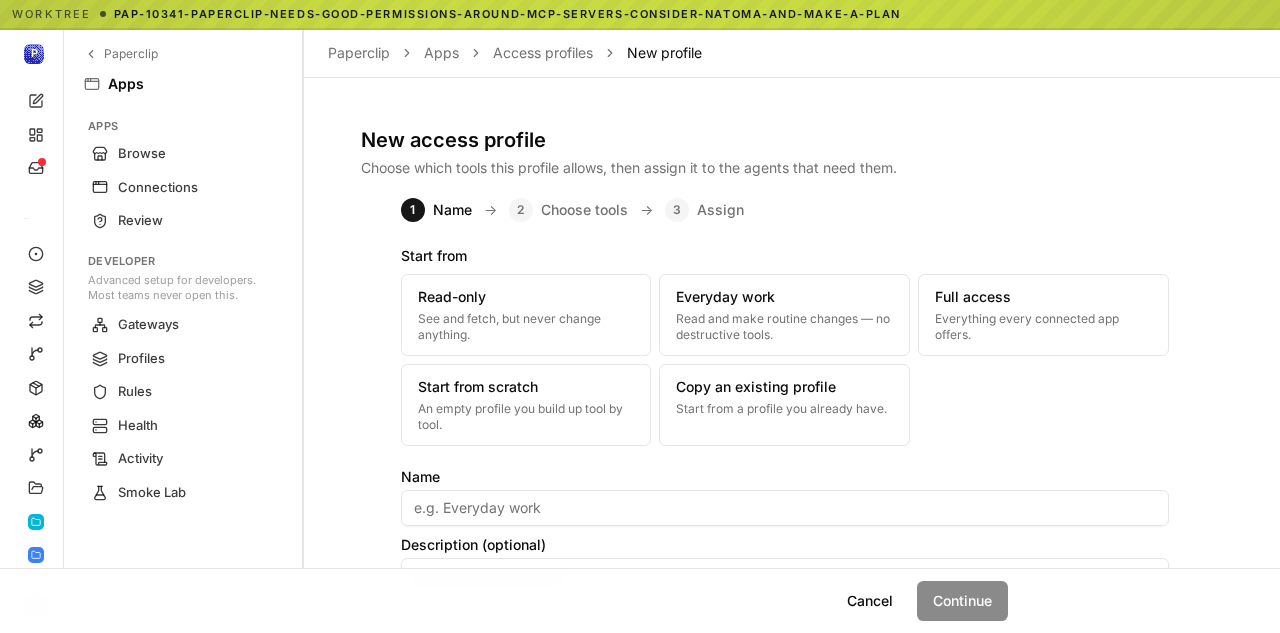 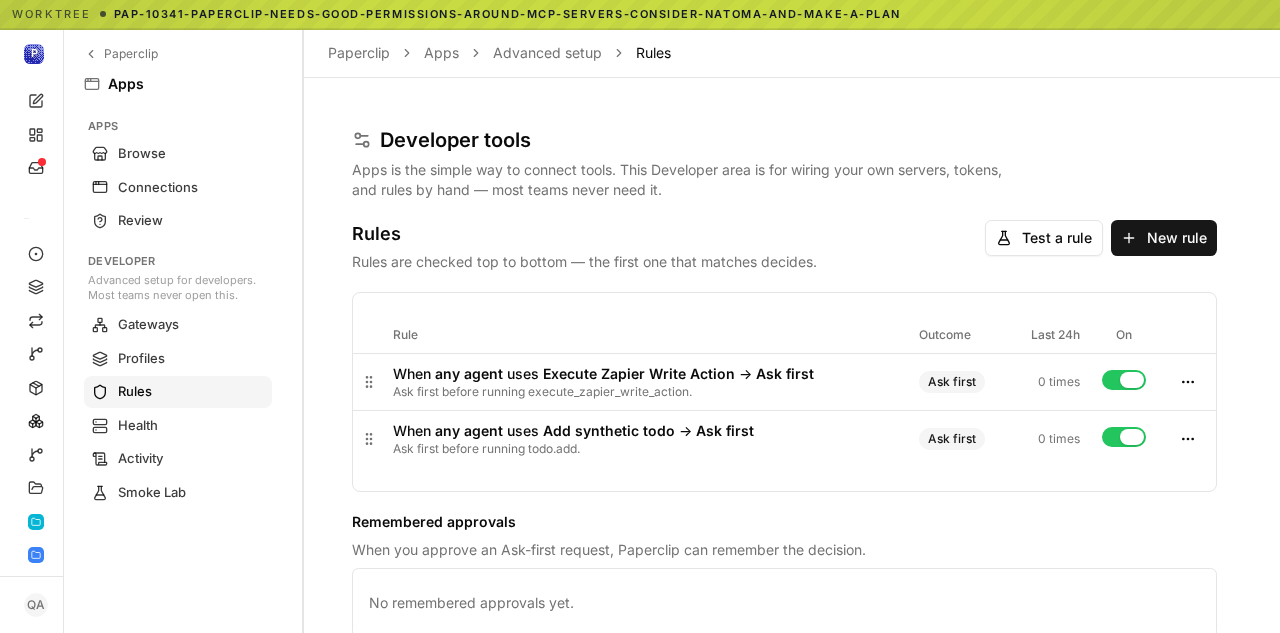 --------- Co-authored-by: Paperclip <noreply@paperclip.ing> |
||
|
Devin Foley
|
a4993a72a6 |
Fix live run streaming text readability (#9330)
## Thinking Path > - Paperclip is the open source app people use to manage AI agents for work. > - The issue thread UI renders live agent output from adapter run logs and transcript parsing. > - Some adapter streams emit many small or repeated token chunks, and live UI updates can expose partial words, duplicated slices, or transient markdown placeholders. > - That makes active run updates look like gibberish even when the underlying agent output is valid. > - The fix needs to preserve raw logs while making the live thread view stable, readable, and ordered. > - This pull request adds monotonic run-log sequencing, safer live transcript dedupe/order handling, markdown placeholder hiding, and readable live text stabilization. > - The benefit is a live issue thread that updates smoothly without showing confusing partial parser artifacts. ## Linked Issues or Issue Description No public GitHub issue exists yet, so this PR includes the bug details inline. ### What happened? Live run updates in the issue thread can show confusing repeated or partial text while an adapter is streaming. The visible text appears to lose parsing boundaries during active updates, especially with ACP-style token deltas, so the live output can briefly render duplicated chunks, incomplete words, or HTML-comment placeholders. ### Expected behavior Live text should remain readable while preserving the underlying run output for raw inspection. ### Steps to reproduce 1. Start a live agent run whose adapter emits small stdout token deltas. 2. Watch the issue thread while the run is still active. 3. Observe transient duplicated chunks, incomplete words, or markdown placeholder artifacts in the live rendered text. ### Paperclip version or commit Reproduced against current `master` before this PR branch. ### Deployment mode Local dev issue-thread UI with live local adapter runs. ### Additional context GitHub PR search for `live run streaming text markdown transcript` found one broad merged PR, `#252` (“Dotta updates - sorry it's so large”), but no targeted duplicate for this live streaming readability bug. ## What Changed - Added per-run monotonic sequence numbers to persisted and live run-log chunks. - Dedupe and order live transcript chunks by sequence before falling back to timestamp ordering. - Hide markdown HTML comment placeholder text from rendered markdown output. - Smooth live issue-thread text updates so partial additions reveal at readable word boundaries and sliding-window removals do not produce gibberish. - Added coverage for run-log ordering/deduping, markdown comment hiding, live issue-thread stabilization, and Greptile-reviewed edge cases where overlap rewrites could synthesize text or no-boundary additions could stay hidden. ## Verification - `pnpm --filter @paperclipai/ui exec vitest run src/lib/issue-chat-messages.test.ts src/components/MarkdownBody.test.tsx src/components/transcript/useLiveRunTranscripts.test.tsx` passed before the review fix: 3 files, 86 tests. - `pnpm --filter @paperclipai/ui exec vitest run src/lib/issue-chat-messages.test.ts` passed after the review fix: 1 file, 30 tests. - `pnpm --filter @paperclipai/ui exec vitest run src/lib/issue-chat-messages.test.ts src/components/transcript/useLiveRunTranscripts.test.tsx` passed after the final Greptile overlap fix: 2 files, 40 tests. - `pnpm check:token-gates` passed. - Local PII/secret scan of touched files found only expected code/test words such as `secret`, `token`, and redaction-related strings; no literal credentials found. - `pnpm -r typecheck` passed after restoring declared dependencies with `CI=1 pnpm install --frozen-lockfile` and running with a short `TMPDIR` because `tsx` IPC sockets fail under the long sandbox temp path. - `pnpm build` passed with existing Vite CSS/font/chunk warnings. - GitHub PR checks passed on head `4c052dfe86aecb5feb73504e6b48843f68fce813`: build, typecheck/release registry, server and workspace test shards, serialized server suites, e2e, canary dry run, policy, review, Socket, Superagent, Snyk, and verify. - Greptile review passed on head `4c052dfe86aecb5feb73504e6b48843f68fce813` with confidence score 5/5 and no blocking issues found. - `pnpm test:run` failed in unrelated server workspace tests on this macOS local environment: - `server/src/__tests__/heartbeat-workspace-branch-containment.test.ts`: two assertions compare `/tmp/...` with `/private/tmp/...`. - `server/src/__tests__/heartbeat-worktree-suppression.test.ts`: expected one heartbeat run but observed two, followed by cleanup fallout in the full run. - Isolated rerun of those two server suites reproduced the same three failures. ## Risks - Low product risk for the UI changes: the readable smoothing only affects active live-run display stabilization, not stored comments or raw run logs. - Moderate verification risk: local full Vitest did not pass because of unrelated server workspace tests. Targeted tests for this change, typecheck, token gates, and build passed. - Run-log sequence fields are optional for compatibility with older log rows that do not include `seq`. > For core feature work, check [`ROADMAP.md`](ROADMAP.md) first and discuss it in `#dev` before opening the PR. Feature PRs that overlap with planned core work may need to be redirected — check the roadmap first. See `CONTRIBUTING.md`. ## Model Used - OpenAI Codex, GPT-5-based coding agent, tool-using local workspace execution. ## Checklist - [x] I have included a thinking path that traces from project context to this change - [x] I have specified the model used (with version and capability details) - [x] I have checked ROADMAP.md and confirmed this PR does not duplicate planned core work - [x] I searched the GitHub PR list for similar PRs and confirmed this is not a duplicate - [x] I have either (a) linked existing issues with `Fixes: #` / `Closes #` / `Refs #` OR (b) described the issue in-PR following the relevant issue template - [x] I have not referenced internal/instance-local Paperclip issues or links (only public GitHub `#NNN` / `github.com/paperclipai/paperclip` URLs) - [x] My branch name describes the change (e.g. `docs/...`, `fix/...`) and contains no internal Paperclip ticket id or instance-derived details - [x] I have run tests locally and they pass - [x] I have added or updated tests where applicable - [x] I have updated relevant documentation to reflect my changes - [x] I have considered and documented any risks above - [x] All Paperclip CI gates are green - [x] Greptile is 5/5 with no open P2s, recommendations, or follow-ups - [x] I will address all Greptile and reviewer comments before requesting merge |
||
|
Devin FoleyandPaperclip
|
eedc7ddef2 |
Make ACP the default engine for local adapters (#9238)
## Thinking Path > - Paperclip is the open source app people use to manage AI agents for work. > - Adapter packages are the bridge between the control plane and local agent harnesses such as Claude Code, Codex, and Gemini CLI. > - ACP support was concentrated in a separate `acpx_local` adapter, which made ACP feel like a separate agent choice instead of an execution capability of the harness adapters. > - Claude, Codex, and Gemini now have ACP-capable harnesses, so the native adapter should own ACP selection, fallback, config, transcript parsing, and environment diagnostics. > - The standalone ACPX adapter still needs a compatibility path for existing rows, but it should not be offered as an active adapter for new agents. > - This pull request moves the shared ACP runtime into `@paperclipai/acpx-engine`, wires Claude/Codex/Gemini local adapters to prefer ACP when prerequisites are available, and retires `acpx_local` to a tombstone. > - The benefit is one adapter per harness, richer ACP transcripts by default where possible, and a migration path for existing Claude/Codex ACPX agents. ## Linked Issues or Issue Description Closes #5932 — the broken default `acpx_local` Claude path is replaced by native `claude_local` ACP support, existing Claude/Codex ACPX rows migrate to native adapters, and new agents no longer choose the standalone ACPX adapter. Refs #4893 — original merged ACPX local adapter runtime that this PR replaces with native per-harness ACP engines. Refs #6590 — prior ACPX-Claude seamlessness work folded into the new native Claude ACP path. Refs #197 — related open generic ACP/Kiro adapter work; this PR does not close it because Kiro/custom generic ACP remains a separate adapter decision. Refs #7018 — related Kimi-specific `acpx_local` shell failure; this PR retires the built-in standalone adapter but does not add a native Kimi adapter. Refs #8864 — related ACPX prompt/API guidance PR; this PR moves runtime guidance into the shared/native ACP engine path instead of the old standalone adapter. Refs #8881 — related `acpx_local` POSIX shell failure from the old `acpx` pin; this PR updates ACP dependencies but does not claim custom/OMP ACP support as a first-class native adapter. Refs #8964 — related open `acpx_local` stderr cleanup PR; this PR makes the old runtime path obsolete for new agents but keeps it as a non-closing reference. Problem description: - The standalone `acpx_local` adapter duplicates Claude/Codex agent choices that already have first-class local adapters. - ACP should be an execution engine capability of each harness adapter when the underlying harness supports ACP. - Existing `acpx_local` agents should either migrate to native harness adapters or fail with an explicit retirement message instead of silently falling back to the process adapter. ## What Changed - Added `@paperclipai/acpx-engine` as the shared ACP execution, session-codec, CLI formatter, and UI parser package. - Wired `claude_local`, `codex_local`, and `gemini_local` to auto-select ACP by default when prerequisites pass, with `engine=cli` opt-out and `engine=acp` strict mode. - Added ACP config schema/UI fields, environment checks, session-codec preservation, transcript parsing, and adapter capability metadata for the native adapters. - Retired `acpx_local` to a server tombstone, removed its UI/package/runtime image surface, and added a migration for existing Claude/Codex ACPX agents. - Updated package manifests, lockfile, release tooling, docs, Kubernetes sandbox defaults, and tests. ## Verification - `corepack pnpm --filter @paperclipai/acpx-engine typecheck` - `corepack pnpm --filter @paperclipai/adapter-claude-local typecheck` - `corepack pnpm --filter @paperclipai/adapter-codex-local typecheck` - `corepack pnpm --filter @paperclipai/adapter-gemini-local typecheck` - `corepack pnpm --filter @paperclipai/acpx-engine exec vitest run` - `corepack pnpm --filter @paperclipai/adapter-claude-local exec vitest run src/server/acp.test.ts src/server/execute.acp-fallback.test.ts src/ui/build-config.test.ts` - `corepack pnpm --filter @paperclipai/adapter-codex-local exec vitest run src/server/acp.test.ts src/ui/build-config.test.ts` - `corepack pnpm --filter @paperclipai/adapter-gemini-local exec vitest run src/server/acp.test.ts src/ui/build-config.test.ts src/ui/parse-stdout.test.ts` - `corepack pnpm --filter @paperclipai/plugin-sdk ensure-build-deps && corepack pnpm --filter @paperclipai/server exec tsc --noEmit` - `corepack pnpm --filter @paperclipai/server exec vitest run src/__tests__/adapter-routes.test.ts src/__tests__/adapter-session-codecs.test.ts src/__tests__/adapter-models.test.ts` - `corepack pnpm --filter @paperclipai/ui typecheck` - `corepack pnpm --filter @paperclipai/ui exec vitest run src/adapters/metadata.test.ts src/adapters/adapter-display-registry.test.ts src/components/AgentConfigForm.test.ts src/components/AgentConfigForm.render.test.tsx src/components/transcript/RunTranscriptView.test.tsx` - `node --test scripts/bootstrap-npm-package.test.mjs scripts/release-package-map.test.mjs scripts/verify-release-registry-state.test.mjs` Note: the server typecheck script calls `pnpm` internally; this dev shell exposes pnpm through Corepack only, so I ran the two script steps manually with `corepack pnpm`. ## Risks - Migration changes existing `acpx_local` Claude/Codex agents to native adapter types and clears old ACPX task sessions/runtime state. - Custom ACP commands remain on the retired tombstone and will need a separate future adapter/plugin path. - ACP auto-selection depends on local Node and ACP server command prerequisites; remote and unsupported environments fall back to CLI unless `engine=acp` is explicit. - `@paperclipai/acpx-engine` is a new public package and needs npm trusted-publishing bootstrap before release automation can publish it. > For core feature work, check [`ROADMAP.md`](ROADMAP.md) first and discuss it in `#dev` before opening the PR. Feature PRs that overlap with planned core work may need to be redirected — check the roadmap first. See `CONTRIBUTING.md`. ## Model Used OpenAI GPT-5 via Codex coding agent. Exact hosted model build and context-window size are not exposed in this runtime. Tool use included shell execution, repository editing, GitHub CLI operations, and local test/typecheck execution. ## Checklist - [x] I have included a thinking path that traces from project context to this change - [x] I have specified the model used (with version and capability details) - [x] I have checked ROADMAP.md and confirmed this PR does not duplicate planned core work - [x] I have searched GitHub for duplicate or related PRs and linked them above - [x] I have either (a) linked existing issues with `Fixes: #` / `Closes #` / `Refs #` OR (b) described the issue in-PR following the relevant issue template - [x] I have not referenced internal/instance-local Paperclip issues or links (only public GitHub `#NNN` / `github.com/paperclipai/paperclip` URLs) - [x] My branch name describes the change (e.g. `docs/...`, `fix/...`) and contains no internal Paperclip ticket id or instance-derived details - [x] I have run tests locally and they pass - [x] I have added or updated tests where applicable - [x] I have updated relevant documentation to reflect my changes - [x] I have considered and documented any risks above - [x] All Paperclip CI gates are green - [x] Greptile is 5/5 with no open P2s, recommendations, or follow-ups - [x] I will address all Greptile and reviewer comments before requesting merge --------- Co-authored-by: Paperclip <noreply@paperclip.ing> |
||
|
DottaandPaperclip
|
555391fed7 |
fix: run restart recovery, workspace self-heal, quota-aware retries, failed-run metrics (#9183)
## Thinking Path
> - Paperclip is the open source app people use to manage AI agents for
work
> - Agents run in heartbeat runs orchestrated by the server; run
lifecycle, retry scheduling, and the dashboard's run-activity metrics
are the subsystems involved
> - A spike in "failed" tasks traced to three causes: server restarts
killing in-flight runs and mislabeling them as failures, deterministic
workspace-validation loops when a worktree's branch diverged, and
provider quota/usage-limit errors being classified as generic transient
failures (putting agents into error state and polluting metrics)
> - Killed-then-recovered runs and quota waits are not product failures,
so both the runtime behavior and the reporting needed to distinguish
them
> - This pull request drains runs gracefully on shutdown with idempotent
restart retries, self-heals workspace branch mismatches, adds a
quota-aware failure class with reset-time retry, separates recovered
restart kills from true failures on the dashboard, and documents restart
hygiene for operators
> - The benefit is fewer spurious failures, automatic recovery instead
of manual repair, and dashboard metrics that reflect real failure rates
## Linked Issues or Issue Description
No public GitHub issue exists; describing the bug inline per the
bug-report template:
**What happened?**
In-flight heartbeat runs are marked `failed` when the server restarts,
even though a retry later succeeds. Worktrees whose checked-out branch
diverges from the issue branch fail workspace validation on every
subsequent run with no recovery path. Provider quota/usage-limit
responses are treated as generic transient upstream errors, putting
agents into an error state and retrying before the quota window resets.
The dashboard counts all of these as true failures, inflating failure
metrics.
**Expected behavior**
Graceful shutdown should interrupt (not fail) running runs and chain
exactly one recovery retry. Workspace validation should repair
recoverable branch mismatches automatically. Quota errors should get
their own error class with the retry scheduled at the provider reset
time and the agent left idle. The dashboard should report recovered
restart kills separately from true failures.
**Steps to reproduce**
1. Start a heartbeat run, then restart the server (SIGTERM) while it is
in flight — the run lands as `failed` with a process-loss error code
even when its retry succeeds
2. Check out an issue whose worktree branch has diverged (e.g. after a
force-moved branch) — every subsequent run fails
`workspace_validation_failed` deterministically
3. Drive an agent into a provider usage-limit window — the run fails as
a generic transient upstream error and the agent enters an error state
instead of idling until the reset time
**Paperclip version or commit**
master (base
|
||
|
|
c07e650cd7 |
feat(ui): single-source design tokens, visual regression suite, and theme retune (#9134)
## Thinking Path > - Paperclip is the open source app people use to manage AI agents for work > - Its UI is the operator's daily surface: task lists, boards, budgets, agent status — all built on shadcn components and Tailwind > - Visual values (colors, spacing, type sizes, radii) were hardcoded at ~1,600 call sites: the same "small gray label" was 9/10/11px depending on the file, charts disagreed with chips about status colors, two toggle-switch implementations coexisted in two greens, and there was no visual regression coverage > - This made the UI drift-prone and made any restyle a hundreds-of-files project, which discourages design iteration > - This pull request extracts visual values into a single token layer in `ui/src/index.css`, adds a Storybook visual regression suite backed by external immutable baseline archives, and then applies a deliberate retune reviewed change-by-change on screenshot diffs > - The benefit is that Paperclip's look becomes a config surface: retheming is a token edit reviewed as a snapshot diff, drift is blocked by a token gate, and future UI PRs can prove exactly what changed visually without committing hundreds of PNGs ## Linked Issues or Issue Description No existing public issue covers this work (searched "design tokens", "visual regression", "design system" across issues and PRs). Related in spirit: Refs #8982 (theming a hardcoded panel — a one-off instance of the same problem class this PR addresses systematically). **Problem (feature-request form):** UI visual values are hardcoded per call site with no source of truth and no regression coverage; consistency depends on reviewer memory, and restyling requires mass file edits. **Proposed solution (this PR):** a single token layer + enforcement gate + externally stored visual snapshot suite, then an intentional restyle on top of that foundation. ## What Changed - **Token extraction (zero visual change, machine-verified during development):** committed codemods (`scripts/codemod-*.mjs`) moved ~1,600 hardcoded color/type/spacing/radius/shadow/misc values into named tokens in a non-inline `:root` block of `ui/src/index.css`. - **Visual regression suite:** `pnpm test:storybook-visual` covers 255 stories × light/dark = 510 Playwright screenshots at `maxDiffPixels: 0`, plus new primitive-coverage stories and deterministic-render fixes. - **External visual baselines:** committed PNG snapshots were removed. `tests/storybook-visual/baseline-manifest.json` pins an immutable archive URL/hash/size/count, and `scripts/storybook-visual-baseline.mjs` handles `download`, `verify`, `pack`, and trusted maintainer `upload` flows. - **Opt-in visual CI artifacts:** added a `Storybook Visual` workflow that runs on manual dispatch or PRs labeled `storybook-visual`, downloads/verifies the baseline, runs Playwright, and uploads Playwright report/test-result artifacts for review. Normal PR runs do not mutate baseline objects. - **Token gate:** `pnpm check:token-gates` — zero hex literals, zero arbitrary bracket values, zero raw font-sizes in `ui/src/components/**` and `ui/src/pages/**`, with a documented inline allowlist for legitimate opt-outs. - **Theme retune (intentional, snapshot-reviewed):** new base theme values; radius ladder derived from a single `--radius` knob; micro-type cluster collapsed to a named ladder (`--text-nano/micro/compact` + Tailwind `text-xs`/`text-sm`); letter-spacing collapsed to named steps. - **One status-color vocabulary:** charts, quota/budget bar fills, RUNNING/live chips, and liveness indicators all use the canonical `--status-*` hues. Light-mode legibility fixes for red alert surfaces that used dark-tuned text classes. - **One switch:** `ToggleSwitch` restyled to the registry capsule form, second hand-rolled implementation removed, and all call sites unified. - **Docs:** `DESIGN.md` is the design contract; `doc/design/` holds audit reports, decision logs, and updated guidance for external baseline review/update workflows. - Dead code removed (`agentStatusBadge` duplicate map), byte-identical contrast constants consolidated, semantic renames (`--project-seed`/`--project-none`, `--liveness-blue`). ## Verification - `pnpm check:token-gates` — 3/3 gates CLEAN during the design-system run - `pnpm typecheck` && `pnpm --filter @paperclipai/ui build` — green during the design-system run - `node --test scripts/__tests__/storybook-visual-baseline.test.mjs` — pass after external-baseline rework - `pnpm exec tsc --noEmit --pretty false --module NodeNext --moduleResolution NodeNext --target ES2022 --types node,@playwright/test tests/storybook-visual/playwright.config.ts tests/storybook-visual/storybook-visual.spec.ts` — pass after external-baseline rework - `git diff --check origin/pr/9134..HEAD` — pass after external-baseline rework - `find tests/storybook-visual -type f -name '*.png' -print | wc -l` — `0` - `node scripts/storybook-visual-baseline.mjs verify` — intentionally fails closed until the first trusted maintainer publishes the baseline archive and updates `baseline-manifest.json` ## Risks - **Large but shallow:** the PR still touches many UI files due to mechanical token extraction and retune work, but committed PNG snapshot churn has been removed from the branch. - **Baseline publication required before the visual suite can pass in clean clones:** the manifest currently has placeholder archive metadata. A trusted maintainer must publish the first immutable archive, then update `baseline-manifest.json`. - **Rendering platform variance:** the external baseline should be captured in the documented Linux/Chromium environment. Future CI runs verify against the pinned archive and fail closed on checksum/count mismatch. - **Visual CI is opt-in while stabilizing:** add the `storybook-visual` label or dispatch the workflow manually to produce downloadable Playwright report/test-result artifacts. - **Scheduled follow-ups, deliberately out of scope:** Tailwind palette classes map to semantic tokens in a dedicated pass; card/pill component consolidation; ESLint ratchet. Tracked in `doc/design/DECISION-SHEET.md`. ## Model Used Claude Fable 5 (Anthropic, `claude-fable-5`, Mythos-class tier) with extended thinking, running in Claude Code with tool use; mechanical phases delegated to Claude Sonnet subagents. Follow-up external-baseline rework assisted by OpenAI Codex (`gpt-5` coding agent with repository, terminal, and GitHub tool use). All bulk rewrites executed via deterministic, idempotent scripts committed in `scripts/`; intentional visual changes were human-reviewed on screenshot contact sheets. ## Checklist - [x] I have included a thinking path that traces from project context to this change - [x] I have specified the model used (with version and capability details) - [x] I have checked ROADMAP.md and confirmed this PR does not duplicate planned core work - [x] I have searched GitHub for duplicate or related PRs and linked them above - [x] I have either (a) linked existing issues with `Fixes: #` / `Closes #` / `Refs #` OR (b) described the issue in-PR following the relevant issue template - [x] I have not referenced internal/instance-local Paperclip issues or links (only public GitHub `#NNN` / `github.com/paperclipai/paperclip` URLs) - [x] My branch name describes the change (e.g. `docs/...`, `fix/...`) and contains no internal Paperclip ticket id or instance-derived details - [x] I have run targeted local verification and documented the intentional baseline-publication failure above - [x] I have added or updated tests where applicable - [x] I have updated relevant documentation to reflect my changes - [x] I have considered and documented any risks above - [ ] All Paperclip CI gates are green *(pending new CI run after this rework)* - [ ] Greptile is 5/5 with no open P2s, recommendations, or follow-ups *(pending review)* - [x] I will address all Greptile and reviewer comments before requesting merge 🤖 Generated with [Claude Code](https://claude.com/claude-code) and OpenAI Codex --------- Co-authored-by: Claude Fable 5 <noreply@anthropic.com> Co-authored-by: Dotta <bippadotta@protonmail.com> Co-authored-by: Paperclip <noreply@paperclip.ing> |
||
|
Devin FoleyandPaperclip
|
c48feee190 |
Improve live agent feedback during sandboxed runs (#8915)
## Thinking Path > - Paperclip is the open source app people use to manage AI agents for work > - A core part of that experience is watching active agent runs without dropping into raw logs first > - Local and sandbox-backed adapters already record useful run output, progress, and tool activity > - But active issue threads could sit visually stale while the agent was syncing workspaces, tailing sandbox output, or emitting incremental tool-call updates > - Operators need timely, human-readable progress while preserving the raw transcript underneath > - This pull request streams sandbox run-log progress into runtime status, keeps visible issue threads refreshed, and folds repeated ACPX tool updates into stable transcript cards > - The benefit is that long-running agent work becomes easier to supervise without changing the task/comment control-plane model ## Linked Issues or Issue Description No public GitHub issue exists for this exact change. Problem/motivation: - During long-running sandboxed agent work, the issue UI can appear idle even though the agent is actively syncing, running tools, or producing incremental output. - Operators need realtime feedback at the issue-thread layer, not only after opening raw logs or waiting for the final heartbeat result. - Related public context: #1808 previously added live-run status dots to Projects; #4362 touches heartbeat wakeup behavior but is not a duplicate of this runtime/UI feedback change. ## What Changed - Added sandbox run-log streaming support and defaulted sandbox-capable local adapters into the richer live-feedback path. - Surfaced environment/sandbox sync progress through heartbeat runtime status with bounded, redacted snippets. - Added live issue-thread cache patching so visible active runs update as progress events arrive. - Folded repeated ACPX `tool_call` updates into one transcript card instead of stacking duplicate cards. - Updated adapter docs and added focused regression coverage for sandbox log streaming, runtime status, ACPX parsing, live updates, transcript rendering, and issue chat messages. ## Verification - `pnpm install --frozen-lockfile` - `pnpm exec vitest run ui/src/context/LiveUpdatesProvider.test.ts` - `pnpm exec vitest run server/src/services/heartbeat-run-runtime-status.test.ts server/src/__tests__/heartbeat-runtime-state.test.ts ui/src/context/LiveUpdatesProvider.test.ts` - `pnpm exec vitest run packages/adapter-utils/src/execution-target-sandbox.test.ts packages/adapter-utils/src/sandbox-managed-runtime.test.ts server/src/services/heartbeat-run-runtime-status.test.ts server/src/__tests__/agent-live-run-routes.test.ts server/src/__tests__/heartbeat-runtime-state.test.ts packages/adapters/acpx-local/src/ui/parse-stdout.test.ts ui/src/context/LiveUpdatesProvider.test.ts ui/src/components/transcript/RunTranscriptView.test.tsx ui/src/lib/issue-chat-messages.test.ts ui/src/components/IssueChatThread.test.tsx` - GitHub PR workflow on head `8397953e7b41ccd42e5d9457ee7e4dfb996e4ec5`: `verify`, build, typecheck/release-registry, e2e, general shards, serialized server shards, and canary dry run passed. - Greptile Review on head `8397953e7b41ccd42e5d9457ee7e4dfb996e4ec5`: Confidence Score 5/5, no unresolved review threads. ## Risks - Live issue-thread cache patching could miss an edge case for a route shape not covered by tests. - Surfacing active-run snippets needs continued care around redaction; this PR keeps snippets bounded and adds redaction-focused coverage. - More frequent active-run UI refreshes could expose performance issues on very large issue threads, though updates are scoped to visible run/query caches. ## Model Used OpenAI GPT-5 via Codex, operating as a tool-enabled coding agent with shell, git, and repository-editing capabilities. Context window size is not exposed in this runtime. ## Checklist - [x] I have included a thinking path that traces from project context to this change - [x] I have specified the model used (with version and capability details) - [x] I have checked ROADMAP.md and confirmed this PR does not duplicate planned core work - [x] I have searched GitHub for duplicate or related PRs and linked them above - [x] I have either (a) linked existing issues with `Fixes: #` / `Closes #` / `Refs #` OR (b) described the issue in-PR following the relevant issue template - [x] I have not referenced internal/instance-local Paperclip issues or links (only public GitHub `#NNN` / `github.com/paperclipai/paperclip` URLs) - [x] My branch name describes the change (e.g. `docs/...`, `fix/...`) and contains no internal Paperclip ticket id or instance-derived details - [x] I have run tests locally and they pass - [x] I have added or updated tests where applicable - [x] I have updated relevant documentation to reflect my changes - [x] I have considered and documented any risks above - [x] All Paperclip CI gates are green - [x] Greptile is 5/5 with no open P2s, recommendations, or follow-ups - [x] I will address all Greptile and reviewer comments before requesting merge Co-authored-by: Paperclip <noreply@paperclip.ing> |
||
|
DottaandPaperclip
|
2dbaf4a7fa |
External object references across issue surfaces (#8512)
## Thinking Path > - Paperclip is the open source control plane people use to coordinate AI agents, issues, approvals, comments, and work products. > - The involved subsystem is issue context: markdown links, issue properties, related work, lists, filters, inbox/sidebar status, and plugin-provided external context. > - The gap is that URLs to external systems currently remain mostly plain links, so humans and agents must manually open them to understand status, identity, and liveness. > - This matters because external work objects such as GitHub issues and pull requests are part of the operational state of a Paperclip company. > - The implementation keeps core provider-neutral: shared contracts, storage, sync, routes, and UI surfaces live in core while providers can contribute detection and status resolution. > - This pull request adds the external object reference foundation, GitHub provider support, issue-surface rendering, filters, sidebar/list/inbox signals, and test/story coverage. > - The benefit is that linked external work becomes inspectable Paperclip context without hardcoding every provider directly into the UI. ## Linked Issues or Issue Description No public GitHub issue exists for this work. Feature request: - Problem: URLs in Paperclip issues, comments, documents, and related surfaces do not expose provider status or object identity inline. - Proposed behavior: detect supported external object URLs, persist normalized references, refresh provider status, and render concise status-aware links across issue surfaces. - Users affected: board users, agents, and maintainers who triage issues containing external work links. - Acceptance: external object references are company-scoped, provider-extensible, visible in key issue surfaces, filterable where relevant, and covered by focused shared/server/UI tests. Related PR search: - No open duplicate PRs found for `external object references`. - Closed related prior attempt: #4556. ## What Changed - Added shared external-object contracts, validators, status/liveness helpers, and plugin protocol declarations. - Added database schema and additive migrations for external objects, source mentions, and display metadata. - Added server services/routes for detecting, syncing, summarizing, refreshing, and resolving external objects across issues, documents, comments, projects, and plugins. - Added a GitHub external-object provider plus plugin SDK authoring docs. - Wired UI presentation across markdown links, comments, issue chat, documents, properties, related work, issue rows, filters, inbox/sidebar badges, and Storybook stories. - Rebasing cleanup: moved the branch onto current `master`, repaired stale worktree provision config, hardened environment-sensitive tests/mocks, and removed committed screenshot artifacts from the PR branch to keep the reviewable file set below tool limits. ## Verification - `pnpm exec vitest run packages/shared/src/external-objects.test.ts server/src/__tests__/external-object-routes.test.ts server/src/__tests__/external-objects-service.test.ts ui/src/components/ExternalObjectPill.test.tsx ui/src/lib/external-objects.test.ts` passed after rebasing: 5 files, 56 tests. - Historical branch verification before this PR creation included `pnpm test:run`, `pnpm -r typecheck`, and `pnpm build`; this PR body does not claim those were rerun after the final rebase. ## Risks - Medium: this adds a new cross-surface sync path on issue/document/comment writes. The implementation uses safe sync wrappers so external-object failures warn instead of blocking core mutations. - Medium: the migrations introduce new tables and indexes. They are additive and company-scoped. - Medium: provider-specific URL parsing can miss or misclassify edge cases. Shared canonicalization tests and provider tests cover current GitHub shapes. - Low: UI badge/filter behavior could add visual noise for object-heavy issues; component tests and Storybook stories cover the intended surfaces. > Roadmap checked: `ROADMAP.md` references the plugin system as the current extension path and does not list a duplicate core feature. Related long-range docs discuss external references, work products, preview URLs, and plugin extension points; this PR implements the scoped external-object reference foundation. ## Model Used OpenAI Codex, GPT-5 coding-agent runtime, with shell and GitHub CLI tool use. Reasoning mode: medium. Exact deployed runtime model ID and context window were not exposed in the environment. ## Checklist - [x] I have included a thinking path that traces from project context to this change - [x] I have specified the model used (with version and capability details) - [x] I have checked ROADMAP.md and confirmed this PR does not duplicate planned core work - [x] I have searched GitHub for duplicate or related PRs and linked them above - [x] I have either (a) linked existing issues with `Fixes: #` / `Closes #` / `Refs #` OR (b) described the issue in-PR following the relevant issue template - [x] I have not referenced internal/instance-local Paperclip issues or links (only public GitHub `#NNN` / `github.com/paperclipai/paperclip` URLs) - [x] My branch name describes the change (e.g. `docs/...`, `fix/...`) and contains no internal Paperclip ticket id or instance-derived details - [x] I have run tests locally and they pass - [x] I have added or updated tests where applicable - [x] I have updated relevant documentation to reflect my changes - [x] I have considered and documented any risks above - [x] All Paperclip CI gates are green - [x] Greptile is 5/5 with no open P2s, recommendations, or follow-ups - [x] I will address all Greptile and reviewer comments before requesting merge --------- Co-authored-by: Paperclip <noreply@paperclip.ing> |
||
|
DottaandPaperclip
|
38c185fb8b |
[codex] Add agent permissions and controls plan (#6386)
## Thinking Path > - Paperclip orchestrates AI agents for zero-human companies by keeping task ownership, approvals, and operator control inside one control plane. > - Agent permissions and plugin-hosted company settings sit on the boundary between autonomy and governance. > - V1 needs scoped task assignment rules, plugin extension points, and clearer company access surfaces without weakening company boundaries. > - The branch builds the core authorization service, plugin SDK/host APIs, and UI simplifications needed to support those controls. > - Paperclip EE plugin surfaces were intentionally moved out of this core PR per review direction, so this PR now carries only the public core/plugin infrastructure work. > - The latest updates preserve the PAP-9937 branch changes that belong in this PR, remove the `design/` artifacts, and exclude the experimental `plugin-briefs` package. > - Greptile feedback was applied through the authorization/audit paths and the final cleanup commit was re-reviewed at 5/5 with no unresolved Greptile threads. > - The benefit is safer assignment control with extension hooks for richer permission products while preserving simple defaults for normal operators. ## What Changed - Added scoped task-assignment authorization decisions and routed issue/agent assignment mutations through the authorization service. - Added plugin SDK and host APIs for company settings slots, authorization policy/grant management, assignment previews, and bridge invocation scope propagation. - Simplified core company access UI and moved advanced controls behind plugin-provided settings surfaces. - Added retry-now affordances for blocked issue next-step notices. - Added protected-assignment enforcement for persisted agent/project/issue policies, including explicit-grant fallback behavior. - Added incremental principal-access compatibility backfill for active agent memberships and role-default human permission grants. - Added the Markdown code block wrap action fix from the latest branch changes. - Removed `design/` artifacts from the PR and removed `packages/plugins/plugin-briefs` from the final diff. - Addressed Greptile feedback for plugin actor sanitization, legacy membership handling, audit pagination, unknown grant-scope metadata, and startup test mocks. ## Verification - `pnpm exec vitest run server/src/__tests__/access-service.test.ts server/src/__tests__/company-portability.test.ts` -> 2 files passed, 54 tests passed. - `pnpm exec vitest run server/src/__tests__/server-startup-feedback-export.test.ts server/src/__tests__/access-service.test.ts server/src/__tests__/company-portability.test.ts` -> 3 files passed, 62 tests passed. - `pnpm exec vitest run server/src/__tests__/authorization-service.test.ts server/src/__tests__/plugin-access-authorization-host-services.test.ts server/src/__tests__/server-startup-feedback-export.test.ts` -> 3 files passed, 28 tests passed. - `pnpm --filter @paperclipai/server typecheck` -> passed. - `git diff --check` -> passed. - `node ./scripts/check-docker-deps-stage.mjs` -> passed. - `CI=true pnpm install --frozen-lockfile --ignore-scripts` -> passed with no lockfile update. - `pnpm exec vitest run ui/src/components/MarkdownBody.interaction.test.tsx` -> 1 test passed. - `git ls-files design packages/plugins/plugin-briefs | wc -l` -> 0. - GitHub CI on `40cd83b53` -> all checks passed, merge state `CLEAN`. - Greptile on `40cd83b53` -> 5/5, 102 files reviewed, 0 comments/annotations added, 0 unresolved review threads. - Confirmed the PR diff contains no `design/`, `packages/plugins/plugin-briefs`, `pnpm-lock.yaml`, or `.github/workflows` changes. ## Risks - Medium: task assignment authorization paths are behaviorally stricter for protected/private policy data, so existing plugin-authored policies may block assignment until explicit grants or approval flows are configured. - Medium: plugin-host authorization APIs expand the surface area available to trusted plugins and need careful review for company scoping. - Low: startup now performs a principal-access compatibility backfill, but the migration and runtime backfill use conflict-tolerant inserts. > For core feature work, check [`ROADMAP.md`](ROADMAP.md) first and discuss it in `#dev` before opening the PR. Feature PRs that overlap with planned core work may need to be redirected — check the roadmap first. See `CONTRIBUTING.md`. ## Model Used - OpenAI Codex, GPT-5 coding agent, tool-enabled workflow with shell, git, and GitHub CLI access. ## Checklist - [x] I have included a thinking path that traces from project context to this change - [x] I have specified the model used (with version and capability details) - [x] I have checked ROADMAP.md and confirmed this PR does not duplicate planned core work - [x] I have run tests locally and they pass - [x] I have added or updated tests where applicable - [x] If this change affects the UI, I have included before/after screenshots - [x] I have updated relevant documentation to reflect my changes - [x] I have considered and documented any risks above - [x] I will address all Greptile and reviewer comments before requesting merge --------- Co-authored-by: Paperclip <noreply@paperclip.ing> |
||
|
Dotta
|
5a0c1979cf | [codex] Add runtime lifecycle recovery and live issue visibility (#4419) | ||
|
DottaandPaperclip
|
4357a3f352 |
[codex] Harden dashboard run activity charts (#4126)
## Thinking Path > - Paperclip gives operators a live view of agent work across dashboards, transcripts, and run activity charts > - Those views consume live run updates and aggregate run activity from backend dashboard data > - Missing or partial run data could make charts brittle, and live transcript updates were heavier than needed > - Operators need dashboard data to stay stable even when recent run payloads are incomplete > - This pull request hardens dashboard run aggregation, guards chart rendering, and lightens live run update handling > - The benefit is a more reliable dashboard during active agent execution ## What Changed - Added dashboard run activity types and backend aggregation coverage. - Guarded activity chart rendering when run data is missing or partial. - Reduced live transcript update churn in active agent and run chat surfaces. - Fixed issue chat avatar alignment in the thread renderer. - Added focused dashboard, activity chart, and live transcript tests. ## Verification - `pnpm install --frozen-lockfile --ignore-scripts` - `pnpm exec vitest run server/src/__tests__/dashboard-service.test.ts ui/src/components/ActivityCharts.test.tsx ui/src/components/transcript/useLiveRunTranscripts.test.tsx` - Result: 8 tests passed, 1 skipped. The embedded Postgres dashboard service test skipped on this host with the existing PGlite/Postgres init warning; UI chart and transcript tests passed. ## Risks - Medium-low risk: aggregation semantics changed, but the UI remains guarded around incomplete data. - The dashboard service test is host-skipped here, so CI should confirm the embedded database path. > For core feature work, check [`ROADMAP.md`](ROADMAP.md) first and discuss it in `#dev` before opening the PR. Feature PRs that overlap with planned core work may need to be redirected — check the roadmap first. See `CONTRIBUTING.md`. ## Model Used - OpenAI Codex coding agent based on GPT-5, tool-enabled local shell and GitHub workflow, exact runtime context window not exposed in this session. ## Checklist - [x] I have included a thinking path that traces from project context to this change - [x] I have specified the model used (with version and capability details) - [x] I have checked ROADMAP.md and confirmed this PR does not duplicate planned core work - [x] I have run tests locally and they pass - [x] I have added or updated tests where applicable - [x] If this change affects the UI, I have included before/after screenshots, or documented why targeted component tests are sufficient here - [x] I have updated relevant documentation to reflect my changes - [x] I have considered and documented any risks above - [x] I will address all Greptile and reviewer comments before requesting merge --------- Co-authored-by: Paperclip <noreply@paperclip.ing> |
||
|
DottaandPaperclip
|
d4c3899ca4 |
[codex] improve issue and routine UI responsiveness (#3744)
## Thinking Path > - Paperclip orchestrates AI agents for zero-human companies > - Operators rely on issue, inbox, and routine views to understand what the company is doing in real time > - Those views need to stay fast and readable even when issue lists, markdown comments, and run metadata get large > - The current branch had a coherent set of UI and live-update improvements spread across issue search, issue detail rendering, routine affordances, and workspace lookups > - This pull request groups those board-facing changes into one standalone branch that can merge independently of the heartbeat/runtime work > - The benefit is a faster, clearer issue and routine workflow without changing the underlying task model ## What Changed - Show routine execution issues by default and rename the filter to `Hide routine runs` so the default state no longer looks like an active filter. - Show the routine name in the run dialog and tighten the issue properties pane with a workspace link, copy-on-click behavior, and an inline parent arrow. - Reduce issue detail rerenders, keep queued issue chat mounted, improve issues page search responsiveness, and speed up issues first paint. - Add inbox "other search results", refresh visible issue runs after status updates, and optimize workspace lookups through summary-mode execution workspace queries. - Improve markdown wrapping and scrolling behavior for long strings and self-comment code blocks. - Relax the markdown sanitizer assertion so the test still validates safety after the new wrap-friendly inline styles. ## Verification - `pnpm vitest run ui/src/components/IssuesList.test.tsx ui/src/lib/inbox.test.ts ui/src/pages/Issues.test.tsx ui/src/context/BreadcrumbContext.test.tsx ui/src/context/LiveUpdatesProvider.test.ts ui/src/components/MarkdownBody.test.tsx ui/src/api/execution-workspaces.test.ts server/src/__tests__/execution-workspaces-routes.test.ts` ## Risks - This touches several issue-facing UI surfaces at once, so regressions would most likely show up as stale rendering, search result mismatches, or small markdown presentation differences. - The workspace lookup optimization depends on the summary-mode route shape staying aligned between server and UI. ## Model Used - OpenAI Codex, GPT-5-based coding agent in the Codex CLI environment. Exact backend model deployment ID was not exposed in-session. Tool-assisted editing and shell execution were used. ## Checklist - [x] I have included a thinking path that traces from project context to this change - [x] I have specified the model used (with version and capability details) - [x] I have run tests locally and they pass - [x] I have added or updated tests where applicable - [ ] If this change affects the UI, I have included before/after screenshots - [x] I have updated relevant documentation to reflect my changes - [x] I have considered and documented any risks above - [x] I will address all Greptile and reviewer comments before requesting merge --------- Co-authored-by: Paperclip <noreply@paperclip.ing> |
||
|
DottaandPaperclip
|
7f893ac4ec |
[codex] Harden execution reliability and heartbeat tooling (#3679)
## Thinking Path > - Paperclip orchestrates AI agents for zero-human companies > - Reliable execution depends on heartbeat routing, issue lifecycle semantics, telemetry, and a fast enough local verification loop to keep regressions visible > - The remaining commits on this branch were mostly server/runtime correctness fixes plus test and documentation follow-ups in that area > - Those changes are logically separate from the UI-focused issue-detail and workspace/navigation branches even when they touch overlapping issue APIs > - This pull request groups the execution reliability, heartbeat, telemetry, and tooling changes into one standalone branch > - The benefit is a focused review of the control-plane correctness work, including the follow-up fix that restored the implicit comment-reopen helpers after branch splitting ## What Changed - Hardened issue/heartbeat execution behavior, including self-review stage skipping, deferred mention wakes during active execution, stranded execution recovery, active-run scoping, assignee resolution, and blocked-to-todo wake resumption - Reduced noisy polling/logging overhead by trimming issue run payloads, compacting persisted run logs, silencing high-volume request logs, and capping heartbeat-run queries in dashboard/inbox surfaces - Expanded telemetry and status semantics with adapter/model fields on task completion plus clearer status guidance in docs/onboarding material - Updated test infrastructure and verification defaults with faster route-test module isolation, cheaper default `pnpm test`, e2e isolation from local state, and repo verification follow-ups - Included docs/release housekeeping from the branch and added a small follow-up commit restoring the implicit comment-reopen helpers that were dropped during branch reconstruction ## Verification - `pnpm vitest run server/src/__tests__/issue-comment-reopen-routes.test.ts server/src/__tests__/issue-telemetry-routes.test.ts` - `pnpm vitest run server/src/__tests__/http-log-policy.test.ts server/src/__tests__/heartbeat-run-log.test.ts server/src/__tests__/health.test.ts` - `server/src/__tests__/activity-service.test.ts`, `server/src/__tests__/heartbeat-comment-wake-batching.test.ts`, and `server/src/__tests__/heartbeat-process-recovery.test.ts` were attempted on this host but the embedded Postgres harness reported init-script/data-dir problems and skipped or failed to start, so they are noted as environment-limited ## Risks - Medium: this branch changes core issue/heartbeat routing and reopen/wakeup behavior, so regressions would affect agent execution flow rather than isolated UI polish - Because it also updates verification infrastructure, reviewers should pay attention to whether the new tests are asserting the right failure modes and not just reshaping harness behavior ## Model Used - OpenAI Codex coding agent (GPT-5-class runtime in Codex CLI; exact deployed model ID is not exposed in this environment), reasoning enabled, tool use and local code execution enabled ## Checklist - [x] I have included a thinking path that traces from project context to this change - [x] I have specified the model used (with version and capability details) - [ ] I have run tests locally and they pass - [x] I have added or updated tests where applicable - [ ] If this change affects the UI, I have included before/after screenshots - [x] I have updated relevant documentation to reflect my changes - [x] I have considered and documented any risks above - [x] I will address all Greptile and reviewer comments before requesting merge --------- Co-authored-by: Paperclip <noreply@paperclip.ing> |
||
|
dotta
|
03dff1a29a | Refine issue workflow surfaces and live updates | ||
|
dotta
|
cbc237311f | Fix interrupted issue chat rerender | ||
|
dottaandPaperclip
|
627fbc80ac |
Polish issue chat chain-of-thought rendering
Co-Authored-By: Paperclip <noreply@paperclip.ing> |
||
|
dottaandPaperclip
|
d9476abecb |
fix(adapters): honor paused overrides and isolate UI parser state
Co-Authored-By: Paperclip <noreply@paperclip.ing> |
||
|
HenkDz
|
199a2178cf |
feat(ui): collapsible system_group block in transcript view
Batch consecutive system events into a single collapsible group instead of rendering each as a separate warn-toned block. Shows count in header, expands on click. |
||
|
HenkDz
|
47f3cdc1bb |
fix(ui): external adapter selection, config field placement, and transcript parser freshness
- Fix external adapters (hermes, droid) not auto-selected when navigating with ?adapterType= param — was using a stale module-level Set built before async adapter registration - Move SchemaConfigFields to render after thinking effort (same visual area as Claude's chrome toggle) instead of bottom of config section - Extract SelectField into its own component to fix React hooks order violation when schema fields change between renders - Add onAdapterChange() subscription in registry.ts so registerUIAdapter() notifies components when dynamic parsers load, fixing stale parser for old runs - Add parserTick to both RunTranscriptView and useLiveRunTranscripts to force recomputation on parser change |
||
|
HenkDz
|
14d59da316 |
feat(adapters): external adapter plugin system with dynamic UI parser
- Plugin loader: install/reload/remove/reinstall external adapters from npm packages or local directories - Plugin store persisted at ~/.paperclip/adapter-plugins.json - Self-healing UI parser resolution with version caching - UI: Adapter Manager page, dynamic loader, display registry with humanized names for unknown adapter types - Dev watch: exclude adapter-plugins dir from tsx watcher to prevent mid-request server restarts during reinstall - All consumer fallbacks use getAdapterLabel() for consistent display - AdapterTypeDropdown uses controlled open state for proper close behavior - Remove hermes-local from built-in UI (externalized to plugin) - Add docs for external adapters and UI parser contract |
||
|
HenkDz
|
1583a2d65a |
feat(hermes): upgrade hermes-paperclip-adapter + UI adapter + skills + detectModel
Upgrades hermes-paperclip-adapter from 0.1.1 to ^0.2.0 and wires in all new
capabilities introduced in v0.2.0:

Server
- Upgrade hermes-paperclip-adapter 0.1.1 -> ^0.2.0 (pending PR#10 merge)
- Wire listSkills + syncSkills from hermes-paperclip-adapter/server
- Add detectModel to hermesLocalAdapter (reads ~/.hermes/config.yaml)
- Add detectAdapterModel() function + /adapters/:type/detect-model route
- Export detectAdapterModel from server/src/adapters/index.ts

Types
- Add optional detectModel? to ServerAdapterModule in adapter-utils

UI
- Add hermes-paperclip-adapter ^0.2.0 to ui/package.json (for /ui exports)
- New ui/src/adapters/hermes-local/ — config fields + UI adapter module
- Register hermesLocalUIAdapter in UI adapter registry
- New HermesIcon (caduceus SVG) for adapter pickers
- AgentConfigForm: detect-model button, creatable model input, preserve
  adapter-agnostic fields (env, promptTemplate) when switching adapter type
- NewAgentDialog + OnboardingWizard: add Hermes to adapter picker
- Agents, OrgChart, InviteLanding, NewAgent, agent-config-primitives: add
  hermes_local label + enable in adapter sets
- AgentDetail: smarter run summary excerpt extraction
- RunTranscriptView: improved Hermes stdout rendering

NOTE: requires hermes-paperclip-adapter@0.2.0 on npm.
      Blocked on NousResearch/hermes-paperclip-adapter#10 merging.
|
||
|
dottaandPaperclip
|
39878fcdfe |
Add username log censor setting
Co-Authored-By: Paperclip <noreply@paperclip.ing> |
||
|
Richard Anaya
|
aa854e7efe |
fix: include toolName in tool_result transcript entries for Pi adapter
When tool_result entries arrive without a matching tool_call, the transcript was showing generic 'tool' as the name. Now pl-local parses toolName from tool_execution_end events and passes it through, so the UI can display the actual tool name (e.g., 'bash', 'Read', 'Ls') instead of 'tool'. |
||
|
DottaandPaperclip
|
778afd31b1 |
Tighten dashboard agent pane typography
Co-Authored-By: Paperclip <noreply@paperclip.ing> |
||
|
DottaandPaperclip
|
6fe7f7a510 |
Hide saved-session resume noise from nice transcripts
Co-Authored-By: Paperclip <noreply@paperclip.ing> |
||
|
DottaandPaperclip
|
b1bf09970f |
Render transcript markdown and fold command stdout
Co-Authored-By: Paperclip <noreply@paperclip.ing> |
||
|
DottaandPaperclip
|
8194132996 |
Tighten transcript label styling
Co-Authored-By: Paperclip <noreply@paperclip.ing> |
||
|
DottaandPaperclip
|
e76adf6ed1 |
Refine executed command row centering
Co-Authored-By: Paperclip <noreply@paperclip.ing> |
||
|
DottaandPaperclip
|
5e9c223077 |
Tighten live run transcript streaming and stdout
Co-Authored-By: Paperclip <noreply@paperclip.ing> |
||
|
DottaandPaperclip
|
98ede67b9b |
Center collapsed command group rows
Co-Authored-By: Paperclip <noreply@paperclip.ing> |
||
|
DottaandPaperclip
|
f594edd39f |
Refine collapsed command failure styling
Co-Authored-By: Paperclip <noreply@paperclip.ing> |
||
|
DottaandPaperclip
|
487c86f58e |
Tighten command transcript rows and dashboard card
Co-Authored-By: Paperclip <noreply@paperclip.ing> |
||
|
DottaandPaperclip
|
b3e71ca562 |
Polish transcript event widgets
Co-Authored-By: Paperclip <noreply@paperclip.ing> |
||
|
DottaandPaperclip
|
ab2f9e90eb |
Refine transcript chrome and labels
Co-Authored-By: Paperclip <noreply@paperclip.ing> |
||
|
DottaandPaperclip
|
87b8e21701 |
Humanize run transcripts across run detail and live surfaces
Co-Authored-By: Paperclip <noreply@paperclip.ing> |


