mirror of
https://github.com/paperclipai/paperclip.git
synced 2026-11-10 12:37:55 +01:00
18cf130c4e577c8074786335376532ccdcf8a2bd
10
Commits
| Author | SHA1 | Message | Date | |
|---|---|---|---|---|
 Devin Foley |
7b91fe9ea7 |
Hide host-path and execution-engine surfaces in managed-sandbox-only mode (#12293)
## Thinking Path > - Paperclip is the open source app people use to manage AI agents for work > - An instance can turn on the `enableManagedSandboxOnly` feature, which hides the local environment and runs every agent in the platform-managed environment > - That feature already gated the environment pickers, the onboarding wizard, and the server-side run selection, but many other screens still showed absolute paths on the execution host and still let the user pick an execution engine > - On such an instance those controls name a filesystem the user cannot reach; a path written there is stored and then ignored, which reads as a broken control > - This pull request hides the remaining host-path and execution-engine surfaces behind the same feature, adds a server rule that refuses a project-workspace path write while the feature is on, and closes a related route gap in the isolated-workspace pages > - The benefit is that a managed instance shows no host path and no folder picker anywhere, and a write that carries a path now fails with a clear message instead of being silently discarded ## Linked Issues or Issue Description No public issue exists. The description below follows `.github/ISSUE_TEMPLATE/enhancement.yml`. **What existing behavior does this improve?** The `enableManagedSandboxOnly` instance feature, and the UI surfaces that show a host filesystem path: project properties, the new-project dialog, the project workspace and execution workspace detail pages, the workspace and task cards, plugin local folders, and the agent configuration form with its per-adapter fields. It also improves route gating for `enableIsolatedWorkspaces`. **Subsystem affected** Cross-cutting (`ui/` and `server/`). **Current behavior** When `enableManagedSandboxOnly` is on, the local environment disappears from the environment pickers and the server refuses to run an agent on the local host. Everything else stays visible. A user still sees: - the project "Local folder" row, its absolute path, and the Set/Change/Clear buttons - the "Local folder" field and its "Choose" folder picker in the new-project dialog - the "Local path" field and fact row on a project workspace - the "Paths" and "Lifecycle commands" groups on an execution workspace - the working directory on workspace cards, task properties, and runtime service rows - the plugin "Local folders" section - "Working directory (deprecated)", "Command", "Execution engine", "ACP server command", "ACP state directory", and "Agent instructions file" in the agent configuration form A path typed into any of these names a filesystem no agent on the instance uses. The project workspace API also accepts a `cwd` write and stores it. Separately, `/workspaces`, `/execution-workspaces/*`, and `/projects/:projectId/workspaces/:workspaceId` render for anyone who types or bookmarks the URL, even with `enableIsolatedWorkspaces` off. Only the sidebar entry reads that flag. **Proposed behavior** With `enableManagedSandboxOnly` on, none of those surfaces render. A project whose codebase came from a managed checkout keeps its one-line "Paperclip-managed folder." label and shows no path. The non-path controls stay: repo URL, branch, service URL, port, command output, ACP session mode, ACP non-interactive permissions, Codex fast mode, and the sandbox toggles. The project-workspace create and patch routes, and the nested workspace on project create, answer `422` with "This instance runs agents only in the platform-managed environment; local folders are not configurable." when the payload carries a non-null `cwd`. A `cwd: null` write still passes, so an instance that just turned the feature on can clear a stale path. With `enableIsolatedWorkspaces` off, the three workspace route groups redirect to the dashboard. **Reason and benefit** A control that cannot do anything is worse than a missing control: the user fills it in, saves, and gets no error and no effect. The server rule turns that silent no-op into a clear refusal. The route gate stops a feature that an instance has turned off from staying reachable by URL, which is the same standard the Cases, Pipelines, and hidden-settings pages already meet. **Breaking changes** None for a default instance: both flags are off by default for self-hosted and managed instances, so nothing changes unless an operator turns them on. Stored `adapterConfig` values are never cleared, so turning the feature off restores every previous value. ## What Changed - Add `ui/src/hooks/useManagedSandboxOnly.ts`, modelled on `useAppsEnabled`, for components that do not already read the experimental settings. It exposes `hideHostPaths`, which fails closed while the settings query is in flight, so a cold cache never flashes a host path before the policy resolves. Components that keep their own settings read compute the same gate from `isFetched`. - Add `managedSandboxOnly` to `AdapterConfigFieldsProps` and populate it where `AgentConfigForm` builds the adapter field props. Resolve the effective instructions-file gate once as `hideInstructionsFile || hideHostPaths`, so every adapter hides that path field with no per-adapter edit. - Hide under the flag: the project "Local folder" block and its absolute-path edit panel (a managed checkout keeps its label, without the path); the new-project "Local folder" field; the project-workspace "Local path" field and fact row; the execution-workspace "Paths" and "Lifecycle commands" groups; the working directory on the workspace summary card, the task workspace card, the task properties "Folder" row, and the runtime service rows; the plugin "Local folders" section; "Working directory (deprecated)" and "Command" in the agent form; and the per-adapter "Execution engine", "ACP server command", and "ACP state directory" for `claude_local`, `codex_local`, and `gemini_local`. - Drop two working-directory fallbacks that had no gate to read: the close-workspace dialog now falls back to "No additional details", and the reuse-existing workspace label and picker subtitle fall back to a neutral phrase. - Refuse a non-null `cwd` with `422` on `POST /projects/:id/workspaces`, `PATCH /projects/:id/workspaces/:workspaceId`, and the nested workspace on `POST /companies/:companyId/projects`, following the `assertNoAgentHostWorkspaceCommandMutation` precedent on those routes. - Add `IsolatedWorkspacesRouteGate` and wrap the `/workspaces`, `/execution-workspaces/*`, and `/projects/:projectId/workspaces/:workspaceId` routes with it. - Leave the SSH "Remote workspace path" and the workspace file browser alone, with a comment explaining why. ## Verification Automated: - `pnpm --filter @paperclipai/ui exec vitest run` — 479 of 480 files pass (4455 of 4456 tests). The one failure is `OnboardingWizard.test.tsx > renders instead of throwing when the browser denies storage access`, which also fails on `origin/master` and is unrelated to this change. - `pnpm --filter @paperclipai/server exec vitest run project workspace instance-settings` — 45 of 50 files pass. Four files fail on macOS for reasons unrelated to this change: `workspace-instance-cleanup`, `workspace-runtime`, `execution-workspace-runtime-control-conflict`, and `workspace-runtime-exposure` compare `/var/...` against the resolved `/private/var/...` or bind real ports. The same files fail on a clean `master` checkout on the same machine. - `pnpm --filter @paperclipai/ui typecheck` - `tsc --noEmit` in `server/` (after `pnpm --filter @paperclipai/plugin-sdk ensure-build-deps`). The package `typecheck` script also builds the Rust runner, which needs `cargo`; it is not installed on the machine that ran this. New and extended tests: - `ui/src/adapters/managed-sandbox-only-config-fields.test.tsx` — the three adapters drop the execution engine, the ACP paths, the instructions-file path, and every "Choose" button when the flag is on, and keep the non-path controls. - `ui/src/components/AgentConfigForm.render.test.tsx` — flag-on and flag-off renders for the working directory, the command, the engine, the ACP paths, and the resolved adapter field props. - `ui/src/components/ProjectProperties.managed-sandbox.test.tsx`, `ui/src/components/NewProjectDialog.managed-sandbox.test.tsx`, `ui/src/pages/ProjectWorkspaceDetail.test.tsx`, `ui/src/components/ProjectWorkspaceSummaryCard.test.tsx`, `ui/src/components/WorkspaceRuntimeControls.test.tsx`. - `ui/src/components/IsolatedWorkspacesRouteGate.test.tsx` — redirect when off, render when on, and render nothing while the flag query is in flight. - "Still loading" cases for the project properties, the new-project dialog, the workspace summary card, the runtime service rows, and the agent configuration form, each asserting that no host path renders before the policy resolves. - `server/src/__tests__/project-workspace-managed-sandbox-routes.test.ts` — the `422` on all three write paths, the `cwd: null` pass-through, and the flag-off pass-through. Manual check to reproduce: turn on Managed Environment Only in instance experimental settings, then open a project, the new-project dialog, an agent's configuration, and a workspace page. No path, folder icon, or "Choose" button appears. Turn the setting off and each control returns with its stored value. No documentation change was needed. The operator-facing text for both settings lives in the feature catalog entry, which already states the contract this pull request now enforces across the UI. ## Risks - Low. Both flags default to off, so a default instance is unchanged. - The hidden fields are presentation only. No stored `adapterConfig` value is cleared, because an import carries adapter configuration written on another instance and clearing it would break that flow. Turning the setting off shows every previous value again. - The `422` is the one behavior change for an API caller, and only while the setting is on. `cwd: null` still passes so a stale path can be cleared. - The route gate renders nothing until the flag query settles, so an instance with isolated workspaces on never flashes a redirect. An instance with the feature off now redirects a bookmarked workspace URL to the dashboard. - Every host-path guard fails closed while the settings query is in flight, so a default instance shows those controls a moment later than before on a cold load. That is the safe direction: the alternative flashes a path a managed instance must never show. - Two path surfaces stay on purpose, each with a comment: the SSH "Remote workspace path" is a path on the user's own remote host, and the workspace file browser shows workspace-relative paths. The instance Adapters page also keeps its "Local path" install option, since that page is an instance-admin surface the hosting operator can already hide through the hidden-settings mechanism. ## Model Used Claude (Anthropic), Claude Opus, 1M context window, extended thinking, agentic tool use through Claude Code. ## Checklist - [x] I have included a thinking path that traces from project context to this change - [x] I have specified the model used (with version and capability details) - [x] I have checked ROADMAP.md and confirmed this PR does not duplicate planned core work - [x] I have searched GitHub for duplicate or related PRs and linked them above - [x] I have either (a) linked existing issues with `Fixes: #` / `Closes #` / `Refs #` OR (b) described the issue in-PR following the relevant issue template - [x] I have not referenced internal/instance-local Paperclip issues or links (only public GitHub `#NNN` / `github.com/paperclipai/paperclip` URLs) - [x] My branch name describes the change (e.g. `docs/...`, `fix/...`) and contains no internal Paperclip ticket id or instance-derived details - [x] I have run tests locally and they pass - [x] I have added or updated tests where applicable - [x] I have updated relevant documentation to reflect my changes - [x] I have considered and documented any risks above - [x] All Paperclip CI gates are green - [x] Greptile is 5/5 with no open P2s, recommendations, or follow-ups - [x] I will address all Greptile and reviewer comments before requesting merge |
||
|
scotttong
|
4d82f5eaea | copy: unify user-facing "company" wording to "organization" (#12243) | ||
|
DottaandPaperclip
|
e826188e82 |
refactor(settings): unify settings and speed up exports (#11789)
## Thinking Path > - Paperclip is the open source app that people use to manage AI agents for work. > - Operators use the settings area to control a company and its Paperclip instance. > - The current navigation separates related settings and uses duplicate instance pages. > - Company exports also do independent reads in sequence and do extra work for previews. > - Hardened workspace commands can differ from their saved command after loopback binding. > - This pull request makes these related operator workflows consistent and faster. > - The benefit is one clear settings area, faster exports, and stable runtime command matching. ## Linked Issues or Issue Description Refs #338 Related: #9834 **What existing behavior does this improve?** This improves the company settings UI, company export preparation, and workspace runtime command matching. **Current behavior** Company and instance settings use separate navigation and duplicate pages. Export preparation reads many independent records in sequence. Preview generation can also build an unused organization image. A command with a forced loopback bind can fail to match its saved runtime command. **Proposed behavior** Use one settings navigation and put general instance controls on the company General page. Load independent export data with bounded concurrency, skip unused preview image work, and load the export page only when it is needed. Treat the loopback-bound form of a command as the same runtime command. **Reason and benefit** Operators get one clear settings area. Large company exports need fewer serialized reads. Export previews and initial UI loads do less work. Hardened runtime services remain linked to their saved command definitions. **Breaking changes** The obsolete instance General URL redirects to the unified settings page. Access and Heartbeats remain available, and legacy bookmarks keep their destinations. No API response shape or database schema changes. ## What Changed - Unified company and instance settings navigation and removed duplicate instance settings pages. - Embedded general instance controls in the company General page and kept access-sensitive navigation behavior. - Preserved instance Access and Heartbeats controls in the unified navigation and normalized old bookmarks to those destinations. - Improved environment and access-state handling when workspace seed requests overlap. - Added bounded export reads, a lighter preview path, deferred export preparation, and lazy export-page loading. - Matched loopback-bound runtime commands to their saved command definitions. - Added focused shared, server, and UI regression tests. ## Verification - `pnpm exec vitest run <18 changed test files>`: 18 files and 256 tests passed. - `pnpm check:token-gates`: passed all four token gates. - `pnpm -r typecheck`: passed for all workspace projects. - `pnpm build`: passed for all workspace projects. - `pnpm test:run`: tests ran without a reported failure, but the runner did not close after the server handoff tests. The process closed with status 0 after an interrupt. - Focused latest-head route tests: 2 files and 4 tests passed. - GitHub latest-head checks: all completed without failure. - Greptile: 5/5 with no unresolved review threads. ## Risks - Medium risk: settings routes and navigation changed across several operator roles. - Medium risk: bounded export concurrency increases simultaneous database reads. The limits stay below the normal pool size. - Low risk: runtime command matching accepts only the known Tailscale HTTPS loopback transformation. - No migrations are included. > For core feature work, check [`ROADMAP.md`](ROADMAP.md) first and discuss it in `#dev` before opening the PR. Feature PRs that overlap with planned core work may need to be redirected — check the roadmap first. See `CONTRIBUTING.md`. ## Model Used - OpenAI Codex with a GPT-5-family coding model. The runtime does not expose the exact deployed model ID or context-window size. Reasoning, tool use, and local code execution were enabled. ## Checklist - [x] I have included a thinking path that traces from project context to this change - [x] I have specified the model used (with version and capability details) - [x] I have checked ROADMAP.md and confirmed this PR does not duplicate planned core work - [x] I have searched GitHub for duplicate or related PRs and linked them above - [x] I have either (a) linked existing issues with `Fixes: #` / `Closes #` / `Refs #` OR (b) described the issue in-PR following the relevant issue template - [x] I have not referenced internal/instance-local Paperclip issues or links (only public GitHub `#NNN` / `github.com/paperclipai/paperclip` URLs) - [ ] My branch name describes the change (e.g. `docs/...`, `fix/...`) and contains no internal Paperclip ticket id or instance-derived details Exception: This task requires the existing execution branch. The harness does not permit a branch rename. - [x] I have run tests locally and they pass - [x] I have added or updated tests where applicable - [x] I have updated relevant documentation to reflect my changes - [x] I have considered and documented any risks above - [x] All Paperclip CI gates are green - [x] Greptile is 5/5 with no open P2s, recommendations, or follow-ups - [x] I will address all Greptile and reviewer comments before requesting merge --------- Co-authored-by: Paperclip <noreply@paperclip.ing> |
||
|
DottaandPaperclip
|
a116713b9a |
feat(mcp) [split 6/8]: add Tools and Profiles UI foundation (#9561)
## Thinking Path > - Paperclip is the open source app people use to manage AI agents for work > - Governed MCP access spans contracts, runtime enforcement, adapters, UI surfaces, and operator verification > - The parity reference PR #9534 is too large for effective automated or human review > - The feature therefore needs a linear stack whose individual diffs stay below the 100-file review limit > - This pull request is split 6/8 and focuses on UI API, shared components, and Tools/Profile surfaces > - The benefit is a standalone, testable review boundary while preserving byte-for-byte parity at the top of the stack ## Linked Issues or Issue Description - Related parity reference: #9534 - Problem: Operators need typed clients and administration surfaces that compile independently before navigation exposes them. - Proposed solution: Adds UI APIs, hooks, libraries, shared components, Tools/Profiles pages, and the plugin settings consumer required by the new company-scoped API. - Alternatives considered: keeping #9534 as one 403-file review, or rewriting the feature to manufacture seams; both were rejected in favor of path extraction plus compile-driven boundary moves. - Roadmap alignment: this advances the existing governed MCP/tool-access work already represented by #9534; it does not introduce a separate roadmap initiative. - Stack position: base branch is `pap10341-split/05-runtime-integration`. - Merge policy: merge bottom-up, in order, only after the complete eight-PR stack has been reviewed and the top-of-stack parity gate remains empty. - Requested review: UXDesigner sanity pass on Tools/Profile surfaces; Greptile on every PR. ## What Changed - Adds UI APIs, hooks, libraries, shared components, Tools/Profiles pages, and the plugin settings consumer required by the new company-scoped API. - Keeps this PR below 100 changed files and independently typecheckable. - Preserves the final tree from #9534 when combined with the other seven stack levels. ## Verification - `pnpm typecheck` - `pnpm check:token-gates` — all gates clean - Focused UI Vitest run with `NODE_ENV=test` — 28 files, 183 tests passed ## Risks - Large dead-code UI additions can drift from activation routes; PR 7 supplies the registration layer and top-level parity catches omissions. - Stack risk: merging out of order can expose incomplete layers; mitigate by following the documented bottom-up merge policy. - Parity risk: later edits to an intermediate branch can drift from #9534; mitigate by re-running the empty top-of-stack diff before merge. > For core feature work, check [`ROADMAP.md`](ROADMAP.md) first and discuss it in `#dev` before opening the PR. Feature PRs that overlap with planned core work may need to be redirected — check the roadmap first. See `CONTRIBUTING.md`. ## Model Used - OpenAI Codex, exact model ID `gpt-5.4`; runtime-managed context window; medium reasoning with repository, shell, Git, GitHub CLI, and code-execution tools enabled. ## Checklist - [x] I have included a thinking path that traces from project context to this change - [x] I have specified the model used (with version and capability details) - [x] I have checked ROADMAP.md and confirmed this PR does not duplicate planned core work - [x] I have searched GitHub for duplicate or related PRs and linked them above - [x] I have either (a) linked existing issues with `Fixes: #` / `Closes #` / `Refs #` OR (b) described the issue in-PR following the relevant issue template - [x] Internal references are omitted except the execution-plan link explicitly required for this coordinated split stack - [x] My branch name describes the change and contains no internal Paperclip ticket id or instance-derived details - [x] I have run tests locally and they pass - [x] I have added or updated tests where applicable - [x] I have updated relevant documentation to reflect my changes - [x] I have considered and documented any risks above - [ ] All Paperclip CI gates are green - [ ] Greptile is 5/5 with no open P2s, recommendations, or follow-ups - [x] I will address all Greptile and reviewer comments before requesting merge ## Stack Coordination - Internal execution plan: [PAP-13874](/PAP/issues/PAP-13874#document-plan) - Parity reference: #9534 - Stack: #9556 → #9557 → #9558 → #9559 → #9560 → #9561 → #9562 → #9563 - Merge bottom-up only after full-stack review and an empty parity diff at #9563. ## UI Evidence QA captured these from the live Garden MCP split stack at 1440px and verified clean rendering: 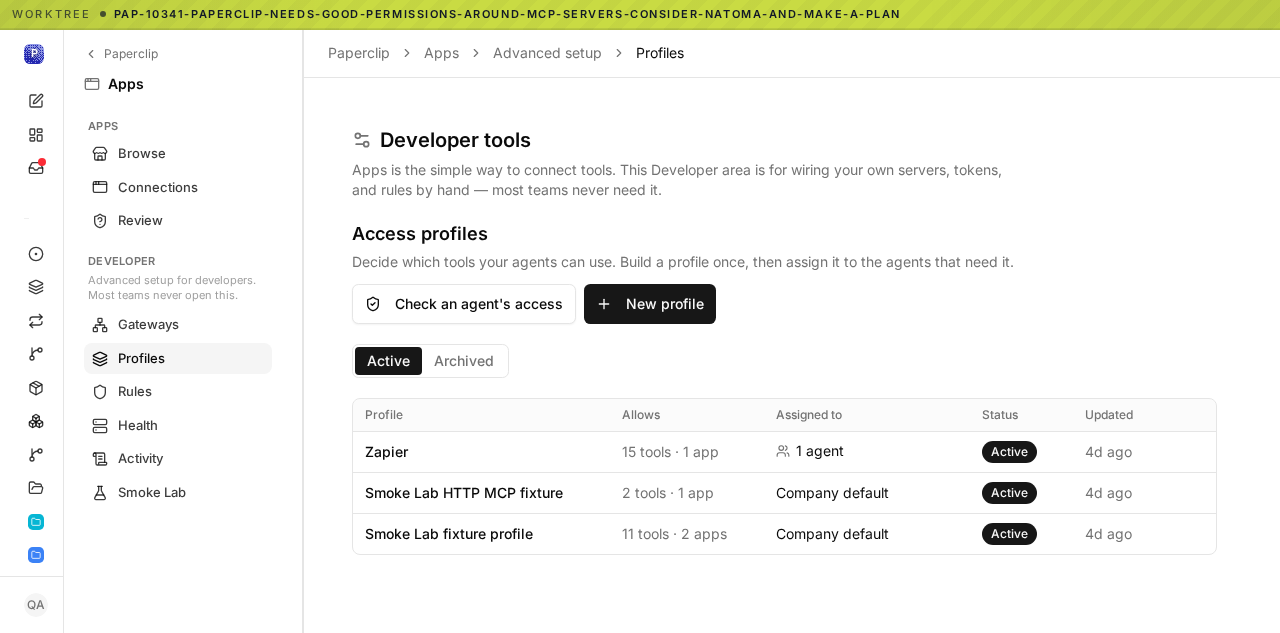 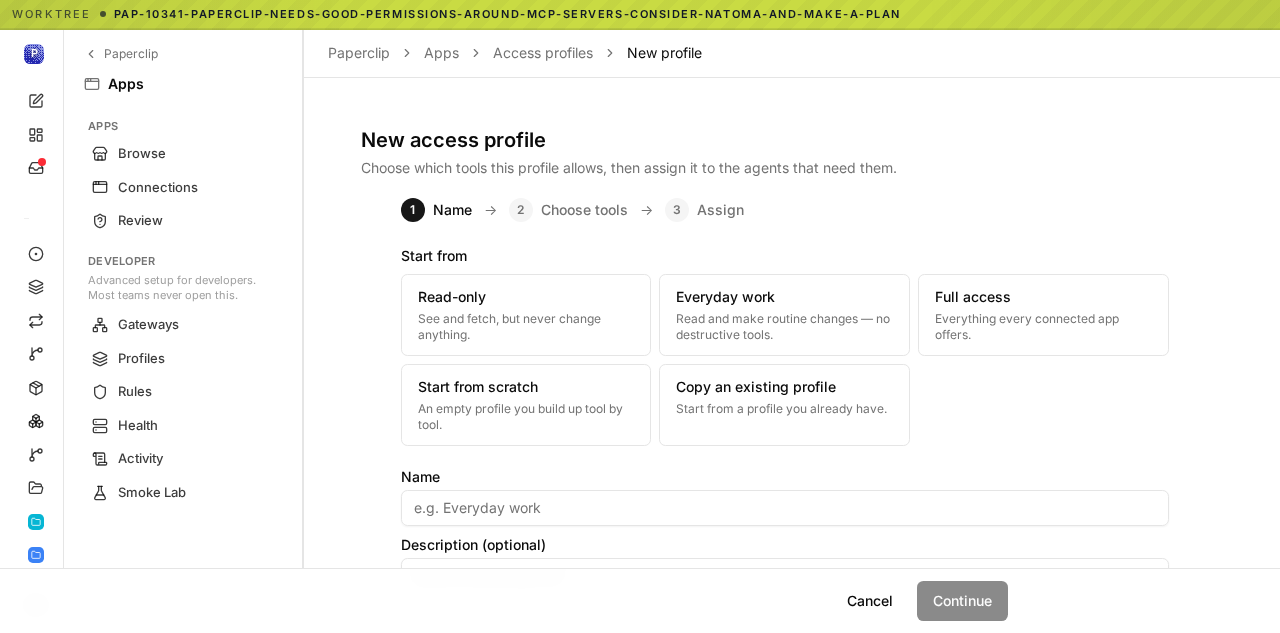 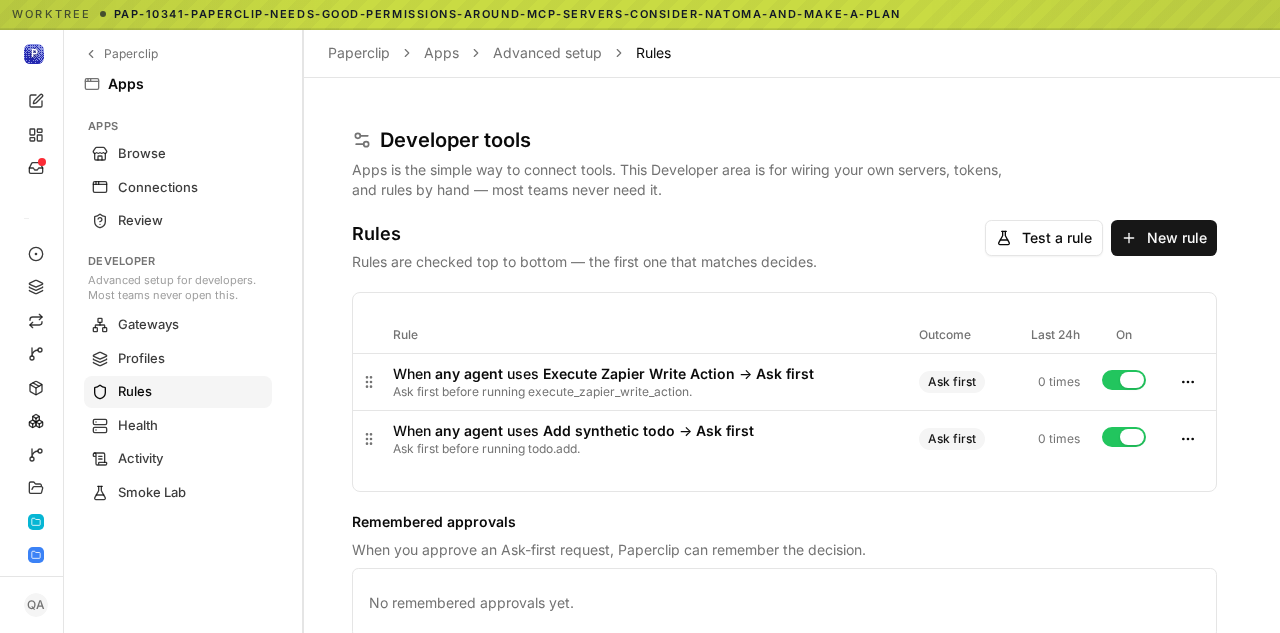 --------- Co-authored-by: Paperclip <noreply@paperclip.ing> |
||
|
|
c07e650cd7 |
feat(ui): single-source design tokens, visual regression suite, and theme retune (#9134)
## Thinking Path > - Paperclip is the open source app people use to manage AI agents for work > - Its UI is the operator's daily surface: task lists, boards, budgets, agent status — all built on shadcn components and Tailwind > - Visual values (colors, spacing, type sizes, radii) were hardcoded at ~1,600 call sites: the same "small gray label" was 9/10/11px depending on the file, charts disagreed with chips about status colors, two toggle-switch implementations coexisted in two greens, and there was no visual regression coverage > - This made the UI drift-prone and made any restyle a hundreds-of-files project, which discourages design iteration > - This pull request extracts visual values into a single token layer in `ui/src/index.css`, adds a Storybook visual regression suite backed by external immutable baseline archives, and then applies a deliberate retune reviewed change-by-change on screenshot diffs > - The benefit is that Paperclip's look becomes a config surface: retheming is a token edit reviewed as a snapshot diff, drift is blocked by a token gate, and future UI PRs can prove exactly what changed visually without committing hundreds of PNGs ## Linked Issues or Issue Description No existing public issue covers this work (searched "design tokens", "visual regression", "design system" across issues and PRs). Related in spirit: Refs #8982 (theming a hardcoded panel — a one-off instance of the same problem class this PR addresses systematically). **Problem (feature-request form):** UI visual values are hardcoded per call site with no source of truth and no regression coverage; consistency depends on reviewer memory, and restyling requires mass file edits. **Proposed solution (this PR):** a single token layer + enforcement gate + externally stored visual snapshot suite, then an intentional restyle on top of that foundation. ## What Changed - **Token extraction (zero visual change, machine-verified during development):** committed codemods (`scripts/codemod-*.mjs`) moved ~1,600 hardcoded color/type/spacing/radius/shadow/misc values into named tokens in a non-inline `:root` block of `ui/src/index.css`. - **Visual regression suite:** `pnpm test:storybook-visual` covers 255 stories × light/dark = 510 Playwright screenshots at `maxDiffPixels: 0`, plus new primitive-coverage stories and deterministic-render fixes. - **External visual baselines:** committed PNG snapshots were removed. `tests/storybook-visual/baseline-manifest.json` pins an immutable archive URL/hash/size/count, and `scripts/storybook-visual-baseline.mjs` handles `download`, `verify`, `pack`, and trusted maintainer `upload` flows. - **Opt-in visual CI artifacts:** added a `Storybook Visual` workflow that runs on manual dispatch or PRs labeled `storybook-visual`, downloads/verifies the baseline, runs Playwright, and uploads Playwright report/test-result artifacts for review. Normal PR runs do not mutate baseline objects. - **Token gate:** `pnpm check:token-gates` — zero hex literals, zero arbitrary bracket values, zero raw font-sizes in `ui/src/components/**` and `ui/src/pages/**`, with a documented inline allowlist for legitimate opt-outs. - **Theme retune (intentional, snapshot-reviewed):** new base theme values; radius ladder derived from a single `--radius` knob; micro-type cluster collapsed to a named ladder (`--text-nano/micro/compact` + Tailwind `text-xs`/`text-sm`); letter-spacing collapsed to named steps. - **One status-color vocabulary:** charts, quota/budget bar fills, RUNNING/live chips, and liveness indicators all use the canonical `--status-*` hues. Light-mode legibility fixes for red alert surfaces that used dark-tuned text classes. - **One switch:** `ToggleSwitch` restyled to the registry capsule form, second hand-rolled implementation removed, and all call sites unified. - **Docs:** `DESIGN.md` is the design contract; `doc/design/` holds audit reports, decision logs, and updated guidance for external baseline review/update workflows. - Dead code removed (`agentStatusBadge` duplicate map), byte-identical contrast constants consolidated, semantic renames (`--project-seed`/`--project-none`, `--liveness-blue`). ## Verification - `pnpm check:token-gates` — 3/3 gates CLEAN during the design-system run - `pnpm typecheck` && `pnpm --filter @paperclipai/ui build` — green during the design-system run - `node --test scripts/__tests__/storybook-visual-baseline.test.mjs` — pass after external-baseline rework - `pnpm exec tsc --noEmit --pretty false --module NodeNext --moduleResolution NodeNext --target ES2022 --types node,@playwright/test tests/storybook-visual/playwright.config.ts tests/storybook-visual/storybook-visual.spec.ts` — pass after external-baseline rework - `git diff --check origin/pr/9134..HEAD` — pass after external-baseline rework - `find tests/storybook-visual -type f -name '*.png' -print | wc -l` — `0` - `node scripts/storybook-visual-baseline.mjs verify` — intentionally fails closed until the first trusted maintainer publishes the baseline archive and updates `baseline-manifest.json` ## Risks - **Large but shallow:** the PR still touches many UI files due to mechanical token extraction and retune work, but committed PNG snapshot churn has been removed from the branch. - **Baseline publication required before the visual suite can pass in clean clones:** the manifest currently has placeholder archive metadata. A trusted maintainer must publish the first immutable archive, then update `baseline-manifest.json`. - **Rendering platform variance:** the external baseline should be captured in the documented Linux/Chromium environment. Future CI runs verify against the pinned archive and fail closed on checksum/count mismatch. - **Visual CI is opt-in while stabilizing:** add the `storybook-visual` label or dispatch the workflow manually to produce downloadable Playwright report/test-result artifacts. - **Scheduled follow-ups, deliberately out of scope:** Tailwind palette classes map to semantic tokens in a dedicated pass; card/pill component consolidation; ESLint ratchet. Tracked in `doc/design/DECISION-SHEET.md`. ## Model Used Claude Fable 5 (Anthropic, `claude-fable-5`, Mythos-class tier) with extended thinking, running in Claude Code with tool use; mechanical phases delegated to Claude Sonnet subagents. Follow-up external-baseline rework assisted by OpenAI Codex (`gpt-5` coding agent with repository, terminal, and GitHub tool use). All bulk rewrites executed via deterministic, idempotent scripts committed in `scripts/`; intentional visual changes were human-reviewed on screenshot contact sheets. ## Checklist - [x] I have included a thinking path that traces from project context to this change - [x] I have specified the model used (with version and capability details) - [x] I have checked ROADMAP.md and confirmed this PR does not duplicate planned core work - [x] I have searched GitHub for duplicate or related PRs and linked them above - [x] I have either (a) linked existing issues with `Fixes: #` / `Closes #` / `Refs #` OR (b) described the issue in-PR following the relevant issue template - [x] I have not referenced internal/instance-local Paperclip issues or links (only public GitHub `#NNN` / `github.com/paperclipai/paperclip` URLs) - [x] My branch name describes the change (e.g. `docs/...`, `fix/...`) and contains no internal Paperclip ticket id or instance-derived details - [x] I have run targeted local verification and documented the intentional baseline-publication failure above - [x] I have added or updated tests where applicable - [x] I have updated relevant documentation to reflect my changes - [x] I have considered and documented any risks above - [ ] All Paperclip CI gates are green *(pending new CI run after this rework)* - [ ] Greptile is 5/5 with no open P2s, recommendations, or follow-ups *(pending review)* - [x] I will address all Greptile and reviewer comments before requesting merge 🤖 Generated with [Claude Code](https://claude.com/claude-code) and OpenAI Codex --------- Co-authored-by: Claude Fable 5 <noreply@anthropic.com> Co-authored-by: Dotta <bippadotta@protonmail.com> Co-authored-by: Paperclip <noreply@paperclip.ing> |
||
|
Devin Foley
|
547463d3a2 |
refactor(environments): make execution environments instance-scoped (#8375)
## Thinking Path > - Paperclip is the control plane for AI-agent companies, so execution environment selection has to stay inspectable and predictable across companies, agents, and runs. > - The environment subsystem decides where an agent heartbeat actually runs and how remote sandbox state is realized and restored. > - That subsystem previously mixed company-scoped environment catalogs with issue-level environment stamping, so a reassigned issue could keep executing in the previous assignee's sandbox. > - That behavior breaks the control-plane contract: changing the assignee should change the executing agent/environment path unless there is an explicit current override. > - Fixing it cleanly required more than a narrow patch; the environment model had to move to instance scope with a single inherited default and per-agent override semantics. > - This pull request rewires the schema, server/API surface, runtime resolution, and UI around that model, then adds regression coverage for cross-company inheritance and per-agent isolation. > - The benefit is that environment choice now follows the approved instance/agent configuration path instead of stale issue state, while shared environments only need to be configured once per instance. ## Linked Issues or Issue Description - No directly matching public GitHub issue or PR was found while searching for this refactor. ### What happened? Reassigning work between agents with different execution environments could keep running in the previous sandbox because environment choice was stamped onto the issue and outranked the current assignee. The same subsystem also forced environment catalogs to be duplicated per company even though the underlying execution environments were instance-wide resources. ### Expected behavior Execution should resolve through the current instance and agent configuration path, with one instance-scoped environment catalog, one instance default, optional per-agent override, and no stale issue-level environment authority surviving reassignment. ### Steps to reproduce 1. Configure two agents to use different execution environments. 2. Assign an issue to the first agent so the issue records execution state in that environment. 3. Reassign the same issue to the second agent and run another heartbeat. 4. Observe that the pre-fix runtime can still sync or execute in the original sandbox instead of the second agent's environment. ### Paperclip version or commit Current `master` before this PR. ### Deployment mode Self-hosted server. ### Installation method Built from source (`pnpm dev` / `pnpm build`). ### Agent adapter(s) involved - Claude Code - Not adapter-specific (core bug in environment authority / resolution) ### Database mode External Postgres. ### Access context Both board reassignment and agent heartbeats were involved. ## What Changed - Moved environments and their default selection contract to instance scope in DB/shared types, including the migration that dedupes legacy per-company environments and seeds the instance local default. - Reworked environment CRUD/auth flows to use instance-scoped APIs and added route/service coverage for instance-level environment management. - Changed runtime resolution to prefer `agent default -> instance default -> built-in local`, removed issue-level environment stamping from the active execution path, and isolated sandbox/plugin leases by `(executionWorkspaceId, agentId)`. - Added environment env-var runtime precedence so environment-provided values act as the baseline for agent execution. - Moved the environment UI into instance settings and updated agent configuration surfaces to reflect inherit/override behavior. - Added regression coverage for instance-default inheritance across companies and for the new runtime resolution behavior. - Fixed a rebase-only duplicate `enableTaskWatchdogs` flag regression in instance settings types/validators/services so the branch typechecks cleanly on current `master`. - Updated stale server tests so CI matches the shipped instance-scoped environment contract. ## Verification - `git diff --check` - `pnpm --filter @paperclipai/shared typecheck` - `pnpm --filter @paperclipai/db typecheck` - `pnpm exec vitest run server/src/__tests__/environment-runtime-driver-contract.test.ts server/src/__tests__/agent-permissions-routes.test.ts server/src/__tests__/environment-routes.test.ts server/src/__tests__/environment-instance-routes.test.ts server/src/__tests__/execution-workspace-policy.test.ts server/src/__tests__/heartbeat-plugin-environment.test.ts server/src/__tests__/instance-settings-routes.test.ts` ## Risks - The migration changes environment scope and dedupes existing rows, so installs with unusual legacy environment combinations should be reviewed carefully during upgrade. - Remote execution behavior now depends on instance-default inheritance semantics instead of issue-level stamping, so any remaining code paths that still assume issue-scoped environment authority would surface as follow-up bugs. - This PR includes both server/runtime behavior and UI relocation, so reviewers should watch for authorization edge cases around instance settings and environment management. > I checked [`ROADMAP.md`](ROADMAP.md). This work fits the existing Cloud / Sandbox agents direction as a bug-fix/refactor to current behavior, not a new parallel product surface. ## Model Used - OpenAI Codex coding agent in this Paperclip/Codex session; GPT-5-class tool-using model with code execution and shell access. The exact backend model ID is not exposed to the session runtime. ## Checklist - [x] I have included a thinking path that traces from project context to this change - [x] I have specified the model used (with version and capability details) - [x] I have checked ROADMAP.md and confirmed this PR does not duplicate planned core work - [x] I have searched GitHub for duplicate or related PRs and linked them above - [x] I have either (a) linked existing issues with `Fixes: #` / `Closes #` / `Refs #` OR (b) described the issue in-PR following the relevant issue template - [x] I have not referenced internal/instance-local Paperclip issues or links (only public GitHub `#NNN` / `github.com/paperclipai/paperclip` URLs) - [x] My branch name describes the change (e.g. `docs/...`, `fix/...`) and contains no internal Paperclip ticket id or instance-derived details - [x] I have run tests locally and they pass - [x] I have added or updated tests where applicable - [ ] If this change affects the UI, I have included before/after screenshots - [x] I have updated relevant documentation to reflect my changes - [x] I have considered and documented any risks above - [ ] All Paperclip CI gates are green - [ ] Greptile is 5/5 with no open P2s, recommendations, or follow-ups - [x] I will address all Greptile and reviewer comments before requesting merge |
||
|
DottaandPaperclip
|
76c88e5855 |
[codex] Move instance settings under company settings (#7680)
## Thinking Path > - Paperclip is the open source app people use to manage AI agents for work > - Operators manage both company-scoped configuration and instance-level runtime/admin settings from the board UI > - Instance settings previously lived as their own top-level sidebar area, separate from the company settings context operators already use > - That split made settings navigation feel heavier and made instance configuration less discoverable from the settings tab > - This pull request moves instance settings under company settings while preserving the existing instance settings routes and plugin/admin surfaces > - The benefit is a smaller primary sidebar and a more coherent settings hierarchy for operators ## Linked Issues or Issue Description - Refs #338 - Internal: PAP-10491, PAP-10538 ## What Changed - Moved instance settings navigation under the company settings area. - Added route helpers and sidebar entries for nested instance settings paths. - Updated plugin/admin settings routes to use the company settings instance scope. - Preserved legacy instance-settings bookmarks through compatibility redirects that keep the active company prefix. - Updated focused UI and plugin tests for the new navigation shape. - Stabilized the process-loss retry test that was failing the serialized server shard in CI. - Rebased the branch onto current `paperclipai/paperclip` `master` and pushed the current head. ## Verification - `pnpm exec vitest run ui/src/components/CompanySettingsSidebar.test.tsx ui/src/components/access/CompanySettingsNav.test.tsx ui/src/lib/instance-settings.test.ts ui/src/components/InstanceSidebar.test.tsx ui/src/components/Layout.test.tsx ui/src/components/SidebarAccountMenu.test.tsx ui/src/pages/PluginPage.test.tsx ui/src/plugins/bridge.test.ts packages/shared/src/validators/plugin.test.ts` - `pnpm exec vitest run ui/src/lib/instance-settings.test.ts ui/src/components/CompanySettingsSidebar.test.tsx ui/src/components/access/CompanySettingsNav.test.tsx ui/src/components/Layout.test.tsx ui/src/plugins/bridge.test.ts` - `pnpm exec vitest run server/src/__tests__/heartbeat-process-recovery.test.ts -t "queues exactly one retry when the recorded local pid is dead"` - `pnpm test:run:serialized -- --shard-index 0 --shard-count 4` - GitHub PR checks are green on head `fe7b0955169dcae55cbe10889c1876a70ab0b80c`, including `verify`, `General tests (server)`, all serialized server shards, build, e2e, policy, security checks, and Greptile. - Confirmed the PR diff does not include `pnpm-lock.yaml` or `.github/workflows` changes. ## Risks - Medium UI/navigation risk: instance settings links are intentionally moving under company settings, so stale external bookmarks to legacy paths rely on the compatibility routing in this branch. - Low test-only risk from the CI stabilization commit: it makes the recovery assertion select the actual retry run by `retryOfRunId` instead of whichever non-original run appears first. - No database migrations. - No dependency lockfile or workflow changes. > For core feature work, check [`ROADMAP.md`](ROADMAP.md) first and discuss it in `#dev` before opening the PR. Feature PRs that overlap with planned core work may need to be redirected — check the roadmap first. See `CONTRIBUTING.md`. ## Model Used - OpenAI Codex coding agent based on GPT-5, with shell/tool execution in a local repository worktree. Exact context window was not exposed by the runtime. ## Checklist - [x] I have included a thinking path that traces from project context to this change - [x] I have specified the model used (with version and capability details) - [x] I have checked ROADMAP.md and confirmed this PR does not duplicate planned core work - [x] I have searched GitHub for duplicate or related PRs and linked them above - [x] I have either (a) linked existing issues with `Fixes: #` / `Closes #` / `Refs #` OR (b) described the issue in-PR following the relevant issue template - [x] I have run tests locally and they pass - [x] I have added or updated tests where applicable - [ ] If this change affects the UI, I have included before/after screenshots - [x] I have updated relevant documentation to reflect my changes - [x] I have considered and documented any risks above - [x] All Paperclip CI gates are green - [x] Greptile is 5/5 with no open P2s, recommendations, or follow-ups - [x] I will address all Greptile and reviewer comments before requesting merge --------- Co-authored-by: Paperclip <noreply@paperclip.ing> |
||
|
DottaandPaperclip
|
3c73ed26b5 |
Expand plugin host surface (#5205)
## Thinking Path > - Paperclip orchestrates AI agents for zero-human companies > - The plugin system is the extension boundary for optional product capabilities > - Rich plugins need more than a worker entrypoint: they need scoped database storage, local project folders, managed agents/routines, host navigation, and reusable UI components > - The LLM Wiki work exposed those missing host surfaces while keeping plugin code outside the core control plane > - This pull request expands the core plugin host, SDK, server APIs, and UI bridge so plugins can declare and use those surfaces > - The benefit is that future plugins can integrate with Paperclip through documented, validated contracts instead of bespoke server or UI imports ## What Changed - Added plugin-managed database namespaces and migration tracking, including Drizzle schema/migration files and SQL validation for namespace isolation. - Added server support for plugin local folders, managed agents, managed routines, scoped plugin APIs, and plugin operation visibility. - Expanded shared plugin manifest/types/validators and SDK host/testing/UI exports for richer plugin surfaces. - Added reusable UI pieces for file trees, managed routines, resizable sidebars, route sidebars, and plugin bridge initialization. - Updated plugin docs and example plugins to use the expanded host and SDK surface. ## Verification - `pnpm install --frozen-lockfile` - `pnpm run preflight:workspace-links && pnpm exec vitest run packages/shared/src/validators/plugin.test.ts server/src/__tests__/plugin-database.test.ts server/src/__tests__/plugin-local-folders.test.ts server/src/__tests__/plugin-managed-agents.test.ts server/src/__tests__/plugin-managed-routines.test.ts server/src/__tests__/plugin-orchestration-apis.test.ts ui/src/api/plugins.test.ts ui/src/components/FileTree.test.tsx ui/src/components/ResizableSidebarPane.test.tsx ui/src/pages/PluginPage.test.tsx ui/src/plugins/bridge.test.ts` passed: 11 files, 67 tests. - Confirmed this PR changes 89 files and does not include `pnpm-lock.yaml` or `.github/workflows/*`. ## Risks - Medium: this expands plugin host contracts across db/shared/server/ui and includes a new core migration (`0076_useful_elektra.sql`). - The plugin database namespace validator is intentionally restrictive; plugin authors may need follow-up affordances for SQL patterns that remain blocked. - Merge this before the LLM Wiki plugin PR so the plugin can resolve the new SDK and host APIs. > For core feature work, check [`ROADMAP.md`](ROADMAP.md) first and discuss it in `#dev` before opening the PR. Feature PRs that overlap with planned core work may need to be redirected — check the roadmap first. See `CONTRIBUTING.md`. ## Model Used - OpenAI Codex, GPT-5 coding agent, tool-enabled shell/git/GitHub workflow. Context window size was not exposed by the runtime. ## Checklist - [x] I have included a thinking path that traces from project context to this change - [x] I have specified the model used (with version and capability details) - [x] I have checked ROADMAP.md and confirmed this PR does not duplicate planned core work - [x] I have run tests locally and they pass - [x] I have added or updated tests where applicable - [x] If this change affects the UI, I have included before/after screenshots - [x] I have updated relevant documentation to reflect my changes - [x] I have considered and documented any risks above - [x] I will address all Greptile and reviewer comments before requesting merge --------- Co-authored-by: Paperclip <noreply@paperclip.ing> |
||
|
Devin Foley
|
c0ce35d1fb |
Improve E2B plugin configuration UX and fix execution timeouts (#4802)
## Thinking Path > - Paperclip orchestrates AI agents for zero-human companies > - E2B is a sandbox provider plugin that runs agent code in isolated cloud environments > - Operators configure E2B through the plugin settings page > - But the E2B API key configuration was unclear — the settings field description didn't explain that pasted keys are auto-saved as company secrets, and the fallback to the host `E2B_API_KEY` variable wasn't documented > - Additionally, long-running E2B sandbox commands were timing out because the plugin environment RPC driver used a fixed timeout, and environment commands competed for the single foreground command slot > - This PR clarifies the E2B configuration UX, fixes RPC timeouts for plugin environment execution, and runs E2B environment commands in background mode to avoid blocking the foreground slot > - The benefit is clearer E2B setup for operators and more reliable sandbox command execution ## What Changed - Updated E2B plugin manifest and settings UI to clarify API key configuration — field description now explains that pasted keys are saved as company secrets and documents the `E2B_API_KEY` host fallback - Added test coverage for the plugin settings page rendering - Fixed `plugin-environment-driver.ts` to pass the configured timeout through to RPC calls instead of using a hardcoded default - Updated `environment-runtime.ts` to propagate timeout from the environment lease to the plugin driver - Changed E2B sandbox command execution to use background handles so long-running agent commands don't block the foreground slot needed by the callback bridge ## Verification - `pnpm test` — all existing and new tests pass - `pnpm typecheck` — clean - Manual: navigate to plugin settings, verify E2B API key field shows the updated description text - Manual: run an E2B-backed agent task with a long-running command, verify it completes without RPC timeout ## Risks - Low risk. Configuration UX change is cosmetic. The timeout fix passes an existing value through instead of dropping it. Background command execution is a behavioral change but only affects E2B sandbox commands — the foreground slot is still available for bridge health checks. ## Model Used Codex GPT 5.4 high via Paperclip. ## Checklist - [x] I have included a thinking path that traces from project context to this change - [x] I have specified the model used (with version and capability details) - [x] I have checked ROADMAP.md and confirmed this PR does not duplicate planned core work - [x] I have run tests locally and they pass - [x] I have added or updated tests where applicable - [x] If this change affects the UI, I have included before/after screenshots - [x] I have updated relevant documentation to reflect my changes - [x] I have considered and documented any risks above - [x] I will address all Greptile and reviewer comments before requesting merge |
||
|
Dotta
|
80cdbdbd47 | Add plugin framework and settings UI |


